
Narda spreading heavy rain along the southwestern coast of Mexico
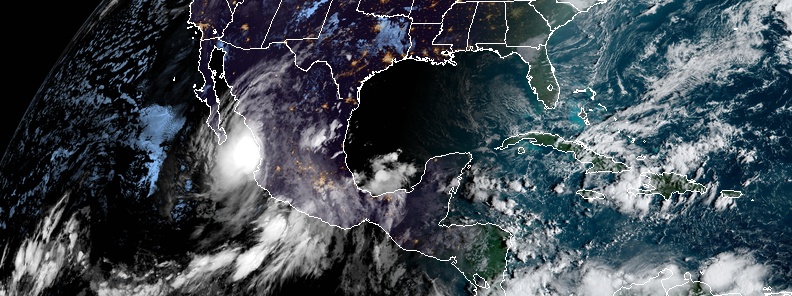
Featured image: Tropical Depression "Narda" at 12:30 UTC on September 30, 2019. Credit: NOAA/GOES-East
Tropical Storm "Narda" formed on September 28, 2019, near the coast of western Mexico as the 15th named storm of the 2019 Pacific hurricane season. Although it temporarily weakened into a tropical depression, the system is dropping heavy rain along the southwestern coast of Mexico. These rains, which could total as much as 380 mm (15 inches) in a few locations, will result in life-threatening flash floods and mudslides.
Heavy rain brought by the storm already caused floods in Oaxaca, Michoacan, Guerrero, Nayarit and Jalisco, and left at least one person dead.
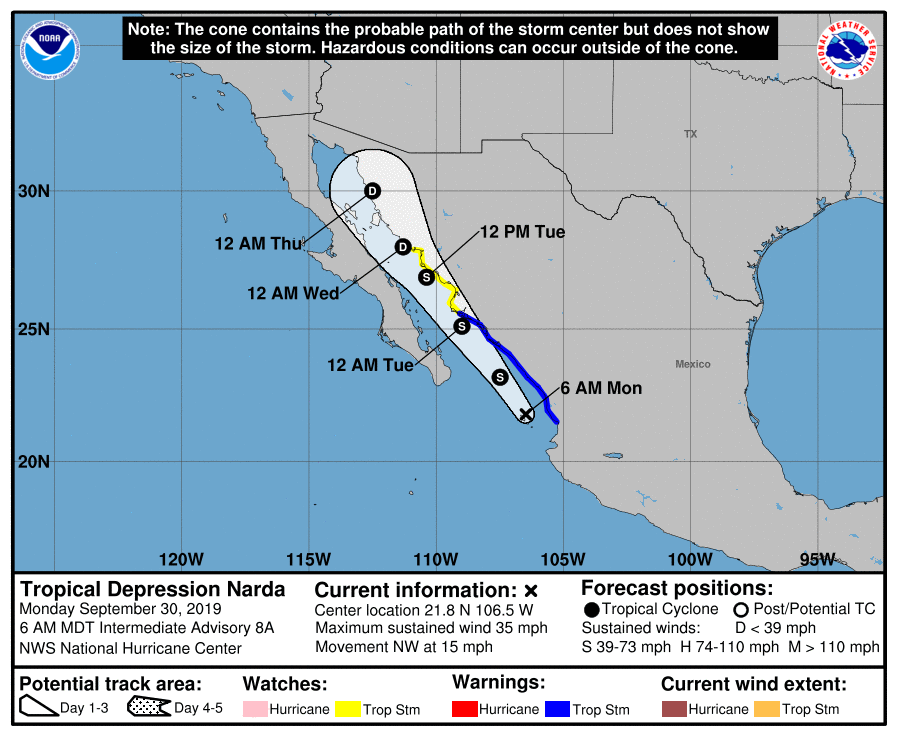
At 12:00 UTC (06:00 MDT) on September 30, the center of Tropical Depression "Narda" was located 35 km (20 miles) NNW of Las Islas Marias and about 155 km (95 miles) S of Mazatlan, Mexico.
Its maximum sustained winds were 55 km/h (35 mph) and minimum central pressure 1 001 hPa. The system is moving NW at 24 km/h (15 mph) and this general motion is expected to continue with some decrease in forward speed during the next couple of days.
A Tropical Storm Warning is in effect for San Blas to Topolobampo, and Islas Marias – tropical storm conditions are expected somewhere within the warning area.
A Tropical Storm Watch is in effect for Topolobampo to Guaymas – tropical storm conditions are possible within the watch area, generally within 48 hours.
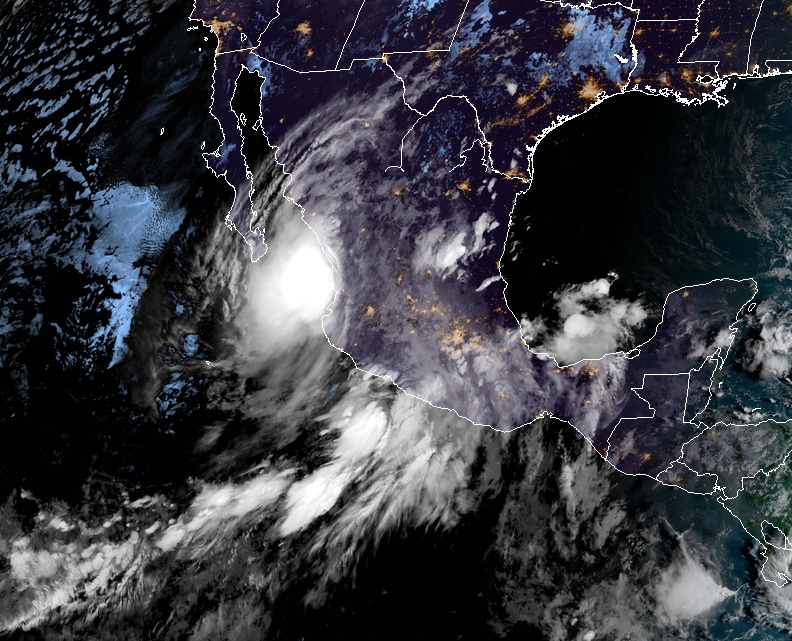
Tropical Depression "Narda" at 12:30 UTC on September 30, 2019. Credit: NOAA/GOES-East
On the forecast track, the center of Narda will move over the Gulf of California near or just offshore the coast of northwestern mainland Mexico through Tuesday, October 1.
Some slight strengthening is forecast, and Narda is expected to become a tropical storm again later today.
"A trough moving into the southwestern U.S. and northern Baja peninsula should cause the track to bend a bit to the right in 2-3 days until the system dissipates near the U.S.-Mexico Border," NWS forecaster Pasch noted 09:00 UTC today.
"The main threat posed by Narda continues to be very heavy rainfall, due to large amounts of moisture being advected northward and northeastward over Mexico on the eastern side of the cyclone's circulation. These rains, which could total as much as 380 mm (15 inches) in a few locations, will result in life-threatening flash floods and mudslides."

Teo Blašković founded The Watchers in 2011 and edited it until 2026, covering seismic and volcanic activity, extreme weather, space weather and near-Earth objects. Articles on this page are his archive.
Published in the last 24 hours
- In 1954, a grapefruit-sized meteorite crashed through a roof in Sylacauga, Alabama, and struck Ann Hodges as she napped on her couch Epicenter
- A meteorite blew a crater beside a village near Lake Titicaca in 2007, and dozens of villagers who went to see it got headaches and nausea, though tests found nothing the rock had added to the water Epicenter
- The people who pay closest attention to the weather are the ones storms have already cost the most, a study of 946 students found, with one damaging storm making little difference to how much attention a student paid, but two or more making a clear one Epicenter
- The sea is falling in Juneau, Alaska, because land freed from melted glaciers is rising about 0.6 inches a year Epicenter
