
TS Iba: Very rare tropical storm forms near the coast of Brazil, the first since 2010 and third ever in recorded history
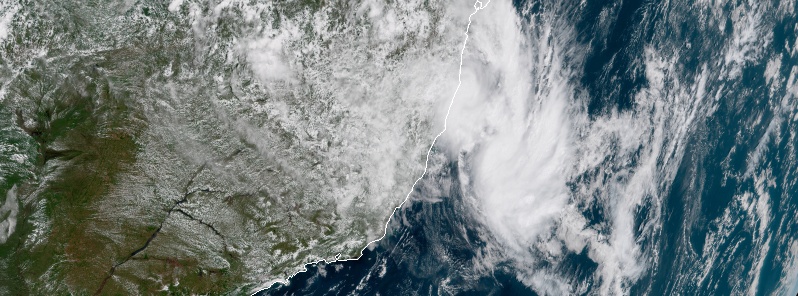
Featured image: Tropical Storm "Iba" at 15:30 UTC on March 24, 2019. Credit: NOAA Goes-EAST
A rare tropical storm named Iba by the Brazilian Navy Hydrographic Center (BNHC) formed near the coast of Brazil on March 24, 2019. This is the first tropical storm to form in this region since 2010 and third ever in recorded history.
At 16:00 UTC on March 24, Tropical Storm "Iba" had maximum winds of 65 km/h (40 mph) and estimated central pressure 1 008 hPa, according to the BNHC.
Its location at 18:00 was estimated about 354 km (220 miles) E of Sao Mateus and 356 km (221 miles) SE of Porto Seguro. Gradual strengthening and movement toward the SSW are expected over the next 24 hours.
A high surf warning is in effect for areas between Caravelas, Bahia and Vitoria, Espirito Santo, Brazil. Waves from SE/E up to 2.5 m (8.2 feet) are expected (valid until 00:00 UTC, March 26).
GFS forecast model takes Iba SSW over the next two days and then east and far away from the coast.
Formation of Tropical Storm "Iba" – 12:45 UTC, March 23 through 18:15 UTC, March 24, 2019. Credit: NOAA Goes-EAST
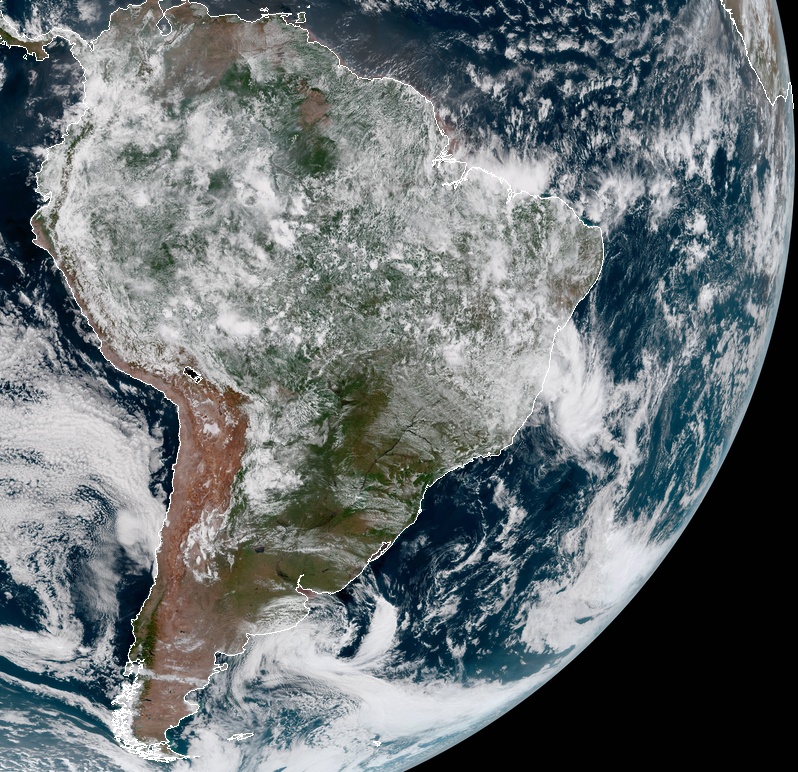
Tropical Storm "Iba" – 15:30 UTC, March 24, 2019. Credit: NOAA Goes-EAST
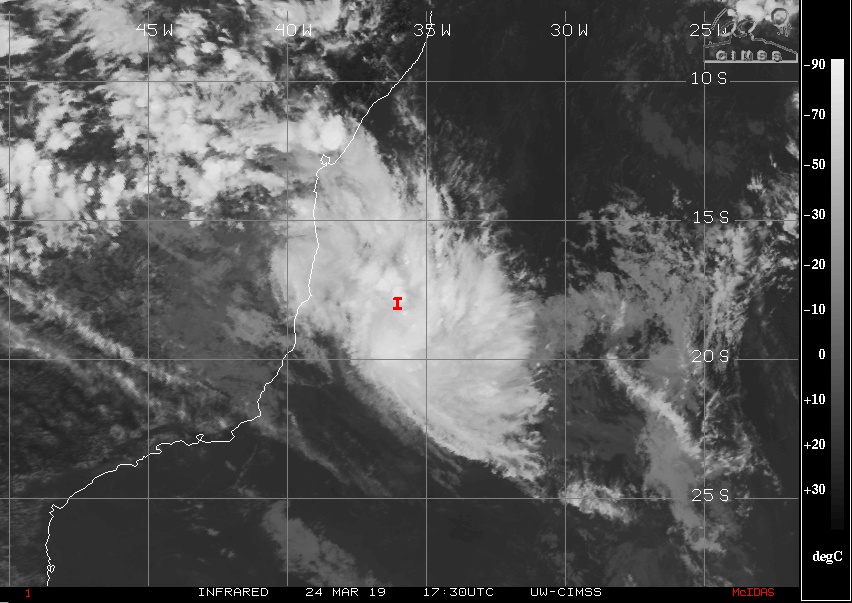
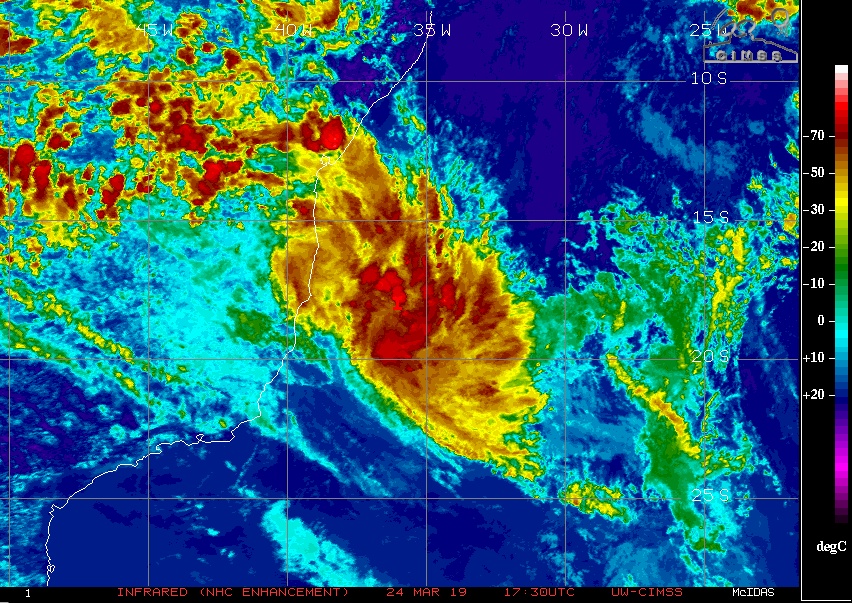
While subtropical systems in South Atlantic Ocean form roughly once a year, the last time a pure tropical system formed there was in March 2010 – 90Q also informally known as Anita.
Tropical Storm 90Q is the second known tropical cyclone to form in the cooler South Atlantic Ocean.
The first tropical cyclone ever seen in recorded history in the Southern Atlantic was Catarina in March 2004.
Catarina made landfall in the Santa Catarina province of Brazil as a Category 1 hurricane equivalent on March 27, 2004, killing three people and injuring 185. It damaged 38 000 structures and destroyed 1 478.
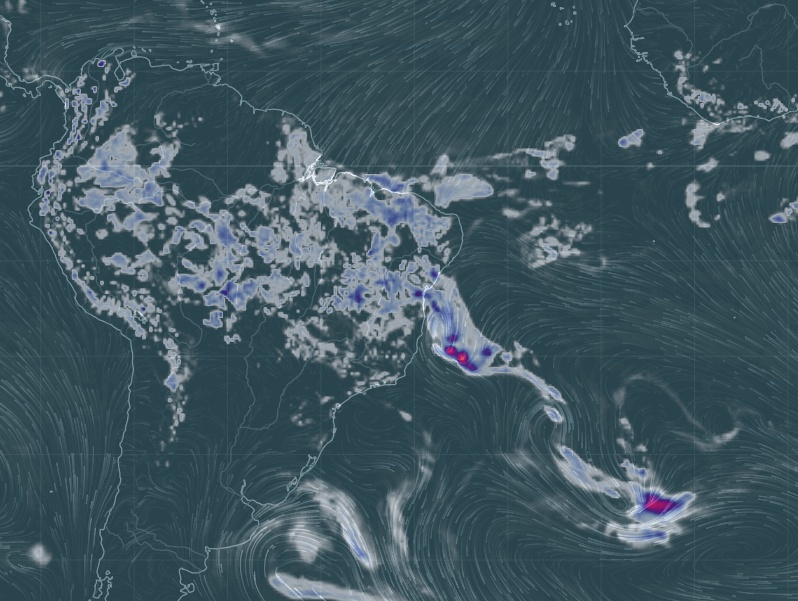
3-hr Precipitation Accumulation at 18:00 UTC on March 24, 2019. Credit: earth.nullschool.net

I'm a dedicated researcher, journalist, and editor at The Watchers. With over 20 years of experience in the media industry, I specialize in hard science news, focusing on extreme weather, seismic and volcanic activity, space weather, and astronomy, including near-Earth objects and planetary defense strategies. You can reach me at teo /at/ watchers.news.

The FATHER will soon ride in the WAR – WINDS against you Brazil because your time is also up Brazil.