
Lyrid meteor shower peaks April 21 and 22
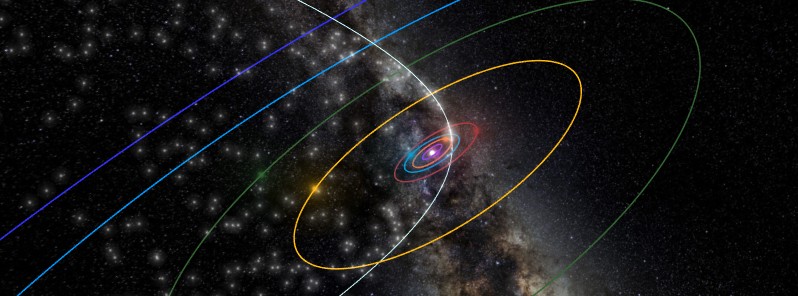
Featured image: Lyrid meteor shower. Credit: meteorshowers.org
The Lyrid meteor shower will peak on the night of April 21 and the morning of April 22. This is a medium strength shower that usually produces about 20 meteors per hour at its peak.
The Lyrids are one of the oldest known meteor showers, observed for at least 2 700 years.
They are known for their fast and bright meteors that frequently leave glowing dust trains, observable for several seconds.
These meteors are best viewed from the northern hemisphere during dark hours, after moonset and before dawn. People in the southern hemisphere can also see the shower but at a lower rate.
Lyrids originate from comet C/1861 G1 Thatcher, discovered on April 5, 1861 bt A. E. Thatcher.
The first quarter moon will set shortly after midnight this year, leaving dark skies for the what could be a good show. Meteors will radiate from the constellation Lyra but can appear anywhere in the sky.

Teo Blašković founded The Watchers in 2011 and edited it until 2026, covering seismic and volcanic activity, extreme weather, space weather and near-Earth objects. Articles on this page are his archive.
Earlier reporting
Nothing on Watchers was published in the last 24 hours. These are older articles.
- In 1920, a man out hunting on a farm in Namibia sat down on a strange black rock, scratched it with his knife and saw metal shine underneath. It was Hoba, a 60-ton meteorite, the largest ever found, and there is no crater around it Epicenter
- On December 26, 2004, a 10-year-old British girl on a Phuket beach recognized the frothing sea from a recent geography lesson, and her warning helped clear the beach before the tsunami struck Epicenter
- A volcano in Tonga exploded so loudly in 2022 that people in Alaska, 6,000 miles away, were woken by the booms. Hawaii, at half that distance, heard nothing at all Epicenter
- In 2001, red rain fell on parts of Kerala, India, on and off for about two months. Scientists traced the color to algae spores, but one physicist argued the cells came from space. Epicenter
