
Lyrid meteor shower to light up night sky in April 2025
The Lyrid meteor shower, caused by debris from Comet Thatcher, will peak from April 21 to April 22, 2025, with an expected rate of 10–15 meteors per hour.
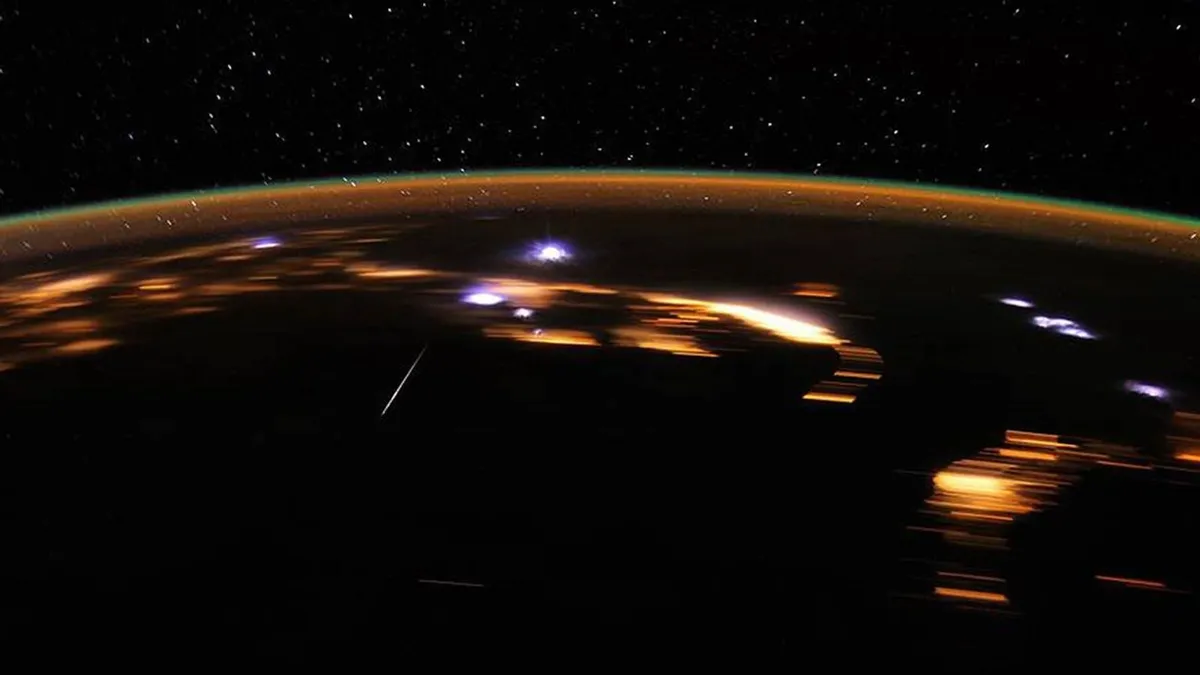
Earth at night with meteors burning up in the atmosphere. Image credit: NASA/JSC/D. Pettit
The Lyrid meteor shower, among the oldest documented celestial events, occurs when Earth passes through the debris left by comet C/1861 G1 (Thatcher). The shower is active from April 16 to April 25, producing bright and fast-moving meteors, some of which leave glowing trails. The event is best visible in the Northern Hemisphere.
The meteor shower will peak during the night of April 21 into the early morning of April 22, with the maximum visibility occurring near 13:00 UTC on April 22. In areas such as North America and Europe, it is best viewed before dawn.
Under ideal conditions, the meteor shower typically produces 10–15 meteors per hour, with a Zenithal Hourly Rate of 18. Occasionally, the Lyrids can produce outbursts with rates up to 100 meteors per hour, though such events are rare.
Lyrids travel at a speed of 47 km/s (29 miles per second), producing bright displays, particularly in dark sky areas.
For the best view, observers are advised to choose a dark location away from city lights and watch the meteor shower after midnight, when the radiant in the constellation Lyra rises higher in the sky. No special equipment is required. It is recommended to lie back and allow 30 minutes for the eyes to adjust to the darkness while avoiding bright screens.
A waning crescent moon, 36% illuminated, will rise on April 22, causing minimal interference. Viewing before the moon rises will improve visibility of fainter meteors. Observers can also reduce the impact by facing away from the moon or positioning themselves in its shadow.
The Southern Hemisphere will likely see fewer meteors because the radiant lies in the northern sky, although some meteors may appear near the horizon. Rural areas and designated dark-sky parks will be best for observing.
References:
1 Lyrid Meteor Shower – NASA – Accessed on April 16, 2025
2 Meteor Shower Calendar – American Meteor Society – Accessed on April 16, 2025

I’m a science journalist and researcher at The Watchers, contributing to the Epicenter edition, where I cover peer-reviewed scientific research and emerging discoveries across Earth and space sciences. With a background in astronomy and a passion for environmental science, I’ve worked in shark and coral conservation in Fiji, conducting reef and shark-behavior research, contributing to mangrove restoration, and earning PADI Open Water and Coral Reef Certifications. I bring a blend of scientific rigor and storytelling to illuminate the discoveries shaping our planet and beyond.

Commenting rules and guidelines
We value the thoughts and opinions of our readers and welcome healthy discussions on our website. In order to maintain a respectful and positive community, we ask that all commenters follow these rules.