
56 dead, 200 000 homeless and 11 000 homes destroyed as floods ravage Niger

Image credit: AFP
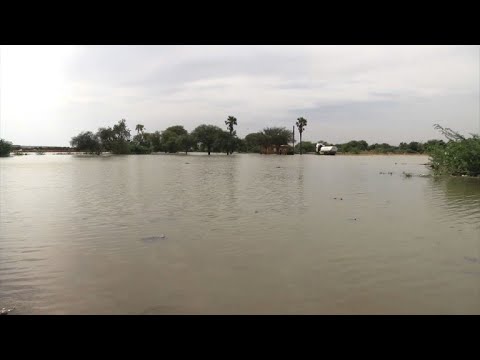
At least 56 people have been killed, nearly 200 000 are homeless and more than 11 000 homes have been destroyed by floods since the start of the rainy season in May, country's interior ministry reported Tuesday, September 19, 2017.
The hardest hit is capital Niamey along with Dosso in the south. A humanitarian source told AFP last week that exacerbating the problems were rising River Niger water levels, leading to fears of a repeat of serious flooding in 2012 which left dozens dead and some 500 000 homeless.
Food production will also take a hit, with the flooding killing some 16 000 cattle and about 12 000 hectares (30 000 acres) of crops being ruined, according to UNOCHA.
Last week, Niger said it had launched a campaign to destroy mosquito breeding sites to help combat the spread of deadly malaria in Niamey after the rain transformed some areas into swamps.

Before the start of the rainy season in May, the government advised people living in flood-prone areas to leave their homes before the rains began, said Boubacar Sidikou, secretary general for Niger's Ministry of Humanitarian Action and Disaster Management, as reported by Reuters.
But few heeded the advice "because they refused to abandon their homes or had nowhere else to go", he said.
According to Katiellou Lawan Gaptia, head of meteorology at Niger's Met Office, climate change in the Sahel is creating warmer conditions where the atmosphere can hold more moisture, often increasing the volume of rainfall.
"This year's rain is just extraordinary," he said. "In Niamey alone, the season's rainfall has increased by 84% since 2010."

Teo Blašković founded The Watchers in 2011 and edited it until 2026, covering seismic and volcanic activity, extreme weather, space weather and near-Earth objects. Articles on this page are his archive.
Published in the last 24 hours
- In September 1859, a solar storm lit up the night sky so brightly that gold miners in the Rocky Mountains woke up after midnight and started cooking breakfast, convinced the aurora glowing over their camp was the sunrise Epicenter
- A patch of warm Pacific water that could become the strongest El Niño in more than 70 years sits thousands of miles from any American town, yet it is already the main reason NOAA expects a wetter winter across the South and a milder one across the North
- A 19-year-old Nebraska teacher reportedly tied her pupils together with twine and led them to safety through a blizzard in January 1888 Epicenter
- NASA built the Opportunity rover to last 90 days on Mars, and Martian winds helped keep it alive for nearly 15 years by blowing dust off its solar panels, until a planet-wide dust storm in 2018 blocked sunlight and silenced the rover Epicenter
