
Iran successfully sends a monkey to space and back
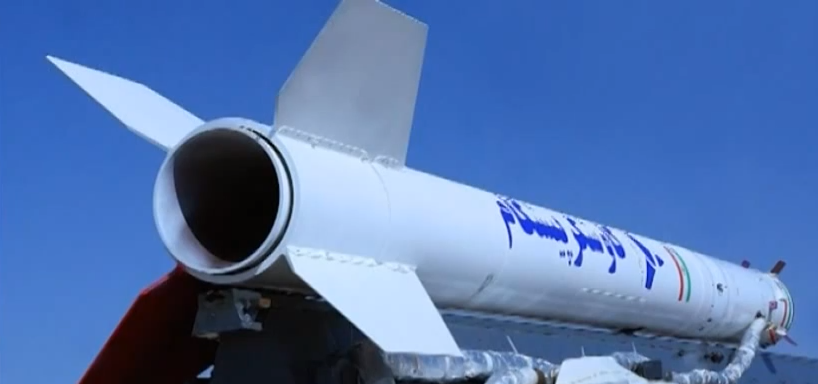
Image credit: TW
According to country’s media outlets Iranian Defense Ministry’s aerospace department issued a statement on January 28, 2013 confirming that Iran had “successfully launched a capsule, code-named Pishgam (“Pioneer”), that contained a monkey.” The statement said the capsule “returned its shipment intact” but it did not elaborate on the condition of the monkey. The rocket reached a height of 120 km.
Announcing this launch, the director of Iran Space Agency (ISA), Hamid Fazeli said on January 15, 2013 that because of biological similarities between humans and monkeys, the latter were selected for the space mission. He added that the plan to send animals into the space is part of a broader project to send human beings on space missions. Iran’s first manned mission to space would be launched within the next five to eight years, he said.
“The monkeys that will be sent in a life capsule are for now in quarantine and are scheduled to be sent into space during the Fajr festival,” Fazeli said. Fajr festival is 10-day celebration leading up to the 34th anniversary of the Islamic revolution on February 10th. Elsewhere in his remarks, Fazeli said the indigenous Sharifsat satellite will be put into the orbit by the end of the current Iranian calendar year (ends on March 20, 2013).
The first Iranian-made satellite, called Omid, was launched by ISA in February 2009. On February 3, 2010, they launched a Kavoshgar-3 (Explorer-3) rocket with one rodent, two turtles, and several worms into sub-orbital space and returned them to Earth alive. The rocket was enabled to transfer electronic data and live footage back to Earth. They showed live video transmission of mini-environmental lab to enable further studies on the biological capsule. This was the first biological payload launched by Iran.
On March 15, 2011, the ISA launched the Kavoshgar-4 (Explorer-4) rocket carrying a test capsule designed to carry a monkey but without living creatures on board. Kavoshgar-5 (Explorer-5) carrying a live monkey was launched for a 20-minute sub-orbital flight in September 2011, however the mission failed. On October 3, 2012 Iran indefinitely postponed further plans while scientists reviewed readiness for future missions.
The Iranian Space Agency (ISA, Persian: سازمان فضایی ایران Sázmán e Fazái e Irán) is Iran’s governmental space agency. Iran became an orbital-launch-capable nation in 2009. They are the sixth country to send animals in space and are one of the 24 founding members of the United Nations Committee on the Peaceful Uses of Outer Space, which was set up in 1958.
According to News24 Iran has announced several successful launches of satellites, dating back to 2005 in a joint project with Russia but have not yet given details of its planned new space facility. Iran’s major satellite launch complex is near Semnan, about 200km east of Tehran. A satellite monitoring facility is located outside Mahdasht, about 70km west of the Iranian capital.
Iran says it wants to put its own satellites into orbit to monitor natural disasters in the earthquake-prone nation, improve telecommunications and expand military surveillance in the region.
Read more:
- Iran claims launch of flying saucer
- Why Iran is sending a monkey to space in the face of tough sanctions
Featured image credit: PRESS TV video.

Teo Blašković founded The Watchers in 2011 and edited it until 2026, covering seismic and volcanic activity, extreme weather, space weather and near-Earth objects. Articles on this page are his archive.
Published in the last 24 hours
- Male toads abandoned a pond in Italy five days before a deadly 2009 earthquake, while a scientist was counting them Epicenter
- An asteroid was spotted 19 hours before it exploded over Sudan in 2008, and students picked its pieces off the desert Epicenter
- A wave up to 3 m (10 feet) high rose out of Lake Michigan on a sunny June morning in 1954 and swept fishermen off Chicago’s piers, and when a second came 10 days later, warnings had cleared the shore Epicenter
- Just 12 inches of rushing water can carry away most cars, and more than half of US flood drownings happen to people who drive into flood water Epicenter

Welcome to the 1940s.