
Tropical storm Katia could be next major hurricane
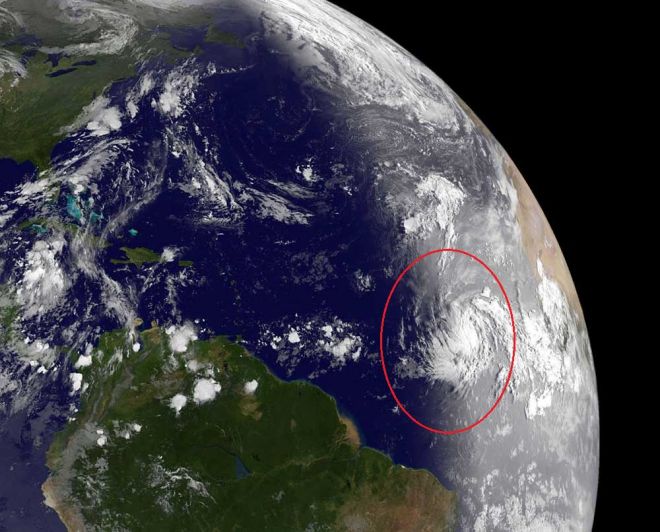
Image credit: TW
While much of the mid-Atlantic and New England continues to suffer from residual flooding and power outages in the wake of Irene, a new storm in the Atlantic bears some watching.Katia became a tropical storm early Tuesday morning after first forming as a tropical depression south of the Cape Verde Islands Monday morning. The storm is moving over very warm sea surface temperatures and into an area with weaker winds aloft. These factors have allowed Katia to strengthen throughout the day Tuesday.

11:00 PM AST Tue Aug 30
Location: 13.3°N 37.5°W
Max sustained: 60 mph
Moving: WNW at 22 mph
Min pressure: 997 mb
Further intensification is expected with the storm potentially becoming a hurricane by Wednesday night or early Thursday morning. Katia could become a major hurricane by the upcoming weekend as it passes north of the Lesser Antilles. (National Hurricane Center)

Katia will continue on a west-northwest track around an area of high pressure over the Atlantic through the weekend. This should take the storm north of the Leeward Islands, which is good news for a region that was hit hard by heavy rain and flooding with Irene. While the forecast is for Katia to eventually turn and head northward and potentially out to sea, it is certainly possible that the storm brings some impacts to the East Coast or Atlantic Canada later next week.
Another factor to keep an eye on is the potential for a tropical system to develop in the Gulf of Mexico this week. Should a tropical system organize in the Gulf, it could completely alter the upper-level pattern, thereby, changing the course of Katia in the long term. (Accuweather)

Katia was added to this year’s rotating storm roster to replace Katrina which killed more than 1,800 people in August 2005 when it made landfall near the Louisiana-Mississippi. Storm names are retired if they caused a large number of fatalities. Katia is the eleventh named storm of the 2011 Atlantic hurricane season, following Tropical Storm Jose which formed south of Bermuda on late Sunday afternoon. Jose passed west of Bermuda, causing minor damage but no casualties. (IWO)
Satellite Animations
- Storm-Centered Infrared (GOES 12; NOAA/SSD)
- Storm-Centered Infrared (Aviation Color Enhancement) (GOES 12; NOAA/SSD)
- Storm-Centered Water Vapor (GOES 12; NOAA/SSD)
- Storm-Centered Visible (GOES 12; NOAA/SSD)
- Storm-Centered Visible (Colorized) (GOES 12; NOAA/SSD)
- Central Atlantic Infrared (GOES 12; NOAA/SSD)
- Central Atlantic Infrared (Aviation Color Enhancement) (GOES 12; NOAA/SSD)
- Central Atlantic Water Vapor (GOES 12; NOAA/SSD)
- Central Atlantic Visible (GOES 12; NOAA/SSD)
- Central Atlantic Visible (Colorized) (GOES 12; NOAA/SSD)

Earlier reporting
Nothing on Watchers was published in the last 24 hours. These are older articles.
- CPC posts a slight risk of heavy rain from the Gulf Coast to the Northeast urban corridor November 25-29, and a moderate risk of West Coast wind and Sierra snow on November 25
- Cyclone Akvan to make landfall between Nellore and Visakhapatnam around noon on November 20, IMD forecasts 120-130 km/h winds gusting to 145
- The storms drenching California this week are fed by a river in the sky, a band of water vapor that can carry up to 15 times the flow of the Mississippi River, and this winter’s near-record El Niño could keep aiming more of them at the West Coast
- Atmospheric river brings moderate risk of heavy rain, mountain snow and high winds to northern California and southwest Oregon on November 24-25
