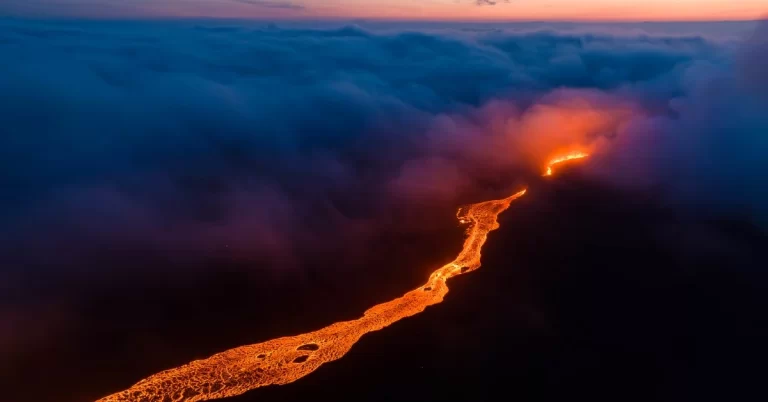
• Sulfur dioxide from 2023 Icelandic eruption traveled 2 000 km (1 240 miles) to Arctic’s Svalbard Islands

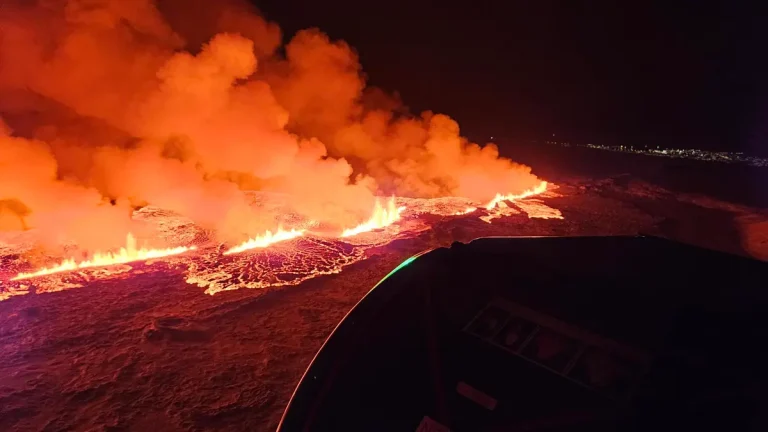
    A Chinese research team tracked sulfur dioxide (SO2) from Iceland’s Sundhnukagigar volcano, which traveled over 2 000 km (1 243 miles) to the Svalbard Islands in the Arctic in 2023, causing significant smog. The findings, published in The Innovation Geoscience, documented the long-distance environmental impact of the eruption.

  • New open-access tool enhances volcanic eruption forecasting

    Breakthrough research led by a University of Canterbury team has resulted in a new tool, developed using artificial intelligence (AI), to improve the prediction of volcanic eruptions worldwide. This innovative system, designed to recognize seismic patterns, could become part of early warning systems for predicting future eruptions. To maximize its impact, the team plans to release the forecasting models as open-access resources, enabling volcano observatories worldwide to apply them in real-time monitoring and prediction.

  • Hidden magma discovered beneath dormant Cascade Range volcanoes

    New research has found magma reservoirs beneath dormant volcanoes in the Cascade Range remain intact for thousands of years, challenging the long-standing belief that magma bodies dissipate over time after eruptions and reshaping understanding of volcanic activity. Previously, large magma bodies were thought to indicate an increased likelihood of eruption, but the study suggests they are a persistent feature of volcanic systems rather than a sign of imminent activity.

  • Study proposes accurate AI model to help predict volcanic eruptions

    Researchers at the University of Granada have developed an innovative system demonstrating a very accurate machine-learning algorithm developed to predict volcanic eruptions. The study with important implications for global volcanic hazard forecasting and disaster preparedness.

  • Deep magma reservoirs’ role in predicting large-scale volcanic eruptions

    New research reveals that deep magma buoyancy, rather than the proportion of solid and molten rock, drives volcanic eruptions. The study, conducted by researchers at Imperial College London and the University of Bristol, highlights the importance of searching for clues much deeper in the Earth’s crust, where rocks are first melted into magma before rising to chambers closer to the surface.