• New model links Mars’ molten core to hemispheric magnetic field anomaly

    A new study proposes that Mars once had a fully molten core, potentially explaining the planet’s hemispheric magnetic field asymmetry. The model links this anomaly to heat loss concentrated in the southern hemisphere, driven by differences in crustal thermal conductivity. The findings offer new insight into Mars’ early interior dynamics and atmospheric evolution.

  • Evidence of rain and snow on ancient Mars

    Geologists from the University of Colorado Boulder report that extensive valley networks on Mars were likely formed by widespread precipitation, challenging previous theories that attributed their formation to runoff from melting ice caps. Using landscape evolution models and topographic data from NASA missions, the researchers found that valley head elevations across Mars’ southern highlands are more consistent with rain or snowmelt than with localized ice melting.

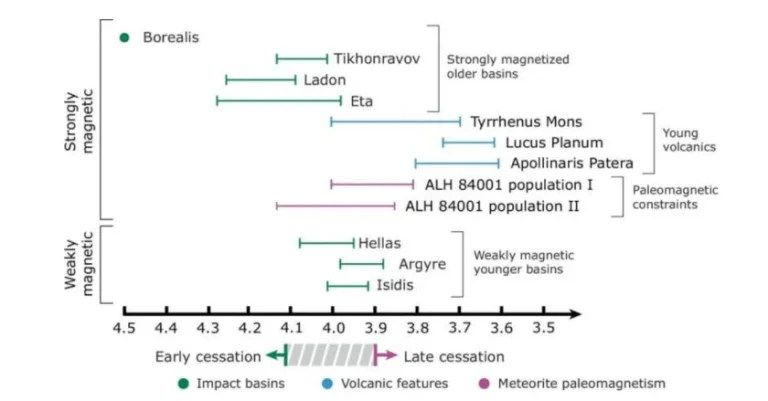
  • Mars’ magnetic history examined in new study

    New research published in Nature Communications suggests that Mars’ magnetic field, which may have helped retain the planet’s atmosphere and surface water, existed until approximately 3.9 billion years ago—lasting longer than prior estimates of 4.1 billion years. The updated timeline offers a clearer picture of Mars’ early environment, potentially shedding light on its habitability.