• Ancient asteroid impact shifted Ganymede’s axis by 7 degrees, changing its geological history

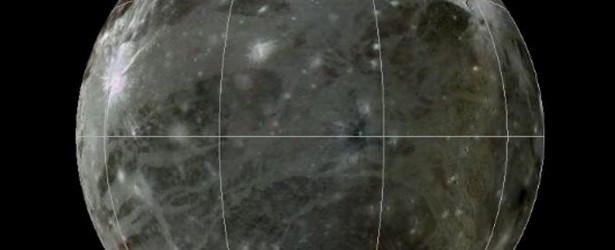
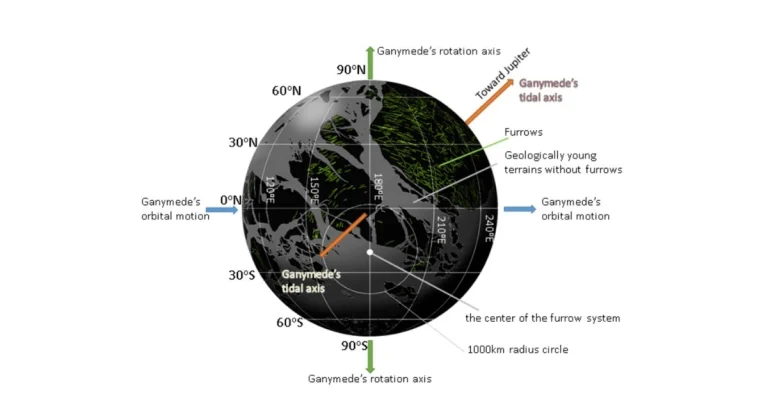
    A massive asteroid struck Ganymede, Jupiter’s and the Solar System’s largest moon, roughly 4 billion years ago, producing a significant shift in its rotational axis. This event, which formed the conspicuous Valhalla Basin, was so powerful that it shifted Ganymede’s axis about 7 degrees, changing the moon’s geological history.

  • Aurorae discovered on all four major moons of Jupiter

    A team of astronomers using the W. M. Keck Observatory in Hawaii has discovered that aurorae at visible lengths appear on all four of Jupiter’s major moons, namely Io, Europa, Ganymede, and Callisto. The discovery was made using the High-Resolution Echelle Spectrometer (HIRES) at the Keck Observatory, as well as other high-resolution spectrographs at the Large Binocular Telescope and Apache Point Observatory.

  • First close-up images of Ganymede in more than 20 years

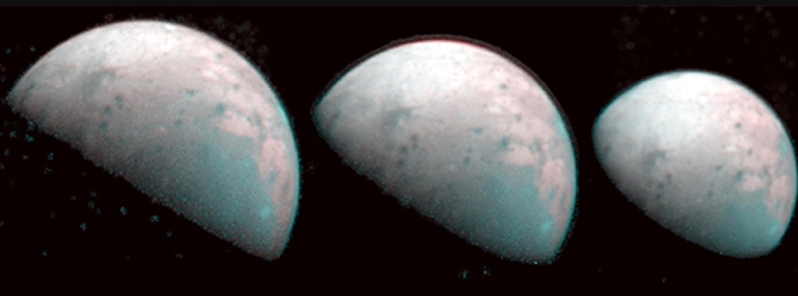
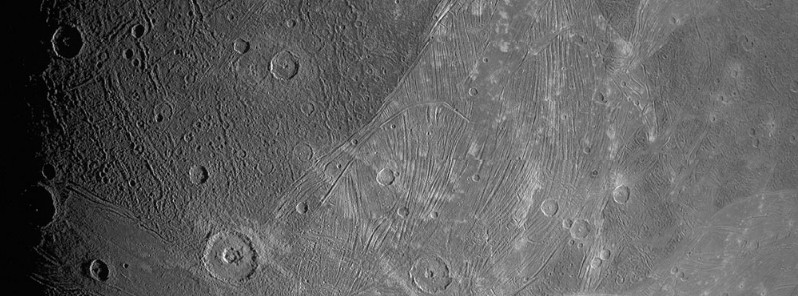
    The first two images from Juno spacecraft's June 7, 2021, flyby of Jupiter’s giant moon Ganymede have been received on Earth. This was the closest any spacecraft has come to this moon in a generation. The photos – one from the Jupiter orbiter’s…

  • Large underground ocean on Ganymede, Jupiter’s largest moon

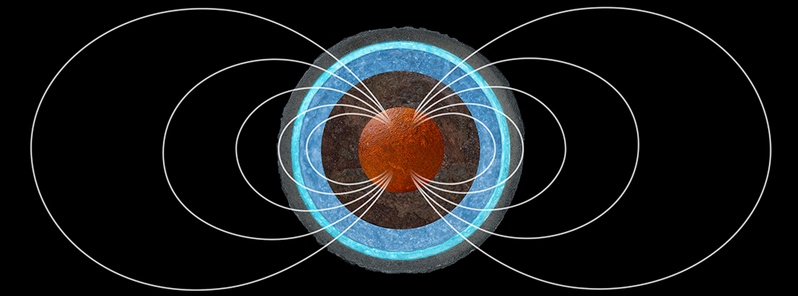
    Hubble Space Telescope has the best evidence yet for an underground saltwater ocean on Ganymede, Jupiter’s largest moon. The subterranean ocean is thought to have more water than all the water on Earth's surface. Identifying liquid water is crucial in the

  • Ganymede may harbor ice and oceans stacked up in several layers

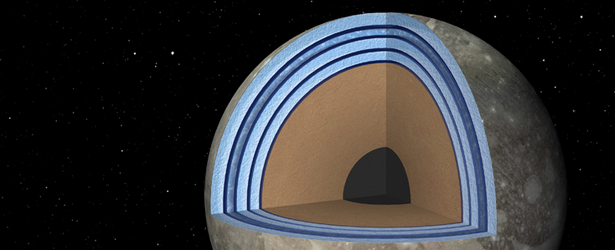
    The largest moon in our solar system, a companion to Jupiter named Ganymede, might have ice and oceans stacked up in several layers like a club sandwich, according to new study led by JPL's Steve Vance that models the moon's makeup.Previously, the moon

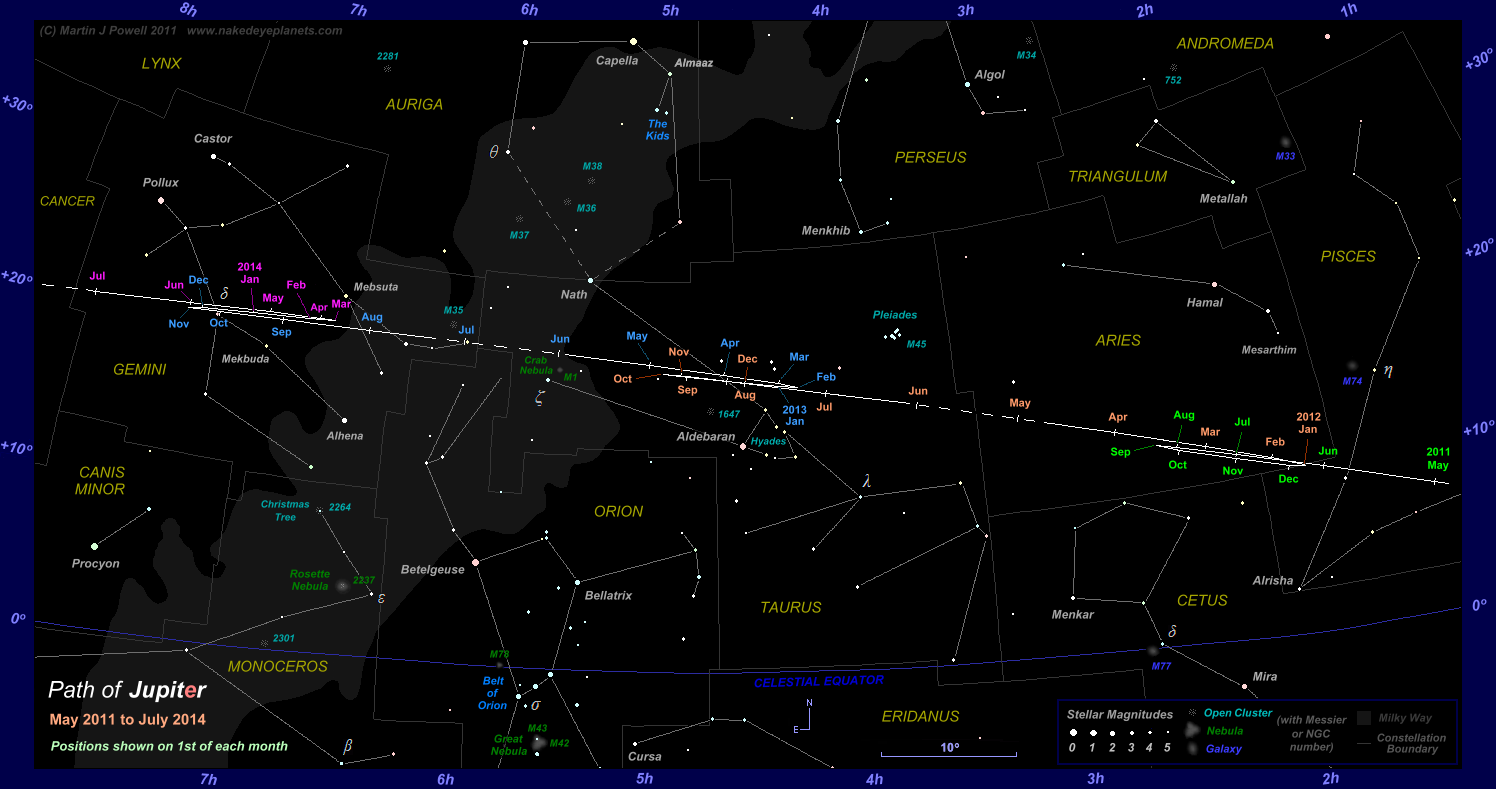
  • Jupiter at opposition to the Sun

    Jupiter will take center stage in the sky this month as it nears opposition to the sun. At opposition, expected on Oct. 29, Jupiter shines opposite the sun in our sky.  Jupiter will rise in the eastern sky at sunset, stay out all night long and set in the west at