• Ancient African bedrock reveals how Earth became a violent, life-bearing planet

    Ancient rocks exposed in southern Africa show that Earth already had oceans, intense volcanism, strong earthquakes, and microbial life more than 3.2 billion years ago. Preserved in the Makhonjwa Mountains of South Africa and Eswatini, these formations provide one of the clearest geological records of early Earth surface conditions.

  • After five years of monitoring, scientists map Popocatépetl’s interior in 3D

    Before dawn, while most of central Mexico sleeps, a small group of scientists climbs the dark slopes of Popocatépetl, one of the country’s most active volcanoes. Their goal is to recover seismic instruments that, after five years of continuous monitoring, have allowed researchers to construct the first complete three-dimensional image of the volcano’s interior. The model reveals multiple zones where magma accumulates beneath the crater, extending to depths of about 18 km (11 miles), and offers new insight into how Popocatépetl functions and how its eruptions may develop.

  • Scientists identify rare jet-forced wind pattern behind 2025 Los Angeles urban firestorm

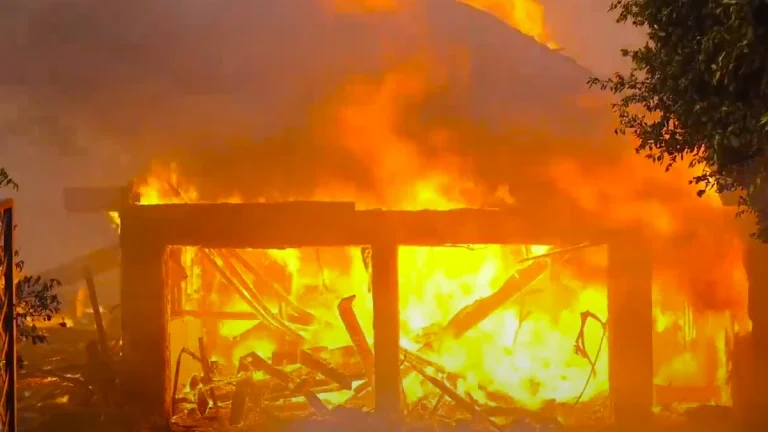
    When powerful northerly winds swept through Los Angeles on January 7, 2025, they unleashed one of the most destructive urban firestorms in U.S. history. A new study attributes those winds to a rare “jet-forced Santa Ana” pattern — a collision of upper-level atmospheric forces that produced gusts over 35 m/s (80 mph), destroyed more than 16 000 structures, and killed 31 people. The event struck ahead of the first winter rain, after months of near-record dryness that left vegetation tinder-dry.

  • Temperature inversions in volcanic valleys and the risks they create

    Strong nighttime cooling in volcanic valleys produces deep temperature inversions that suppress mixing and allow gases and ash to accumulate in low-lying areas. The timing of morning breakup governs when pollutants disperse, making these atmospheric structures a critical factor in assessing overnight hazards and morning exposure windows.

  • Global assessment documents unprecedented atmospheric impacts of the 2022 Hunga Tonga–Hunga Haʻapai eruption

    An international scientific assessment published on December 18, 2025, concludes that the January 15, 2022, eruption of the Hunga Tonga–Hunga Haʻapai volcano caused the most severe stratospheric disruption ever observed in the satellite era, increasing global stratospheric water vapor by about 10%.