
El Niño heat could cause 451 000 additional deaths worldwide by February 2027 as Pacific temperatures reach record levels
A new Climate Impact Lab assessment estimates that heat associated with El Niño could contribute to 451 000 additional deaths worldwide from June 2026 through February 2027, including 239 000 ± 11 000 during September 2026–February 2027. The September 23 report comes as NOAA measurements show central Pacific sea-surface temperatures reaching levels last seen during the 2015–16 El Niño, while multiple media reports indicate a new daily temperature-anomaly record.
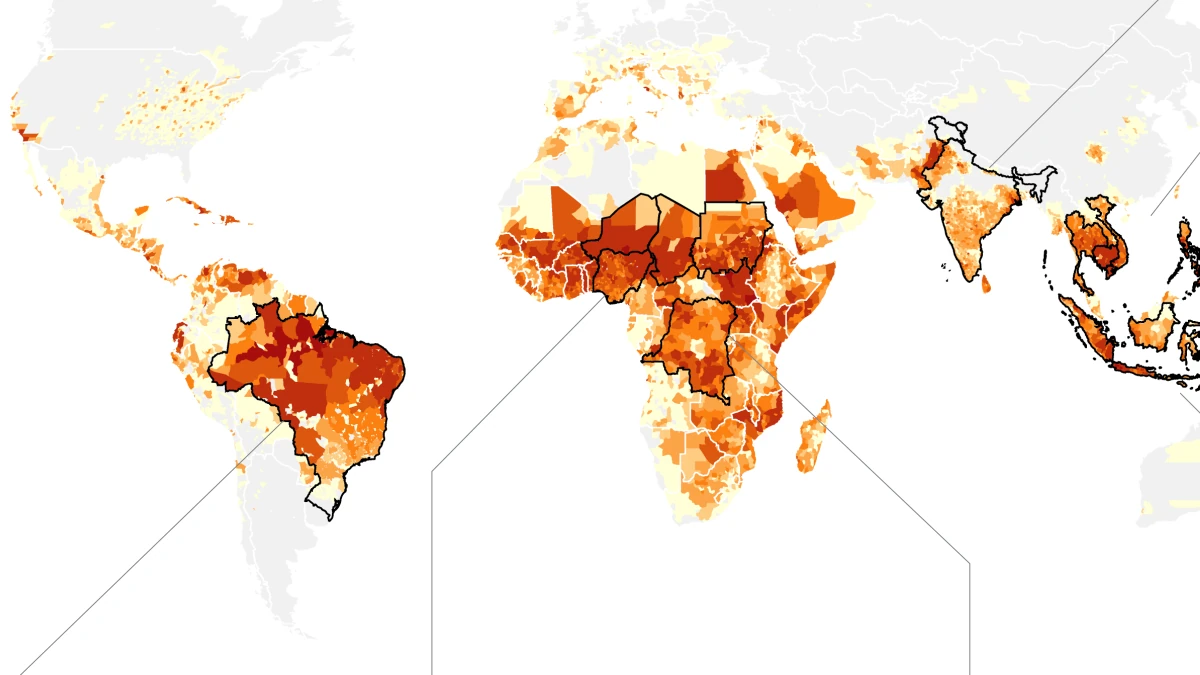
Map showing additional heat-related deaths forecast between September 2026–February 2027 vs 1996-2025. Credit: Climate Impact Lab
Heat during the strengthening El Niño could contribute to an estimated 451 000 additional deaths worldwide between June 2026 and February 2027, according to a Climate Impact Lab assessment released on September 23, 2026. The total includes 239 000 projected deaths during September 2026–February 2027.
The estimates compare mortality with the corresponding months of an average year using a 1996–2025 baseline. The June–August component represents modeled mortality for months preceding the report’s release, rather than a verified count of deaths.
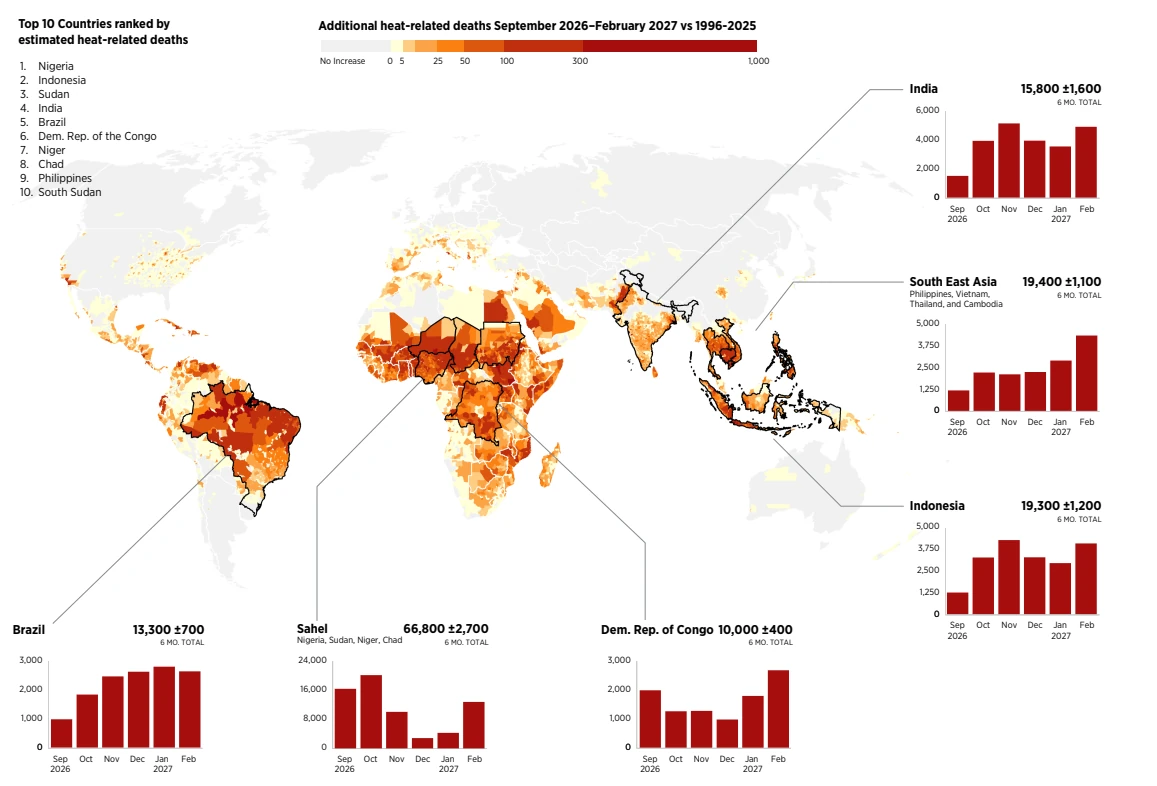
For September–February, the report gives an estimate of 239 000 ± 11 000 additional deaths, equivalent to 228 000–250 000 under its stated uncertainty calculation. It defines the range as the mean plus or minus 1.96 standard errors.
The analysis estimates excess mortality during the event against that historical baseline. It does not isolate the effect of El Niño from every other contributor to the anomalous heat.
The brief estimates 66 800 additional heat-related deaths across the Sahel countries it identifies as most affected during September 2026–February 2027. That total includes 31 400 in Nigeria.
The same six-month projections include 19 300 additional deaths in Indonesia and 19 400 across the Philippines, Vietnam, Thailand and Cambodia combined. Estimates for India and Brazil are 15 800 and 13 300, respectively.
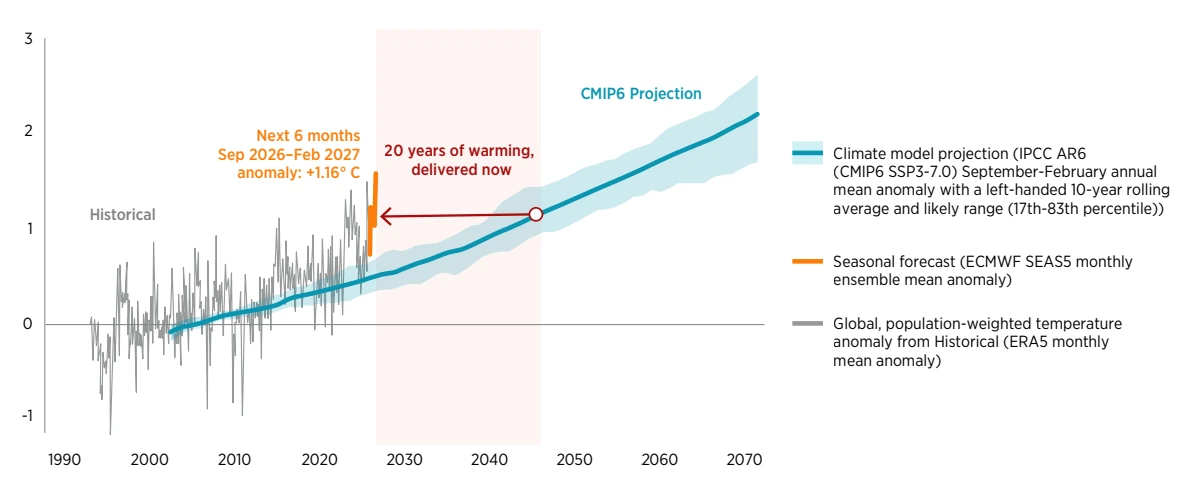
The assessment comes as the US National Oceanic and Atmospheric Administration’s (NOAA) Climate Prediction Center recorded a Niño-3.4 sea-surface temperature of 29.6°C (85.3°F) for the week centered on September 16. The anomaly was +3.0°C (+5.4°F), up from +2.9°C (+5.2°F) a week earlier and matching the value listed for November 18, 2015, at the dataset’s reported precision.
The Washington Post reported a daily Niño-3.4 anomaly of +3.05°C (+5.49°F) on September 19, setting a new daily record in its analysis of NOAA’s Optimum Interpolation Sea Surface Temperature dataset.
NOAA assesses seasonal El Niño strength using the Relative Oceanic Niño Index (RONI), which averages relative sea-surface temperature anomalies over three months and adjusts for conditions across the tropical oceans. A record in the daily Niño-3.4 anomaly does not establish a record under that index.
NOAA’s September 10 ENSO Diagnostic Discussion maintained an El Niño Advisory and reported a greater than 90% chance of a very strong event during Northern Hemisphere autumn and winter 2026–27.
For October–December, NOAA forecast a 75% chance that the three-month RONI would reach at least +2.5°C (+4.5°F). The agency said an event meeting that threshold would exceed previous events in its record dating to 1950.
The assessment was prepared by Michael Greenstone, Tamma Carleton, Genevieve Maricle and Emily Grover-Kopec of the Climate Impact Lab. It applies statistical relationships between temperature and mortality across 24 378 geographical regions to forecasts from the European Centre for Medium-Range Weather Forecasts’ SEAS5 system.
The model accounts for differences in local climate, vulnerability and adaptive capacity. Its uncertainty calculation incorporates the temperature–mortality relationships and the 51-member seasonal forecast ensemble, while the researchers say full methodological details will appear in a forthcoming peer-reviewed journal article.
The Climate Impact Lab expects elevated heat-related mortality to continue beyond February 2027, including into the following Northern Hemisphere summer, and plans to update its projections. Actual outcomes will depend on temperature conditions and vulnerability to heat.
The researchers identify heat warnings, outreach to vulnerable people, cooling centers, access to water, worker protections, and increased health-system capacity as measures that can reduce heat-related mortality.
References:
1 451 000 at Risk Where Action Can Save Lives During the Super El Niño – Climate Impact Lab – September 22, 2026
2 More than 451,000 Heat Deaths Projected from Super El Niño – Climate Impact Lab – September 23, 2026.
3 The ongoing El Niño has officially reached record levels – Washington Post – September 21, 2026
4 Weekly sea-surface temperature and anomaly data for Niño regions – NOAA/CPC – Acessed on September 23, 2026

Rishav Kothari is Editor-in-Chief of The Watchers, where he runs the newsroom and covers earthquakes, volcanoes, severe weather and space weather.

Commenting rules and guidelines
We value the thoughts and opinions of our readers and welcome healthy discussions on our website. In order to maintain a respectful and positive community, we ask that all commenters follow these rules.