
Lava fountains reached 1,900 feet (580 m) at Kīlauea Iki in 1959, the highest ever recorded at Kīlauea, as USGS forecasts episode 57 fountaining at Halemaʻumaʻu for November 22-26.
The U.S. Geological Survey’s Hawaiian Volcano Observatory (HVO) is forecasting another episode of lava fountaining at Kīlauea during November 22–26 after summit inflation stalled late on November 20. The forecast comes against Kīlauea’s historical benchmark at Kīlauea Iki, where episode 15 of the 1959 eruption produced an approximately 580 m (1 900 feet) lava fountain, the highest ever recorded at Kīlauea.
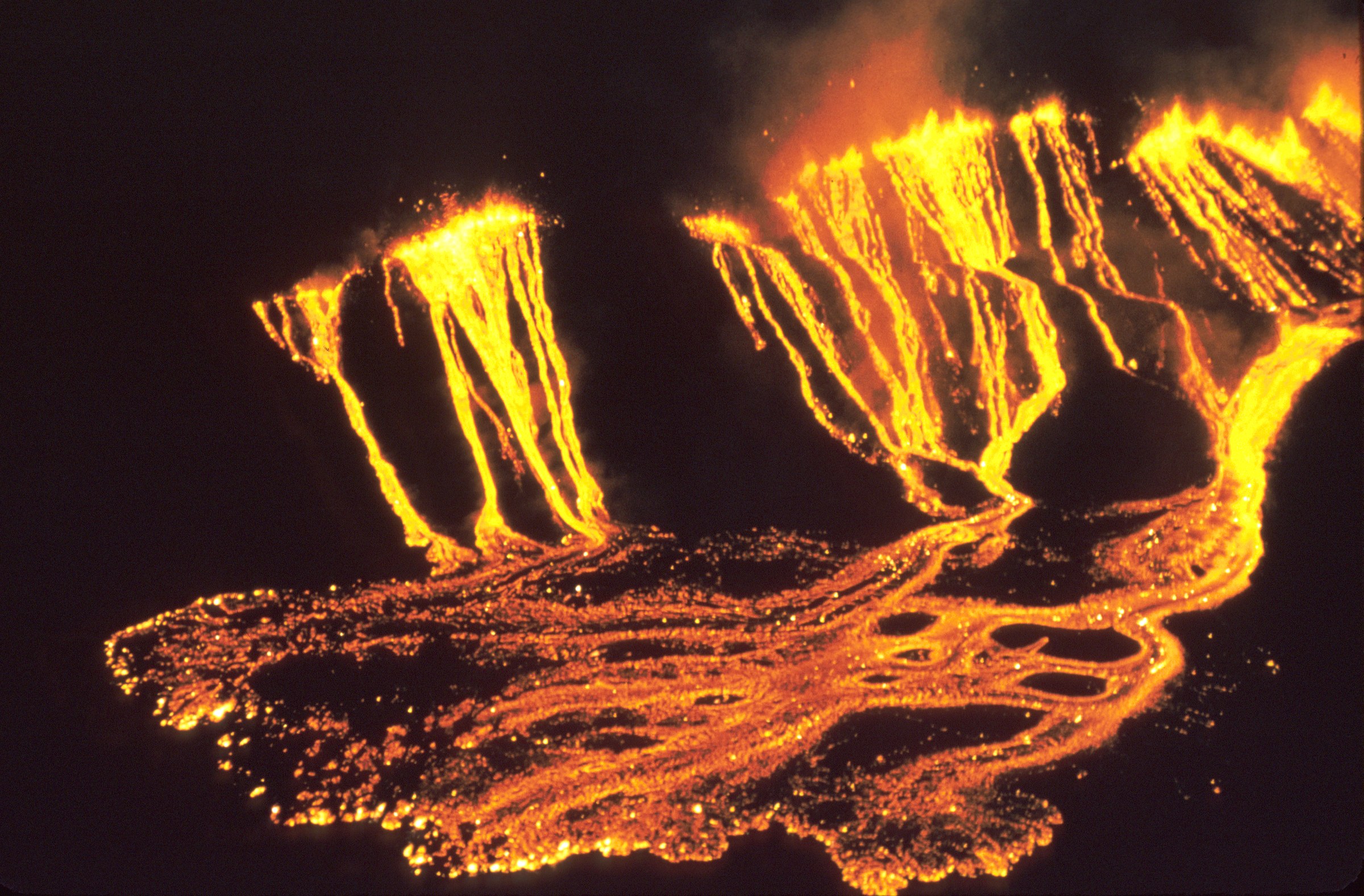
1959 eruption of Kilauea Volcano. Credit: Hawaii Volcano Observatory, USGS (public domain), via Wikimedia Commons.
HVO said in its daily update issued at 18:48 UTC (08:48 HST) on November 21 that the Halemaʻumaʻu eruption remained paused following episode 56 on November 5. Kīlauea was at Volcano Alert Level ADVISORY and Aviation Color Code YELLOW.
Summit tilt changed from slow inflation to flat to slightly deflationary at about 23:30 HST on November 20. HVO said another fountaining episode remained likely and moved the episode 57 forecast window to November 22–26.
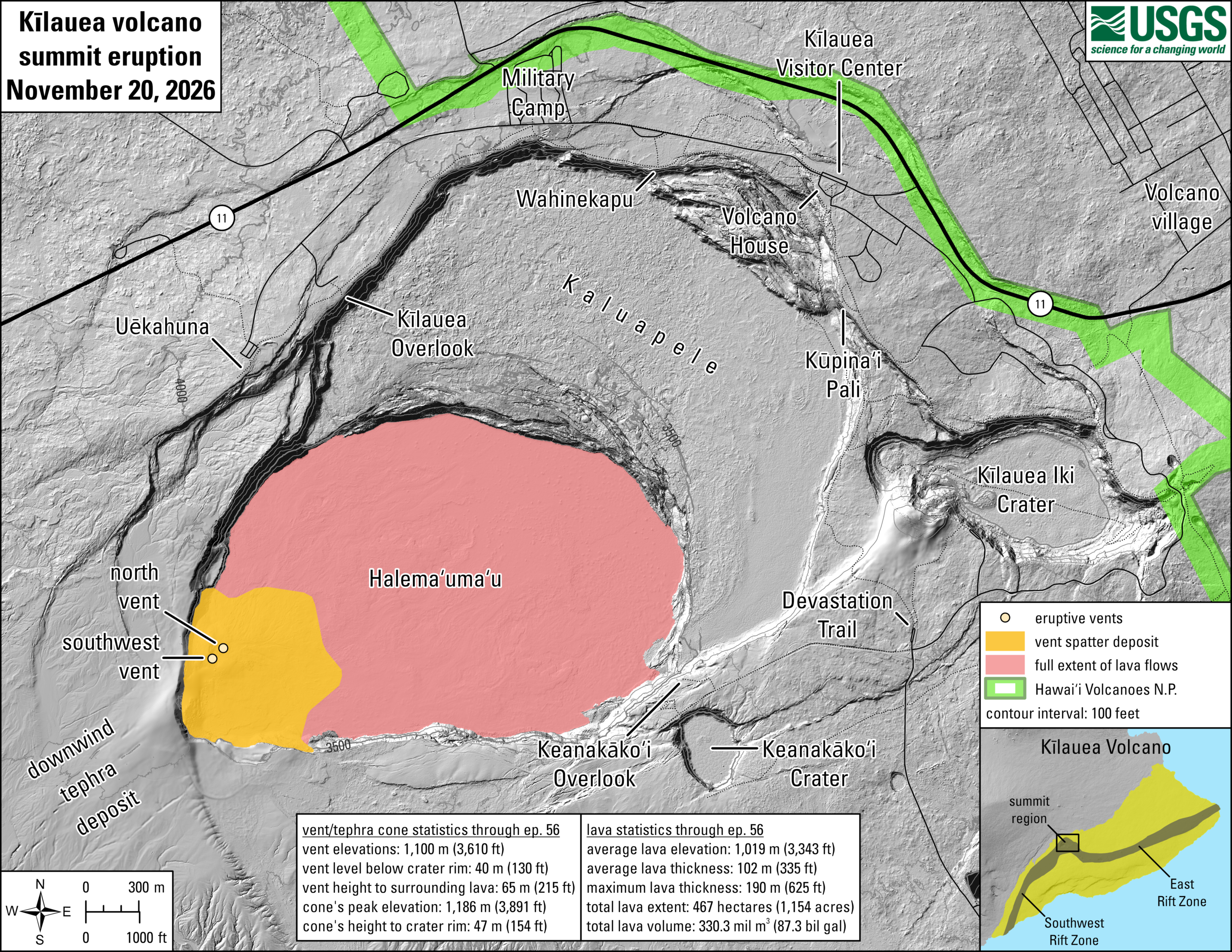
HVO said changes in summit deformation can continue to move the forecast window. If inflation remains stalled or resumes slowly, episode 57 is most likely to begin during the latter part of the window. If the inflation rate increases, the episode could begin earlier.
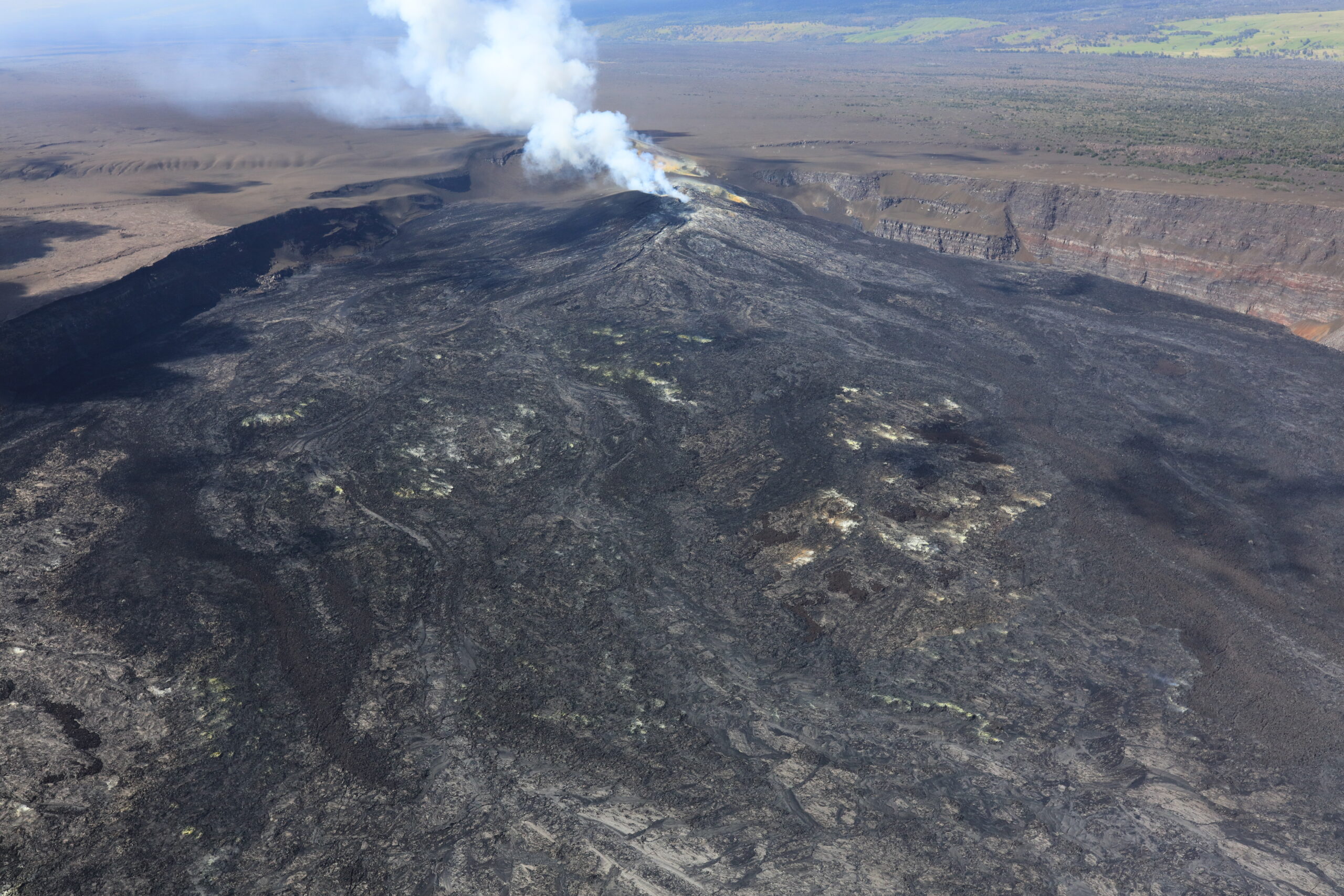
Summit webcams recorded strong to moderate glow from both the north and southwest vents overnight before the November 21 update. HVO reported nearly continuous flames and minor spattering from both vents on its V1cam livestream.
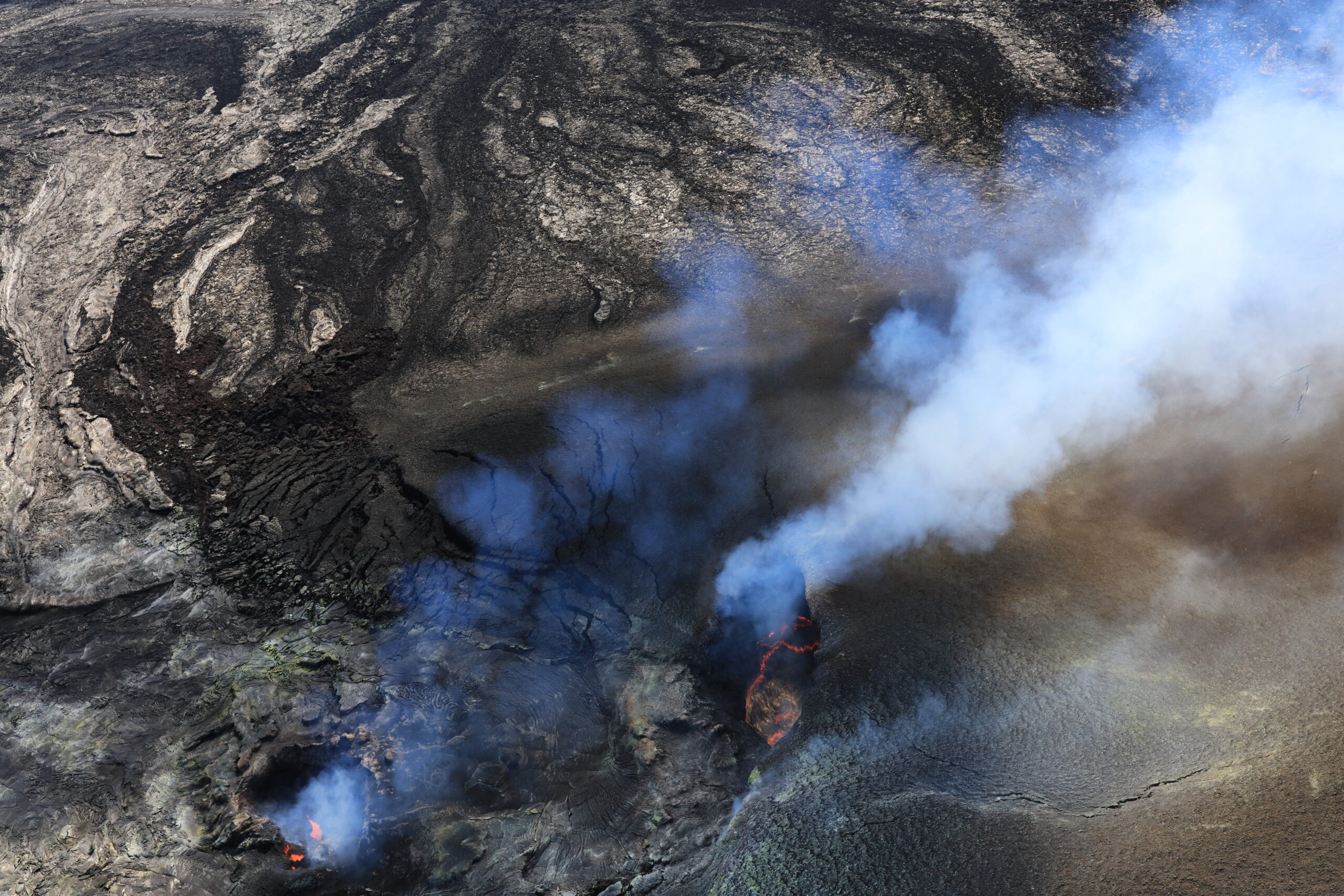
The southwest vent contained a roiling lava lake during the November 18 overflight. At the north vent, HVO observed several hornito-like features that had been producing flames and occasional spatter, with incandescent lava visible deeper in the narrowing conduit.
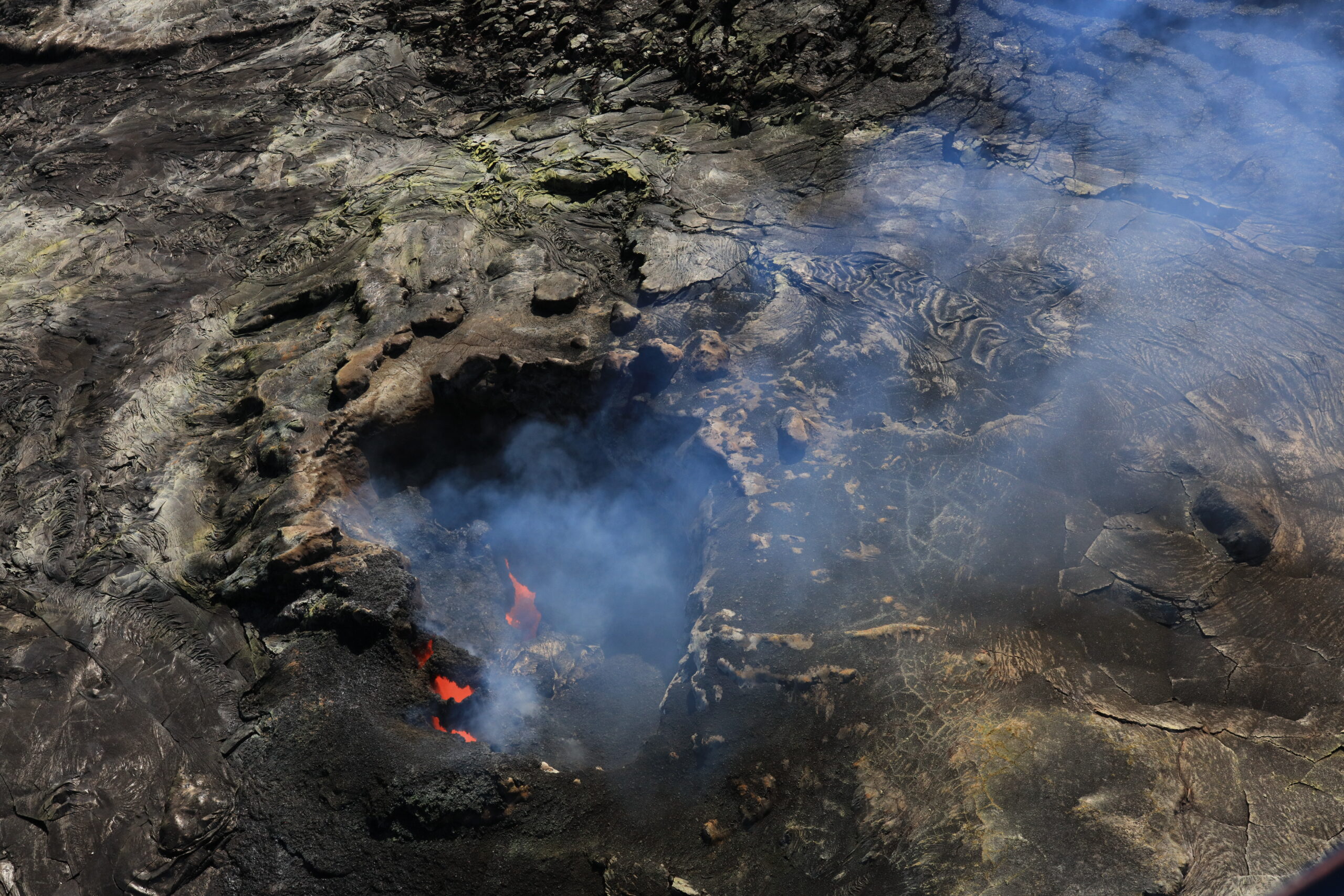

Episode 56 began at 12:10 HST and ended at 18:01 HST on November 5 after almost six hours of lava fountaining. Only the north vent produced sustained fountains, which reached a maximum height of about 200 m (660 feet).
The eruptive plume rose to about 5 500 m (18 000 feet) above sea level. Tephra fell mainly southwest of the vents in closed areas of Hawaiʻi Volcanoes National Park, with trace amounts reported on Highway 11.
Tiltmeter data indicate that approximately 6 million m3 (8 million yd3) of lava erupted during episode 56, at an average eruption rate of about 200 m3/s (260 yd3/s). The Uēkahuna tiltmeter recorded 17 microradians of deflationary tilt during the episode.
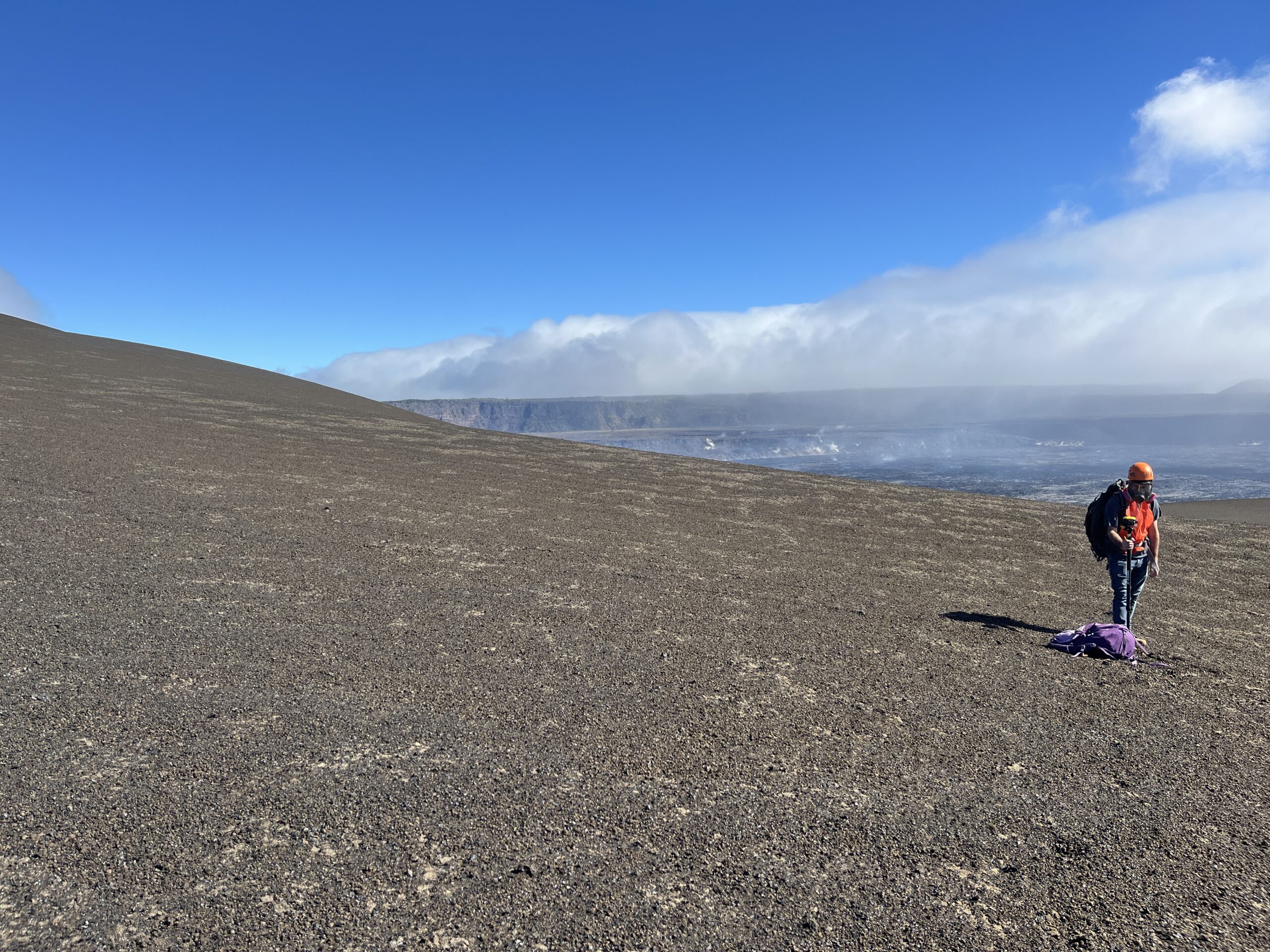
The ongoing summit eruption began on December 23, 2024, and has developed into a sequence of discrete lava-fountaining episodes separated by pauses. HVO reports that individual episodes generally last less than 12 hours and are separated by pauses of two or more weeks.
The November 20 reference map places the scale of the current sequence at about 467 ha (1 154 acres) of lava through episode 56. HVO estimates that about 330.3 million m3 (87.3 billion gallons) of lava had accumulated, with a maximum thickness of about 190 m (625 feet).
The episodic behavior has a well-documented historical precedent at Kīlauea Iki, immediately east of Kaluapele, Kīlauea’s summit caldera. The 1959 eruption began at 20:08 HST on November 14 after the summit region had shaken for about five hours as magma moved toward the surface.
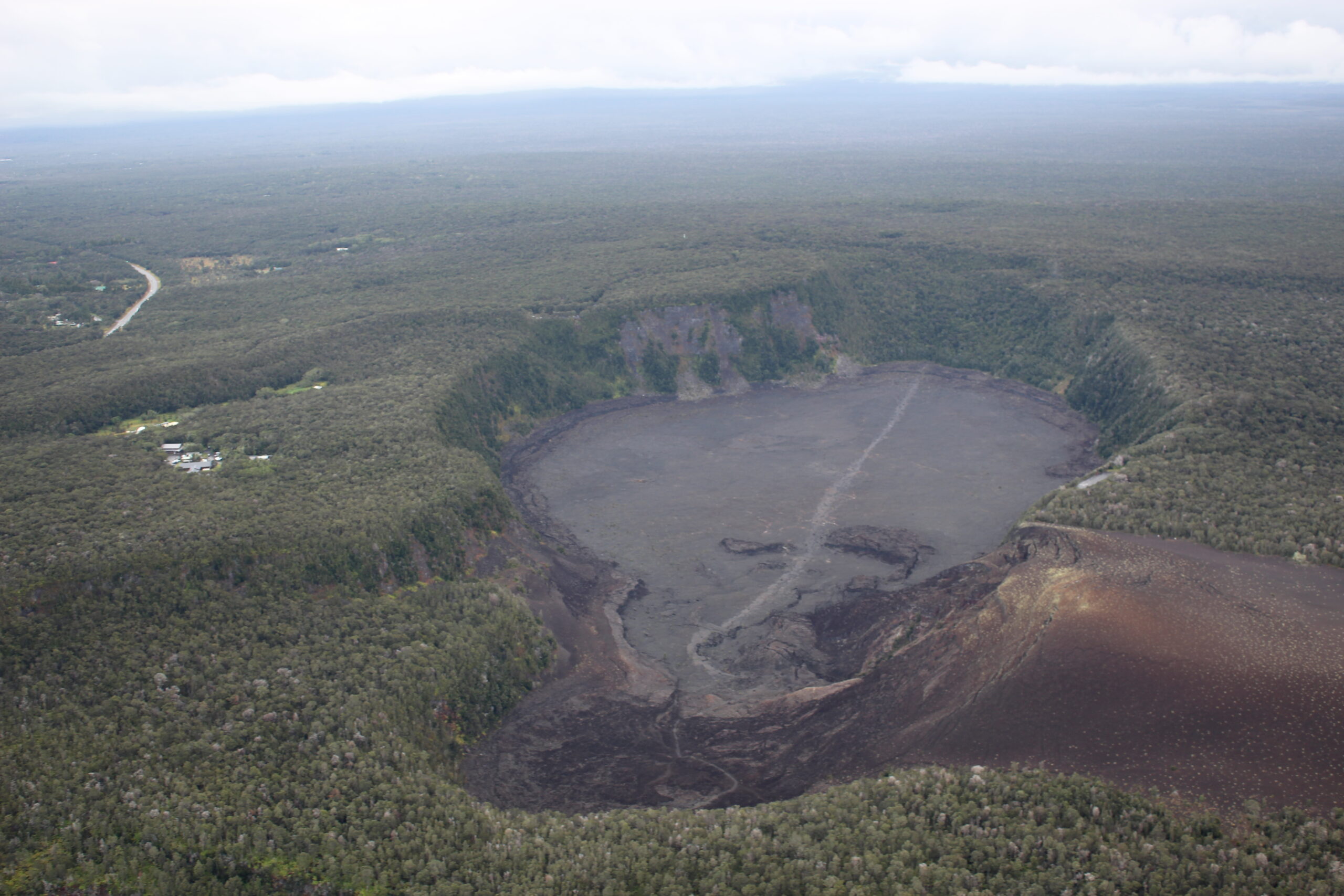
Small fountains initially broke through the south wall of Kīlauea Iki Crater before activity became concentrated at a single vent. During the first week, fountains reached as high as about 380 m (1 200 feet), while tephra accumulated southwest of the vent and lava formed a deepening lake on the crater floor.
The first episode ended on November 21 when the lava lake rose above the level of the vent. Fountaining resumed just after midnight on November 26, beginning a sequence of shorter episodes as lava repeatedly accumulated in the lake and later drained back through the vent.
Seventeen fountaining episodes occurred during the approximately month-long Kīlauea Iki eruption. Episode 15 produced fountains approximately 580 m (1 900 feet) high, which HVO identifies as the highest lava fountains ever recorded at Kīlauea.
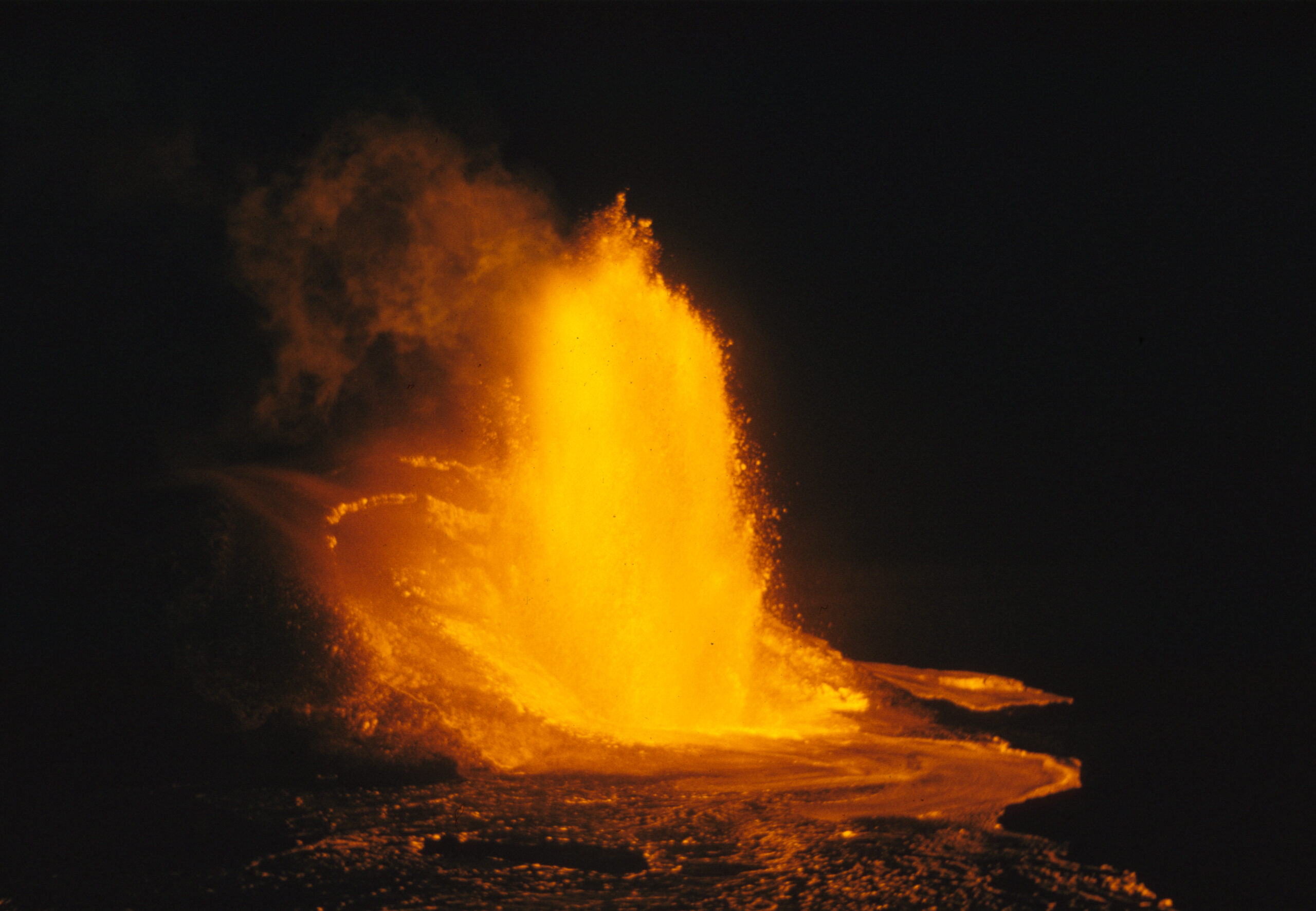
The 1959 eruption produced about 50 million m3 (13.2 billion gallons) of lava over 17 episodes. Lava accumulated to a maximum depth of 126 m (413 feet) in Kīlauea Iki Crater, while approximately 70 m (230 feet) of tephra accumulated on the crater rim at Puʻupuaʻi.
Tephra fragments were carried as far as 16 km (10 miles) downwind. Repeated filling and draining of the lava lake left a cooled ledge around its margin, while sections of the steep Puʻupuaʻi cone occasionally collapsed and were rafted across the lake surface during later episodes.
The 1959 measurements provide a historical scale for episodic lava fountaining at Kīlauea, not a forecast for episode 57. HVO has forecast when another episode is most likely to occur but has not issued a forecast for how high its lava fountains will reach.
HVO reported low rates of seismicity and ground deformation in Kīlauea’s East Rift Zone and Southwest Rift Zone on November 21, with sulfur dioxide emissions from the East Rift Zone below the detection limit. The observatory continues to monitor Kīlauea and remains in contact with Hawaiʻi Volcanoes National Park and the Hawaiʻi County Civil Defense Agency regarding eruptive hazards.
References:
1 Hawaiian Volcano Observatory Daily Update – U.S. Geological Survey – November 21, 2026, 18:48 UTC
2 November 20, 2026—Kīlauea summit eruption reference map – U.S. Geological Survey Hawaiian Volcano Observatory – November 20, 2026
3 Volcano Watch — A look back on the episodic Kīlauea Iki eruption in 1959 – U.S. Geological Survey Hawaiian Volcano Observatory – January 8, 2026

I’m a science journalist and researcher at The Watchers, contributing to the Epicenter edition, where I cover peer-reviewed scientific research and emerging discoveries across Earth and space sciences. With a background in astronomy and a passion for environmental science, I’ve worked in shark and coral conservation in Fiji, conducting reef and shark-behavior research, contributing to mangrove restoration, and earning PADI Open Water and Coral Reef Certifications. I bring a blend of scientific rigor and storytelling to illuminate the discoveries shaping our planet and beyond.
Published in the last 24 hours
- Odisha evacuated 983,642 people before Phailin crossed near Gopalpur on 12 October 2013 with winds of 200-210 km/h gusting to 220, and 44 died, against 9,885 in the 1999 super cyclone. Cyclone Akvan crossed the same coast on 20 November 2026. Epicenter
- Novarupta in Alaska erupted about 3 cubic miles of magma in roughly 60 hours from 6 June 1912, 30 times Mount St. Helens in 1980, and strong northwesterly winds lifted that same loose ash on 16 November 2026, prompting an NWS SIGMET. Epicenter
- A fog linked to about 12 000 excess deaths in London in 1952 puzzled scientists for decades, until researchers reconstructed how coal smoke formed acidic haze Epicenter
- In 2012, cameras filming a thunderstorm in western China caught ball lightning by accident, and its 1.64-second glow carried iron, silicon, and calcium from the soil it rose out of Epicenter
