
Six rescued, nine missing as avalanche hits ski group near Lake Tahoe, California
Six skiers were rescued, and nine are still missing after an avalanche struck a guided expedition near Castle Peak in California’s Sierra Nevada on February 17, 2026. Search and rescue crews continue working through deep snow and strong winds under a high avalanche danger warning.
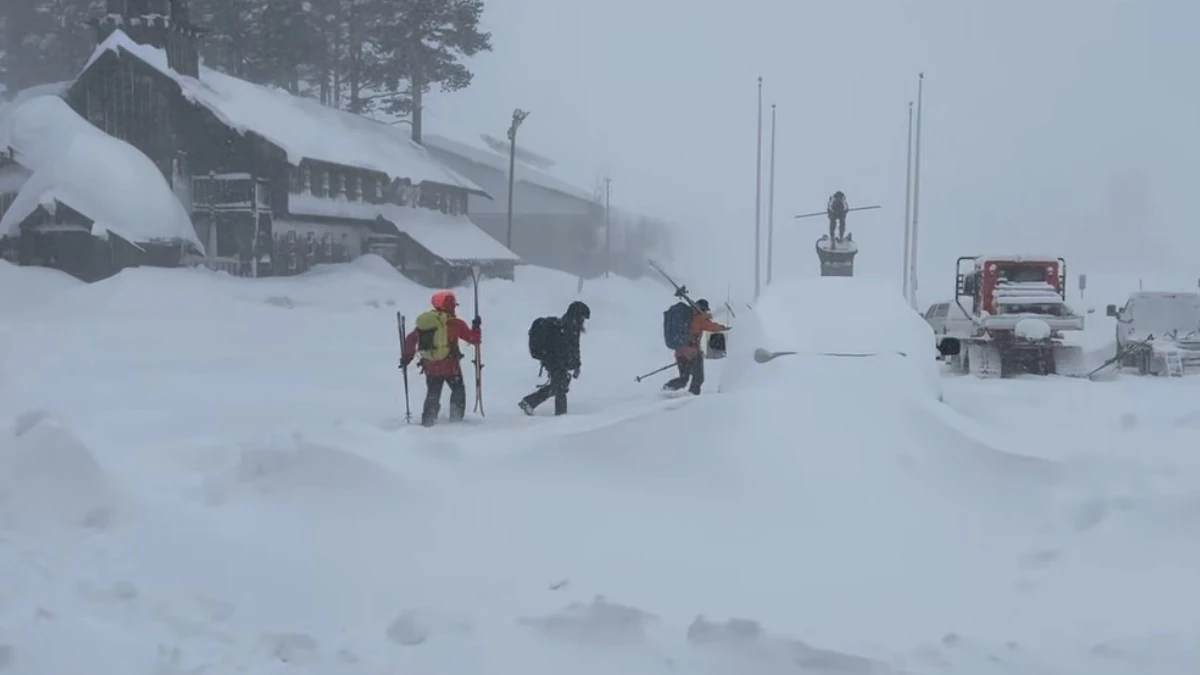
Image credit: Nevada County Sheriff's Office
An avalanche struck a group of 15 backcountry skiers on slopes near Castle Peak, north of Lake Tahoe, at about 11:30 LT (19:30 UTC) on February 17. The incident occurred during a powerful winter storm depositing more than 75 cm (30 inches) of new snow across the Sierra Nevada.
Rescue teams from the Nevada County Sheriff’s Office and Placer County Sheriff’s Office, supported by Tahoe Nordic SAR and Truckee Fire, located six survivors after hours of digging through unstable snow. Two rescued skiers were transported to hospital with moderate injuries, while nine remain missing. Officials reported a total of 46 first responders engaged in the operation.
According to the Sierra Avalanche Center, the region was under a high avalanche danger level on the morning of February 17 due to rapid snow accumulation, strong winds, and an unstable snowpack from successive storms. The center’s morning bulletin warned that natural and human-triggered avalanches were likely on steep, wind-loaded slopes at all elevations.
The affected group included guides and clients participating in a three-day backcountry skiing trek departing from Frog Lake Huts near Donner Summit. The avalanche reportedly released on a north-facing slope above 2 440 m (8 000 feet), sweeping several members downslope and burying them under meters of compacted snow.
Rescue teams reached the site after several hours of travel on skis and snowmobiles through severe conditions, including high winds and low visibility. Operations were further slowed by continuing snowfall and the threat of secondary avalanches.
The National Weather Service reported gusts exceeding 95 km/h (60 mph) and temperatures near −8°C (18°F) through the night, limiting helicopter access.
The Sierra Avalanche Center stated that the storm had added heavy, cohesive snow atop a weak faceted layer, producing widespread instability. Meteorologists from NWS Reno linked the event to a late-season atmospheric-river pulse, typical for February in the region. Avalanche-control operations at several nearby resorts were temporarily suspended during the storm because of visibility and wind constraints.
Placer County officials said search efforts would continue as weather allows, using probe lines, avalanche dogs, and RECCO detectors. The California Office of Emergency Services and California Highway Patrol are assisting with logistics and communication.
Interstate 80, the main trans-Sierra route, was intermittently closed near Donner Summit because of heavy snow accumulation and avalanche risk. Forecasters expect storm conditions to persist through February 19, with total snowfall above 1.2 m (4 feet) in upper Sierra elevations.
Avalanches are a recurrent winter hazard in the Sierra Nevada. February is typically part of the Northern Hemisphere’s peak avalanche season, when rapid snow loading and alternating melt-freeze cycles destabilize the mountain snowpack .
Officials urge backcountry travelers to consult avalanche forecasts and carry transceivers, probes, and shovels whenever entering unmanaged terrain.

I'm a dedicated researcher, journalist, and editor at The Watchers. With over 20 years of experience in the media industry, I specialize in hard science news, focusing on extreme weather, seismic and volcanic activity, space weather, and astronomy, including near-Earth objects and planetary defense strategies. You can reach me at teo /at/ watchers.news.

Commenting rules and guidelines
We value the thoughts and opinions of our readers and welcome healthy discussions on our website. In order to maintain a respectful and positive community, we ask that all commenters follow these rules.