
Lewotobi volcano eruption sends ash cloud to 9.8 km (32 000 feet), Indonesia
Lewotobi Laki-laki volcano in Indonesia erupted on August 17, 2025, ejecting volcanic ash up to 9.8 km (32 000 feet) above sea level, according to the Darwin Volcanic Ash Advisory Center (VAAC).
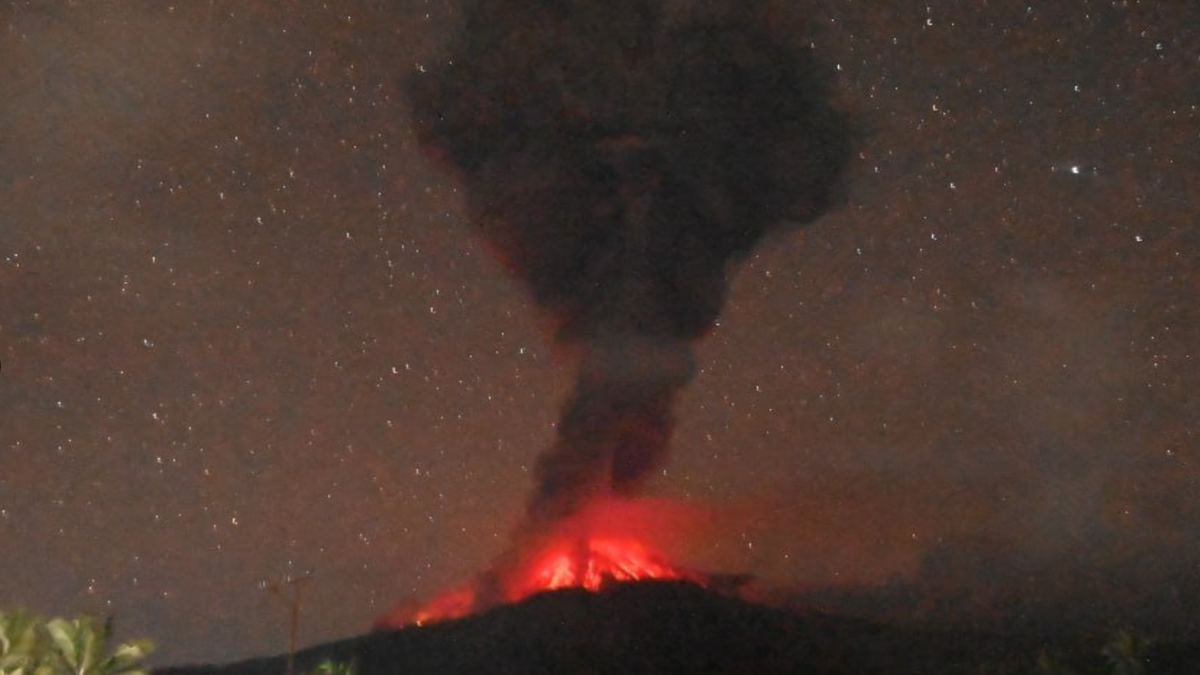
Mount Lewotobi Laki-laki on August 17, 2025. Credit: PVMBG
The eruption began at 23:55 local time (LT) on August 17, with the Darwin VAAC issuing an advisory reporting ash reaching 9.8 km (32 000 feet) above sea level and drifting west at approximately 37 km/h (23 mph). The current Aviation Color Code is Red.
The eruption continued into August 18, with multiple moderate to strong eruptions.
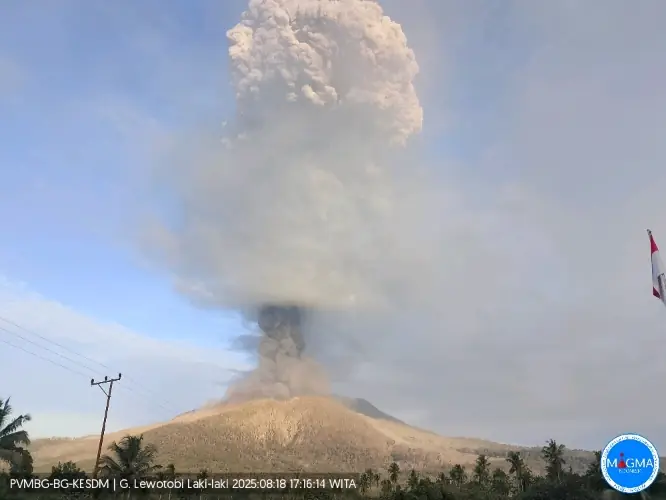
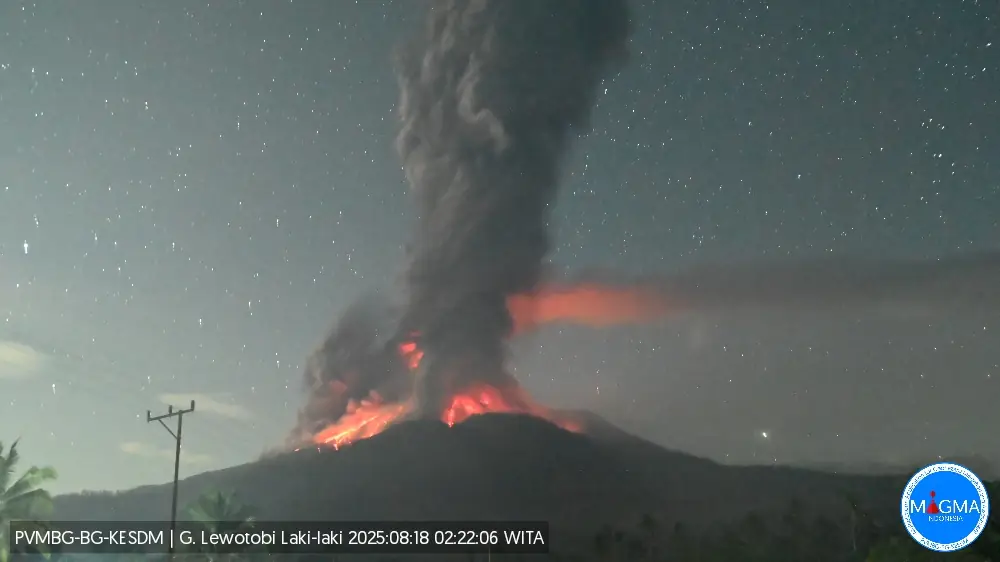
Lewotobi Laki-Laki in Indonesia has erupted again
— Volcaholic (@volcaholic1) August 17, 2025
In the video you can hear it and see volcanic lightning.
An eruption occurred at Mount Lewotobi Laki-laki, East Nusa Tenggara, on August 18, 2025, at 00:38 WITA, with an ash column observed reaching approximately 8,000 m… pic.twitter.com/GZAHUsTeJg
The Smithsonian Institution’s Global Volcanism Program, citing the US Geological Survey (USGS), noted that activity at Lewotobi Laki-laki had decreased following the intense August 1–2 eruption.
Between August 8–11, dense gray ash plumes rose 600–1 200 m (2 000–3 900 feet) above the summit, with seismic activity trending downward. The Alert Level was lowered to 3 on August 10, and residents were advised to remain at least 6 km (3.7 miles) from the summit.
Lewotobi consists of two stratovolcanoes, Lewotobi Laki-laki and Lewotobi Perempuan, located on the eastern part of Flores Island. The main hazards associated with this volcanic complex include ashfall, pyroclastic flows, and lahars. Villages in the surrounding area, such as Konga, Boru, and Nobo, remain at risk during periods of elevated activity.
I’m a science journalist and researcher at The Watchers, contributing to the Epicenter edition, where I cover peer-reviewed scientific research and emerging discoveries across Earth and space sciences. With a background in astronomy and a passion for environmental science, I’ve worked in shark and coral conservation in Fiji, conducting reef and shark-behavior research, contributing to mangrove restoration, and earning PADI Open Water and Coral Reef Certifications. I bring a blend of scientific rigor and storytelling to illuminate the discoveries shaping our planet and beyond.

Commenting rules and guidelines
We value the thoughts and opinions of our readers and welcome healthy discussions on our website. In order to maintain a respectful and positive community, we ask that all commenters follow these rules.