
Deep ice quakes detected in Greenland’s largest ice stream
Previously undetected seismic activity, known as ice quakes, has been recorded deep within Greenland’s Northeast Greenland Ice Stream (NEGIS), revealing a previously unknown mechanism of ice movement.
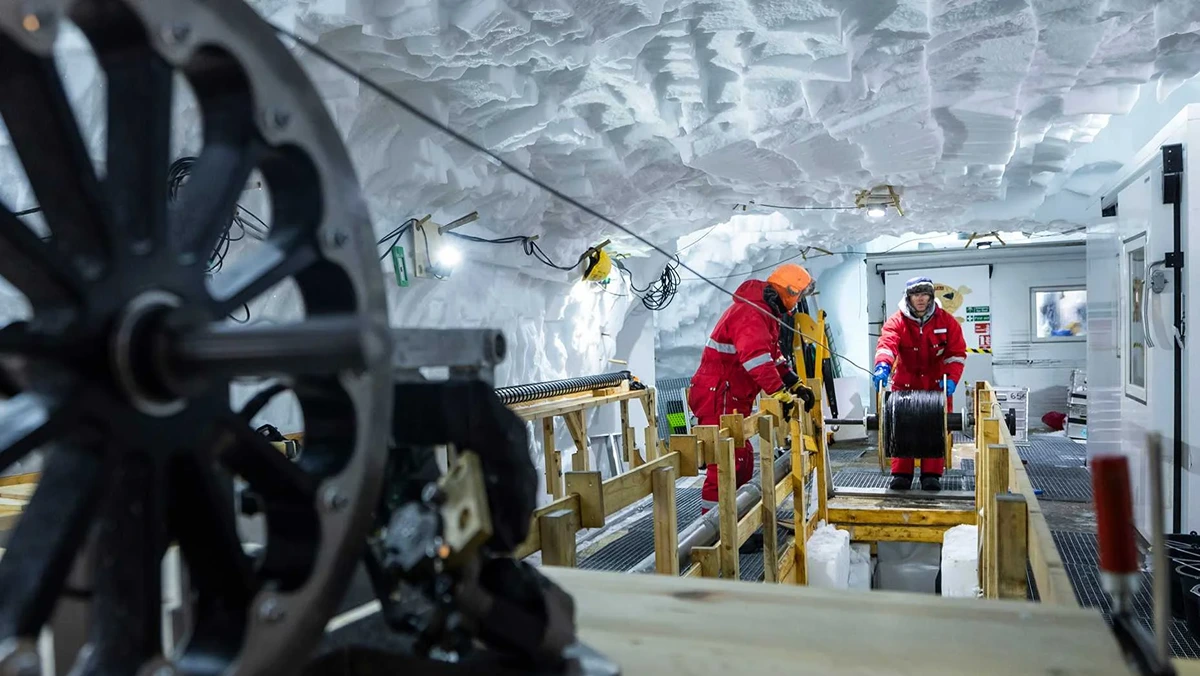
ETH professor Fichtner lowers a fibre-optic cable 1 500 m (4 921 feet) into the borehole in or-der to record signals from inside the ice stream continuously for 14 hours. Image credit: Lukasz Larsson Warzecha / LWimages, ETH zurich
- Researchers detected previously unknown deep ice quakes within Greenland’s Northeast Greenland Ice Stream (NEGIS), revealing a hidden mechanism of brittle failure within ice sheets.
- Using Distributed Acoustic Sensing (DAS), scientists recorded seismic cascades up to 1 500 m (4 921 feet) deep, challenging traditional models that assume continuous, viscous ice flow.
- Volcanic impurities embedded in the ice were found to weaken its structure, triggering localized fracturing and sudden shifts in ice movement which may impact ice sheet stability and sea level predictions.
A hidden seismic phenomenon, known as ‘ice quakes,’ was documented within the Northeast Greenland Ice Stream (NEGIS), revealing a previously undetected mode of ice deformation.
The study was conducted by researchers from institutions including ETH Zurich (Swiss Federal Institute of Technology), Alfred Wegener Institute, and Helmholtz Centre for Polar and Marine Research (Germany).
“The assumption that ice streams only flow like viscous honey is no longer tenable. They also move with a constant stick-slip motion,” says lead author Andreas Fichtner.
Ice quakes, triggered by volcanic impurities buried beneath the ice, generate cascading seismic events that remain invisible from the surface. The discovery challenges traditional ice flow models and suggests that ice streams move through slow, viscous deformation and bursts of brittle failure deep within the ice sheet.
Ice quakes and their role in ice sheet processes
Seismic monitoring of the Greenland Ice Sheet has traditionally relied on surface geophones which detect large-scale ice movements but fail to capture internal seismic activity. The internal processes of ice sheets involve interactions between brittle and ductile deformation which were previously difficult to observe.
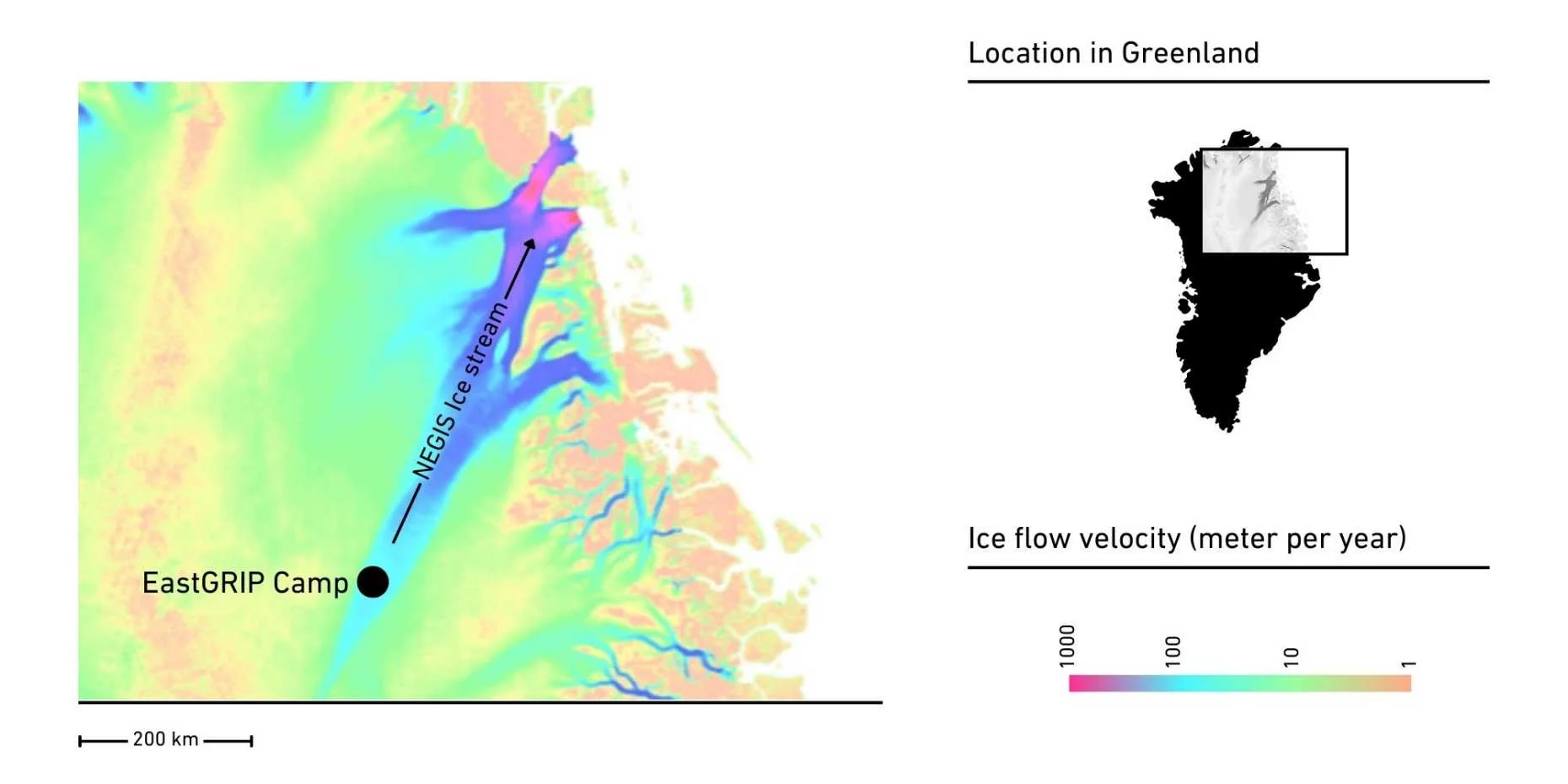
Using DAS, researchers recorded englacial ice quakes originating from depths of up to 1 500 m (4 920 feet) within a 2 420 m (7 9440 feet) deep borehole at the East Greenland Ice Core Project (EastGRIP). The quakes, hidden from external monitoring stations, indicate that internal ice deformation plays a larger role in ice sheet processes than previously assumed.
One key finding is that stress accumulation within the ice triggers seismic cascades. Ice streams experience differential movement because of variations in bed friction and internal structure. When stress exceeds a critical threshold, sudden bursts of brittle failure occur, leading to localized shifts in ice movement.
This suggests ice streams do not solely behave as slow-moving, viscous masses but also exhibit episodic shifts driven by internal seismic activity.
The presence of englacial ice quakes suggests that existing ice sheet models which rely on smooth and continuous deformation theories, may be oversimplified. Satellite and GPS data have shown abrupt accelerations and slowdowns in ice flow which these quakes help explain. The seismic cascades may impact long-term ice sheet stability and contribute to sudden ice stream surges toward the ocean.

Role of volcanic impurities in ice fracturing
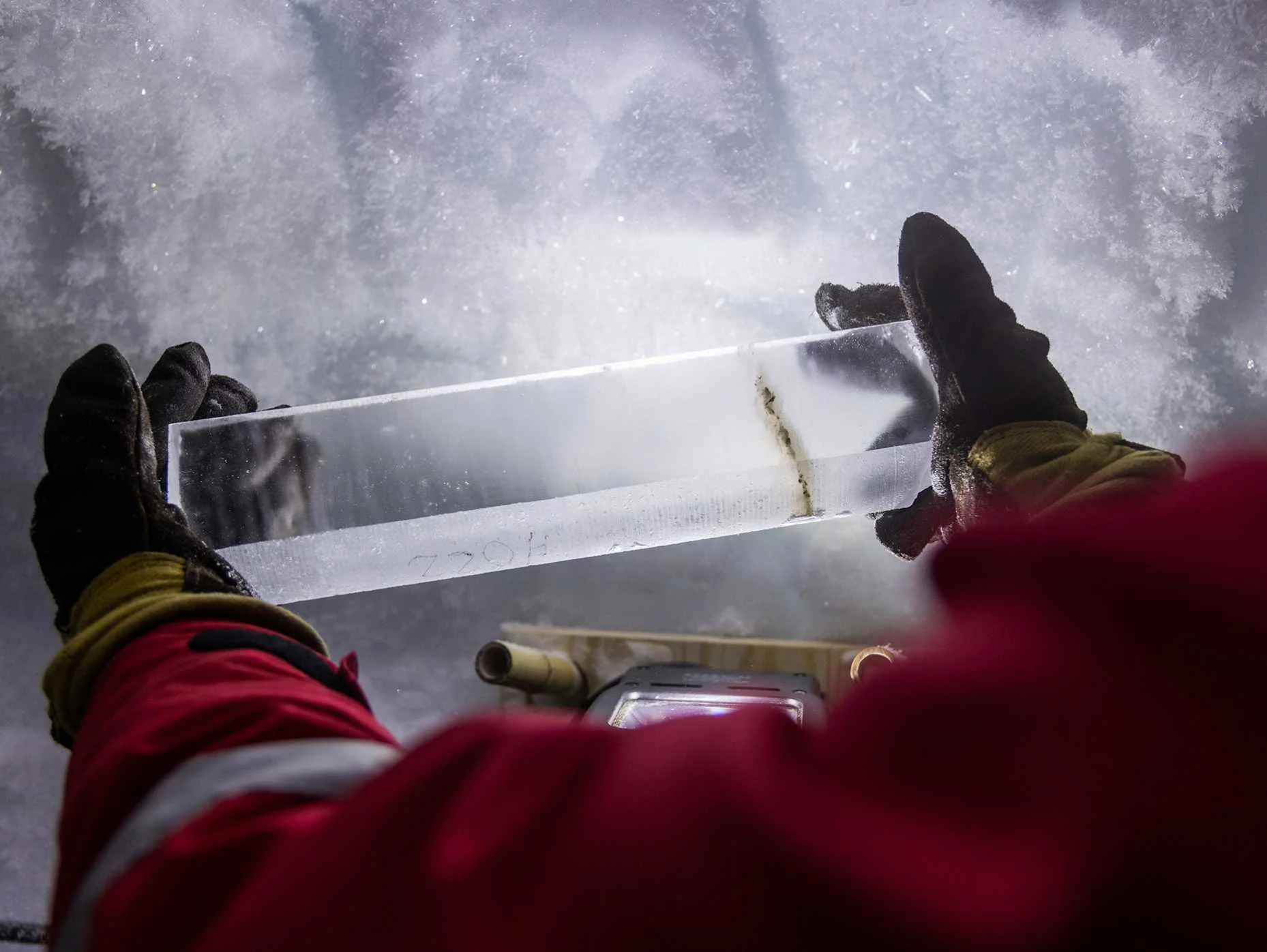
Volcanic impurities trapped within ice sheets influence their mechanical properties, affecting both strength and fracture behavior. Analysis of ice core samples from EastGRIP indicated that many of the observed seismic events originated at depths coinciding with layers of volcanic tephra. The layers create mechanical weaknesses, increasing susceptibility to fracturing under stress.
Two key tephra layers were linked to the seismic cascades, the Mt. Mazama eruption (Crater Lake, U.S.) from 7 600 years before 2000 (b2k) and the Saksunarvatn eruption (Grimsvötn, Iceland) from 10 200 years b2k. The impurities promote grain boundary cracking and reduce the ice’s plasticity, leading to brittle failure in response to stress accumulation.
Lead author Andreas Fichtner noted that the relationship between ice stream processes and volcanic eruptions was unexpected. Volcanic deposits also influence the thermal and chemical properties of ice sheets by lowering the melting point and affecting basal lubrication, contributing to variations in ice movement across different regions of NEGIS.
Distributed acoustic sensing and detection of hidden seismicity
The study used a DAS system with a fiber-optic cable extending 1 500 m (4 921 feet) into the borehole, equipped with a Silixa iDAS v2 interrogator. The setup recorded strain rate variations at a high sampling rate, capturing englacial seismicity previously undetectable by traditional instruments.
The detected quakes exhibited antisymmetric radiation patterns, unlike surface tremors, with strain propagating both upwards and downwards. The magnitudes ranged from -2.3 to -0.24, with rupture displacements between 50 and 200 micrometers, indicating localized stress release mechanisms within the ice sheet.
DAS provides an important aspect in ice sheet monitoring by detecting small-scale but frequent seismic cascades that surface geophones cannot capture. The technology offers a new method for identifying regions of instability before large-scale deformations occur, with potential applications across other ice streams in Greenland and Antarctica.
Implications for ice sheet models and sea level predictions
The detection of brittle ice quakes challenges conventional ice sheet modeling which assumes continuous, viscous flow. The stick-slip motion observed in ice streams suggests that periods of inactivity can be followed by sudden, large-scale movements, altering long-term predictions of ice sheet behavior.
Estimated strain rates from the seismic cascades align with GPS measurements, providing a plausible explanation for discrepancies in ice velocity models. If brittle failure is widespread, current estimates of ice mass loss rates and sea level rise projections may need revision.
The quakes may contribute to ice stream surges where stored elastic energy is rapidly released, accelerating ice discharge into the ocean. This process, if widespread, could impact sea level rise predictions, necessitating updated climate models.
“The fact that we’ve now discovered these ice quakes is a key step towards gaining a better understanding of the deformation of ice streams on small scales,” Olaf Eisen, Professor at the Alfred Wegener Institute and one of the study’s co-authors, explained.
References:
1 Hidden cascades of seismic ice stream deformation – Andreas Fichtner, Coen Hofstede, Brian L. N. Kennett, et. al. – Science – February 6, 2025 – https://doi.org/10.1126/science.adp8094 – OPEN ACCESS
2 Ice streams move due to tiny ice quakes – ETH zurich – February 6, 2025

Rishika holds a Master’s in International Studies from Stella Maris College, Chennai, India, where she earned a gold medal, and an MCA from the University of Mysore, Karnataka, India. Previously, she served as a Research Assistant at the National Institute of Advanced Studies, Indian Institute of Science, Bengaluru, India. During her tenure, she contributed as a Junior Writer for Europe Monitor on the Global Politics website and as an Assistant Editor for The World This Week. Her work has also been published in The Hindu newspaper, showing her expertise in global affairs. Rishika is also a recipient of the Women Empowerment Award at the district level in Haryana, India, in 2022.

Very cool photos.. and interesting topic. Never thought of “ice quakes” before..
Till now…