
Storm Boris returns to Italy, placing Emilia-Romagna and Marche on high alert
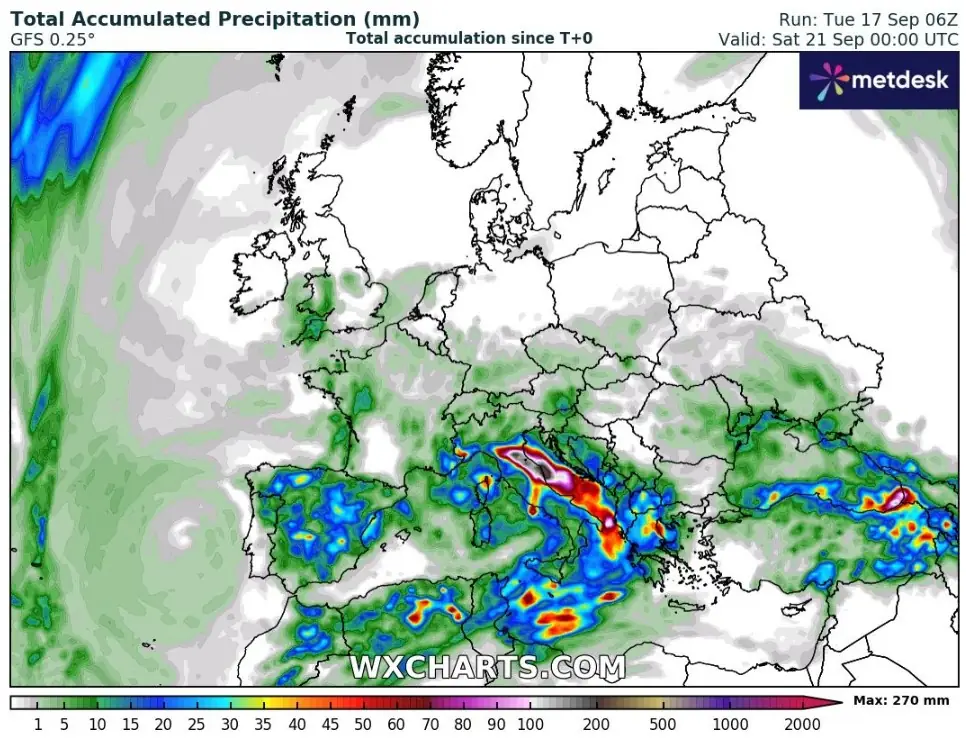
The total death toll from the historic floods in Europe caused by Storm Boris has risen to 21 on Tuesday, September 17, 2024, after an 81-year-old woman was found dead in her flooded home in Austria. Another death was reported in the Czech Republic after a woman drowned near the country’s border with Poland. While heavy rains in parts of central Europe are now diminishing, another wave of very heavy rains is forecast to return to Italy, starting on Tuesday and lasting through Thursday.
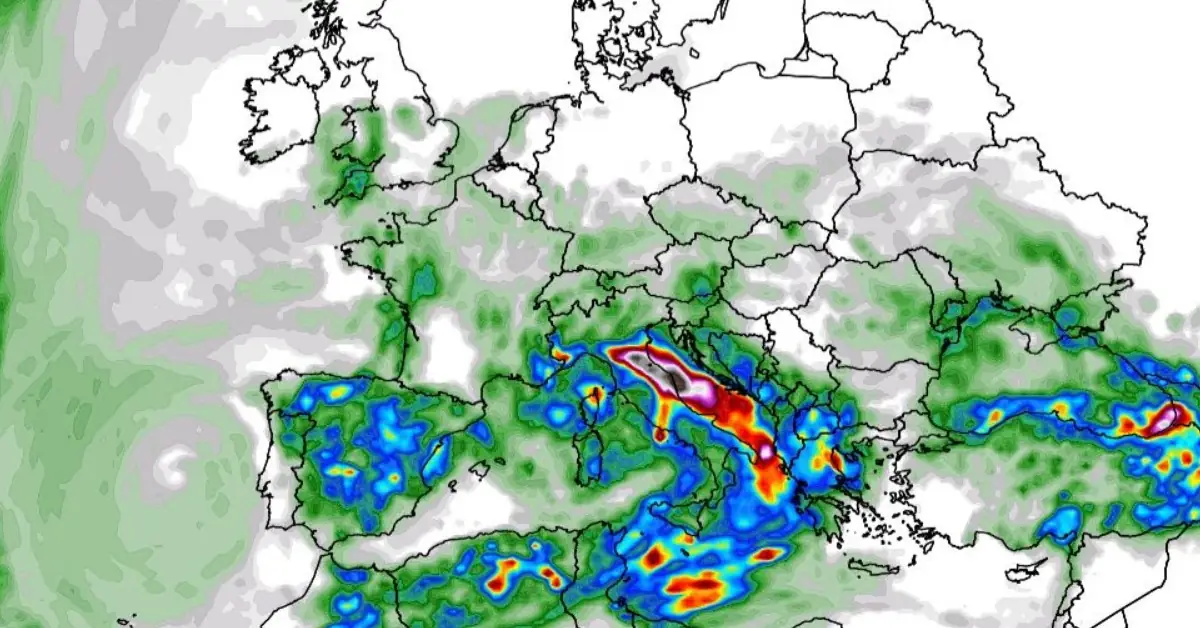
Image credit: WXCharts/GFS
The Italian National Civil Protection Service issued Yellow alerts for nearly 50 regions for September 18, warning there is a risk of storms, landslides, and floods.
“The unusually hot Adriatic Sea will feed storms across the whole Adriatic Apennines starting Tuesday and lasting until Thursday,” ANSA meteorologist Lorenzo Tedici said. “We expect more extreme weather events”.
The Emilia-Romagna and Marche regions are the regions of greatest concern where one or two months’ worth of rainfall could fall over the next three days alone.
While the Italian Air Force Meteorological Service has issued Red Weather Warnings for September 18, the event has already in areas like Pescara in Abruzzo where firefigthers have received more than 200 calls for help after heavy rainfall triggered flooding today.
In Poland, the police today confirmed 6 deaths across the country were caused by Storm Boris, denying false reports of the death of more than a dozen people. Prime Minister Donald Tusk declared a month-long natural disaster as Wroclaw expects the worst flooding to strike on Wednesday, September 18.
In the Czech Republic, the regions bordering Poland have been the worst hit with almost 15 000 people being forced to evacuate, as the country faced the worst flooding in 27 years.
Oder River in Ostrava Burst from its banks after heavy rainfall on Tuesday, September, 17 while temperatures in Ostrava have dropped from about 30 °C (68 °F) to 10 °C (50 °F).
Meanwhile, water levels continue to rise in the River Danube in Slovakia and Hungary, with the Slovak capital Bratislava, and its Hungarian counterpart Budapest preparing for flooding.
The Croatian Meteorological and Hydrological Service predicts that the Danube could see an ‘extremely rare’ increase in water levels and authorities there are preparing flood barriers.
Austrian authorities have closed sections of the Danube to shipping traffic over the elevated water levels along the vital waterway.
More rain is also forecast in the eastern Carpathians, Romania, endangering towns and villages in Galati and Vaslui counties, which have already been hard hit.
Read more:
References:
1 Storm Boris returns to Italy – ANSA – September 19, 2024
2 Storm Boris casualties rise as floods ravage Central Europe – Al Jazeera – September 17, 2024
3 Italy next to face storm after 21 killed in Europe floods – BBC – September 17, 2024

Teo Blašković founded The Watchers in 2011 and edited it until 2026, covering seismic and volcanic activity, extreme weather, space weather and near-Earth objects. Articles on this page are his archive.
Published in the last 24 hours
- In September 1859, a solar storm lit up the night sky so brightly that gold miners in the Rocky Mountains woke up after midnight and started cooking breakfast, convinced the aurora glowing over their camp was the sunrise Epicenter
- A patch of warm Pacific water that could become the strongest El Niño in more than 70 years sits thousands of miles from any American town, yet it is already the main reason NOAA expects a wetter winter across the South and a milder one across the North
- A 19-year-old Nebraska teacher reportedly tied her pupils together with twine and led them to safety through a blizzard in January 1888 Epicenter
