
Researchers use artificial intelligence to decipher early plate tectonics
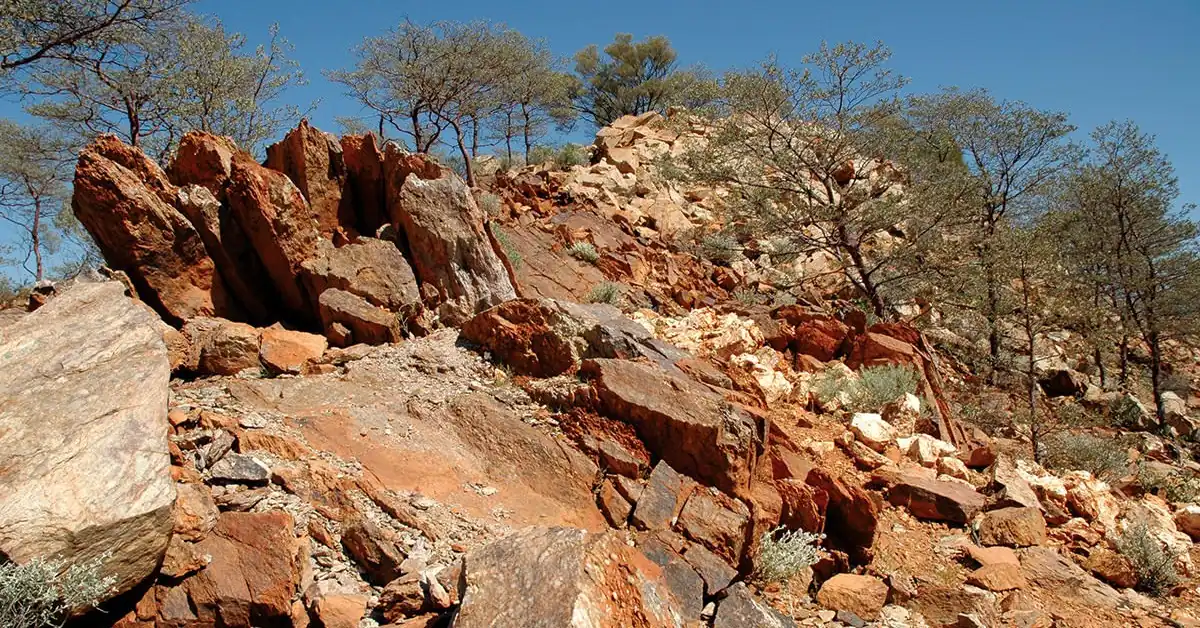
Image credit: TW
Prof. Ross Mitchell’s team at IGGCAS used machine learning to uncover early plate tectonics in 4.24 billion-year-old zircons from Western Australia, providing fresh insights into Earth’s geological history.
- The study intended to understand the beginnings of Earth’s geological processes by analyzing geochemical data using machine learning, and it achieved 96% accuracy in detecting sediment-derived (S-type) zircons, which are markers of early plate tectonics.
- Led by Prof. Ross Mitchell, the study focused on ancient zircons from Jack Hills, Western Australia, going back to the Hadean Eon (4.24 billion years ago), demonstrating that subduction-driven plate tectonics happened significantly earlier than previously assumed.
Prof. Ross Mitchell of the Institute of Geology and Geophysics at the Chinese Academy of Sciences (IGGCAS) led a research team that made substantial progress in decoding Earth’s ancient geological history. The team included professionals such as Jilian Jiang, the study’s lead author, as well as other participants who specialized in geochemistry and geochronology.
The work focused on applying machine learning to examine the geochemical and isotopic composition of ancient zircon samples, specifically from Western Australia’s Jack Hills region. These zircons are the oldest known minerals on Earth, dating back more than 4 billion years. The research seeked to identify evidence of early plate tectonics and sedimentation processes by categorizing zircons as sediment-derived (S-type) or non-sediment-derived.
The essential samples studied were from the Jack Hills in Western Australia’s isolated outback. This region is known for having some of the oldest and best-preserved geological materials, including zircons that are over 4 billion years old. These ancient zircons offer unique information into the Earth’s early years.
The zircons that were analyzed date back to the Hadean Eon, around 4.24 billion years ago. This time frame is critical for understanding the onset of important geological processes on Earth. According to the findings, substantial geological activities such as plate tectonics and sedimentation were already taking place during this early period.
Understanding when and how plate tectonics first occurred is critical for understanding the planet’s evolution, temperature regulating systems, and the conditions that made it livable. The project attempted to answer fundamental concerns concerning the origins and evolution of Earth’s geological processes, which are thought to play an important role in regulating surface temperatures and delivering vital nutrients for life.
The researchers used robust machine learning algorithms to examine geochemical and isotopic data from zircon samples. Traditional methods have limits in discriminating between different forms of zircons, particularly those with low phosphorus concentration. Using a sophisticated machine learning approach, the researchers were able to categorize the zircons with 96% accuracy, revealing a significant presence of S-type zircons, which indicate sediment-derived granites. This method analyzed trace elements and isotope ratios, such as hafnium (Hf) and oxygen (δ18O), to develop a strong classification model.
The findings showed that the presence of S-type zircons follows a cyclical pattern corresponding with the supercontinent cycle, which spans around 600 million years. “When the continents of the world collide, the amount of S-type zircon increases, and then decreases during the breakup,” Jiang Jilian, the lead author, explained. This continuous pattern across time shows that the process of plates moving and colliding, fueled by subduction, has been occurring since nearly the beginning of Earth.
This suggested that subduction-driven plate tectonics has been active since the Hadean Eon. The discovery of rich S-type zircons from this epoch shows that crustal weathering, sediment deposition, and plate tectonic processes were active far earlier than previously assumed. These early activities may have produced the circumstances for the origin of life by regulating surface temperatures and recycling critical nutrients.
Prof. Ross Mitchell and his team’s revolutionary machine learning study has shed new light on the early geological processes that created the Earth. Their research emphasized the importance of combining sophisticated technologies with traditional geological approaches to uncover the secrets of our planet’s past. This interdisciplinary method established a new benchmark for future geological research, promising to advance our understanding of Earth’s evolution and ability to support life.
This study not only demonstrated the potential of AI and machine learning in geological investigation, but it also laid the path for fresh insights into Earth’s early past and active geological processes. As technology advances, additional research is expected to disclose even more about the ancient mechanisms that have molded the world.
References:
¹ Sediment subduction in Hadean revealed by machine learning – Jilian Jiang et al. – PNAS, Vol. 121, No. 30 – July 8, 2024 – https://doi.org/10.1073/pnas.2405160121
Feature image credit: Shire of Murchison

Harsha Borah is an experienced content writer with a proven track record in the industry. Harsha has worked with LitSpark Solutions and Whateveryourdose, honing skills in creating engaging content across various platforms. A gold medalist in a state-level writing competition organized by Assam Tourism, Harsha’s travelogue on Tezpur was widely appreciated. Harsha’s article, "The Dark Tale of the Only Judge in India to Be Hanged," ranks second on Google and has garnered over 11 000 views and 8 900 reads on Medium. Outside of writing, Harsha enjoys reading books and solving jigsaw puzzles.

Commenting rules and guidelines
We value the thoughts and opinions of our readers and welcome healthy discussions on our website. In order to maintain a respectful and positive community, we ask that all commenters follow these rules.