
Strong eruption at Bezymianny volcano, ash up to 9.5 km (31 000 feet) a.s.l., Russia
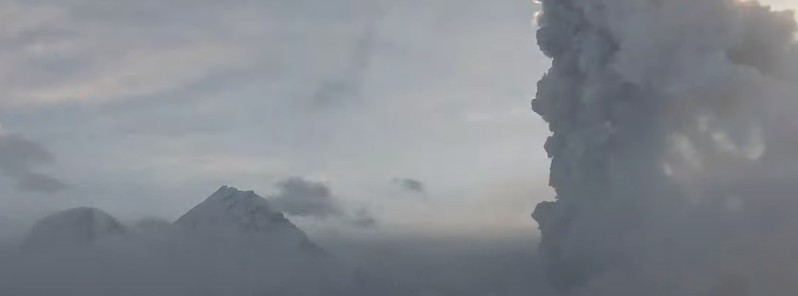
Image credit: KB GS RAS
A strong eruption started at the Russian Bezymianny volcano at 20:22 UTC on October 21, 2020, ejecting ash up to 9.5 km (31 000 feet) above sea level.
The Aviation Color Code was raised to Red at 21:51 UTC and lowered back to Orange at 03:19 UTC on October 21 after the eruption has finished.
Satellite data at 23:00 UTC showed a large ash cloud moving about 75 km (46 miles) west of the volcano, KVERT reported.
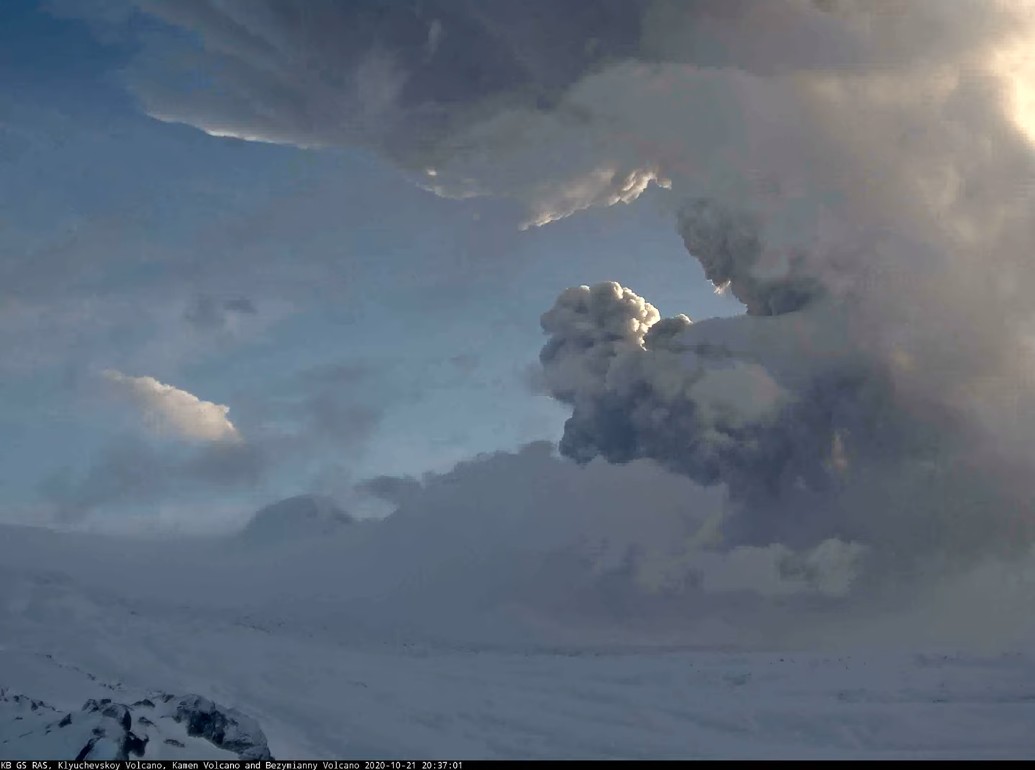
Image credit: KB GS RAS
The large ash cloud was present in the area of the Klyuchevskoy group of volcanoes, but its height has decreased to 5 – 5.5 km (16 400 – 18 000 feet) a.s.l. by 03:19 UTC.
The cloud has divided on the northern part (105 x 57 km / 65 x 25 miles in size) and the southern (36 x 67 km / 22 x 41 miles in size), KVERT said.
A powerful eruption took place at the volcano at 17:29 UTC on March 15, 2019, with volcanic ash rising up to 15.2 km (50 000 feet) above sea level.
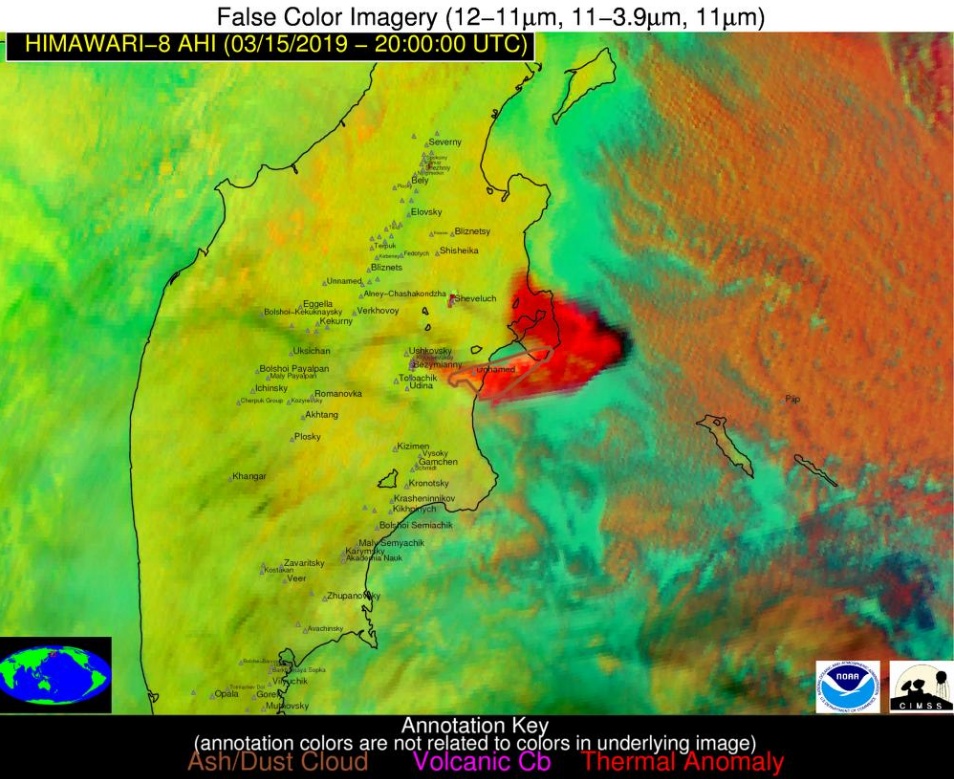
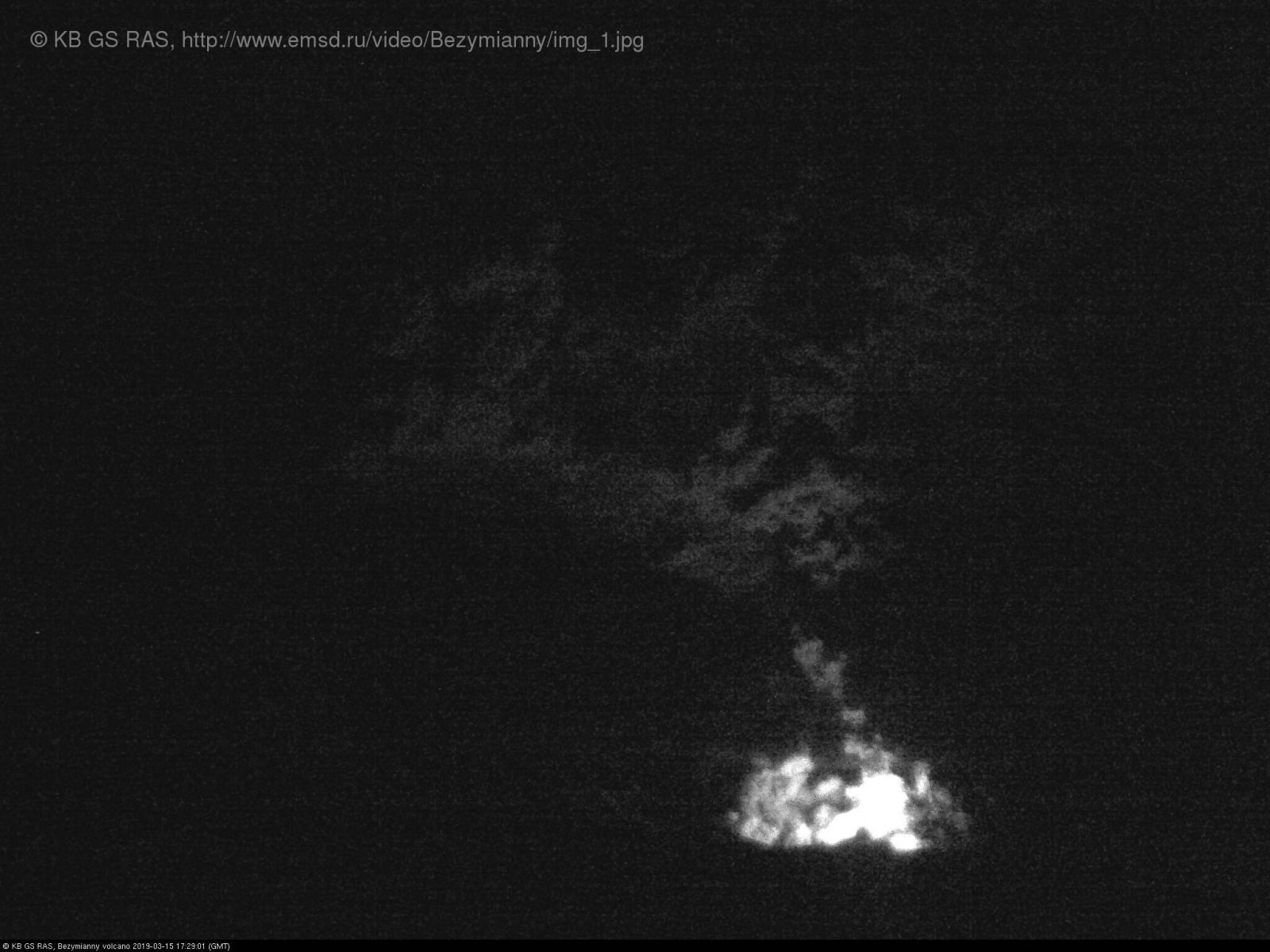
Image credit: KB GS RAS
Geological summary
Prior to its noted 1955-56 eruption, Bezymianny had been considered extinct. The modern volcano, much smaller in size than its massive neighbors Kamen and Kliuchevskoi, was formed about 4700 years ago over a late-Pleistocene lava-dome complex and an ancestral edifice built about 11000 – 7000 years ago.
Three periods of intensified activity have occurred during the past 3 000 years.
The latest period, which was preceded by a 1000-year quiescence, began with the dramatic 1955/56 eruption. This eruption, similar to that of St. Helens in 1980, produced a large horseshoe-shaped crater that was formed by collapse of the summit and an associated lateral blast.
Subsequent episodic but ongoing lava-dome growth, accompanied by intermittent explosive activity and pyroclastic flows, has largely filled the 1956 crater. (GVP)

I'm a dedicated researcher, journalist, and editor at The Watchers. With over 20 years of experience in the media industry, I specialize in hard science news, focusing on extreme weather, seismic and volcanic activity, space weather, and astronomy, including near-Earth objects and planetary defense strategies. You can reach me at teo /at/ watchers.news.

Commenting rules and guidelines
We value the thoughts and opinions of our readers and welcome healthy discussions on our website. In order to maintain a respectful and positive community, we ask that all commenters follow these rules.