
Moderate explosive eruption continues at Klyuchevskoy volcano, Russia
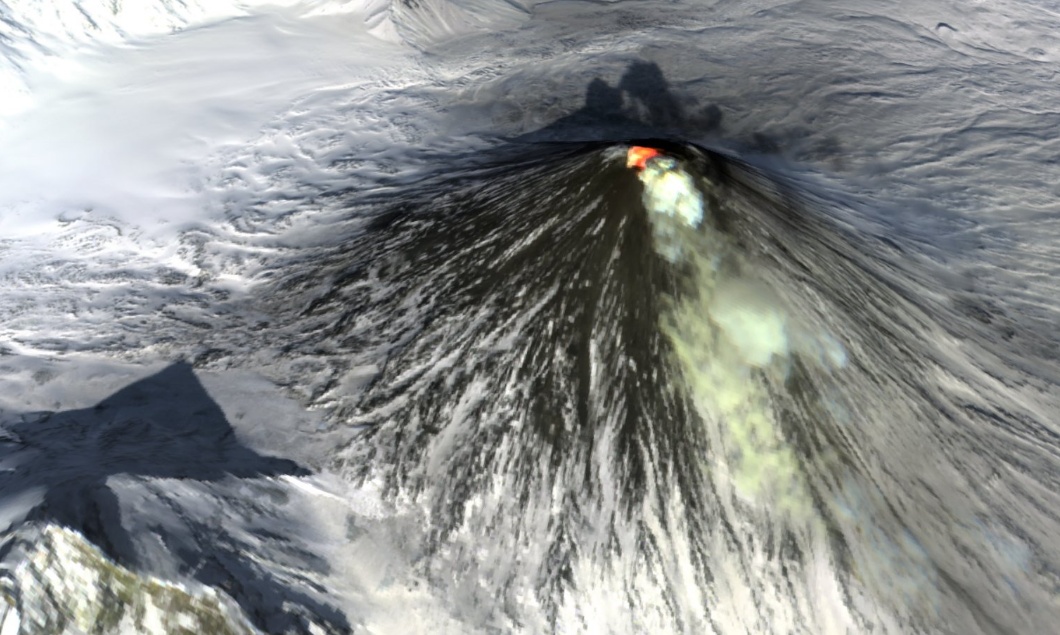
Featured image: Kyluchevskoy volcano on April 9, 2020. Credit: Copernicus EU/Sentinel-2, Antonio Vecoli, Adam Platform. Acquired April 9, 2020
A moderate explosive eruption of the Strombolian and sometimes Vulcanian types continues at Russian Klyuchevskoy volcano.
A notable eruption was registered at 00:05 UTC on April 9. Volcanic ash was ejected up to 7 km (23 000 feet) above sea level, drifting east, the Tokyo VAAC reported at 00:55 UTC.
Ash emissions continued through 06:00 UTC when another similar eruption took place. Ash plume rose to the same height but this time it drifted to the south.
Both dissipated on satellite imagery by 11:20 UTC.
Remote sensing expert Antonio Vecoli aka Mr. SnapMan sent us this amazing image of the volcano, captured on April 9, 2020:
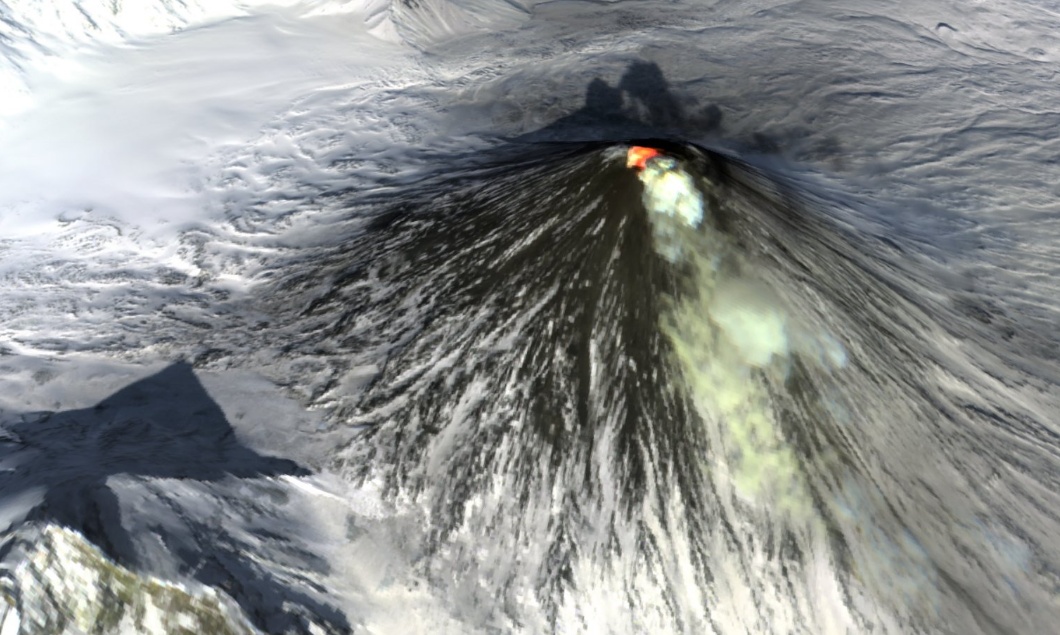
Image credit: Copernicus EU/Sentinel-2, Antonio Vecoli, Adam Platform. Acquired April 9, 2020
Ash explosions up to 5 – 7 km (16 400 – 23 000 feet) a.s.l. could occur at any time. Ongoing activity could affect low-flying aircraft.
Geological summary
Klyuchevskoy (also spelled Kliuchevskoi) is Kamchatka's highest and most active volcano. Since its origin about 6 000 years ago, the beautifully symmetrical, 4 835-m-high (15 862 feet) basaltic stratovolcano has produced frequent moderate-volume explosive and effusive eruptions without major periods of inactivity. It rises above a saddle NE of sharp-peaked Kamen volcano and lies SE of the broad Ushkovsky massif.
More than 100 flank eruptions have occurred during the past roughly 3 000 years, with most lateral craters and cones occurring along radial fissures between the unconfined NE-to-SE flanks of the conical volcano between 500 m and 3 600 m (1 640 – 11 811 feet) elevation.
The morphology of the 700-m-wide (2 296 feet) summit crater has been frequently modified by historical eruptions, which have been recorded since the late-17th century. Historical eruptions have originated primarily from the summit crater, but have also included numerous major explosive and effusive eruptions from flank craters. (GVP)

I'm a dedicated researcher, journalist, and editor at The Watchers. With over 20 years of experience in the media industry, I specialize in hard science news, focusing on extreme weather, seismic and volcanic activity, space weather, and astronomy, including near-Earth objects and planetary defense strategies. You can reach me at teo /at/ watchers.news.

Commenting rules and guidelines
We value the thoughts and opinions of our readers and welcome healthy discussions on our website. In order to maintain a respectful and positive community, we ask that all commenters follow these rules.