
Powerful Typhoon “Lingling” hits the Korean Peninsula, results in at least 3 fatalities and power disruptions

Featured image: Typhoon "Lingling" at 07:20 UTC on September 7, 2019. Credit: JMA/Himawari-8
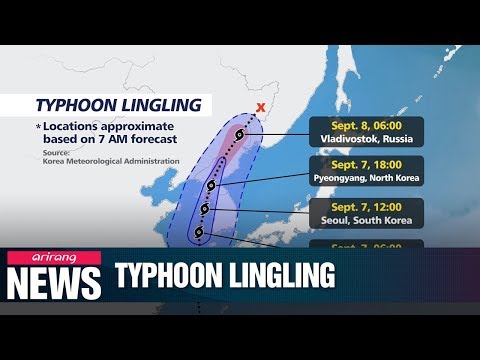
Typhoon "Lingling", one of the most intense storms to hit South Korea, hit Jeju island and passed along the country's coast on September 7, 2019, causing power disruptions and killing at least three people. The quick-moving storm headed towards North Korea afterward where it made final landfall.
The storm moved at 49 km/h (30 mph) as it headed north, according to the Ministry of Interior and Safety. Over 127 000 homes were affected by power interruptions.

One of the victims was identified as a 75-year old woman in Boryeong town, South Korea, who died after being slammed against the wall 30 meters (98 ft) away by extreme winds.
Another victim, a 39-year old in Incheon city, was crushed by a collapsed wall.
A 61-year old Chinese national victim was killed after being slammed by a torn-up roof in the town of Paju, near the border.
Furthermore, at least 10 people are undergoing treatment for sustained injuries. Two of them are an elderly couple from Boryeong town who were hit by a collapsed steel scaffolding.
38 people in Gwangju city near the capital Seoul was forced to evacuate after their homes got submerged in floodwaters.


Over 100 emergency-related calls were reported in Incheon, most were about damaged walls, toppled trees, and blown-off boards.
Meanwhile, five vehicles were reportedly destroyed in Wonju city and ten in Namwon.
The storm had gone overseas 430 km (267 miles) southwest of Jeju Island with a speed of 38 km/h (23 mph) as of 15:00 local time (06:00 UTC).
According to reports, it moved with maximum wind speed was at 161 km/h (100 mph), which was powerful enough to topple trees. Incheon International Airport in Seoul has canceled over 250 flights.
The Korea Meteorological Association said that the speed may increase up to 198 km/h (123 mph). "Record-breaking winds will be seen at islands and southern and western coastal areas," the weather agency added.
Lingling headed west coast and then made landfall in North Korea in the afternoon. The storm is predicted to cause heavier damages as it moves through North Korea.
The country's central news agency stated that President Kim Jong Un urgently called an emergency meeting on September 6 prior to the landfall to plan disaster prevention measures.

Published in the last 24 hours
- A meteorite blew a crater beside a village near Lake Titicaca in 2007, and dozens of villagers who went to see it got headaches and nausea, though tests found nothing the rock had added to the water Epicenter
- The people who pay closest attention to the weather are the ones storms have already cost the most, a study of 946 students found, with one damaging storm making little difference to how much attention a student paid, but two or more making a clear one Epicenter
- The sea is falling in Juneau, Alaska, because land freed from melted glaciers is rising about 0.6 inches a year Epicenter
- A dam above Los Angeles collapsed just before midnight on March 12, 1928, and the flood killed more than 400 people, hours after the engineer who built it had spent two hours looking at a new leak and decided there was no danger Epicenter
