
Extreme rainfall causes severe flooding in South Korea
An extreme rainfall event struck South Korea between August 3 and 4, 2025, triggering severe flooding across the southern regions of the country. Over 280 mm (11 inches) of rainfall was recorded in Muan in just 24 hours, with the hourly rainfall rates reaching over extreme 140 mm (6 inches) on August 4.
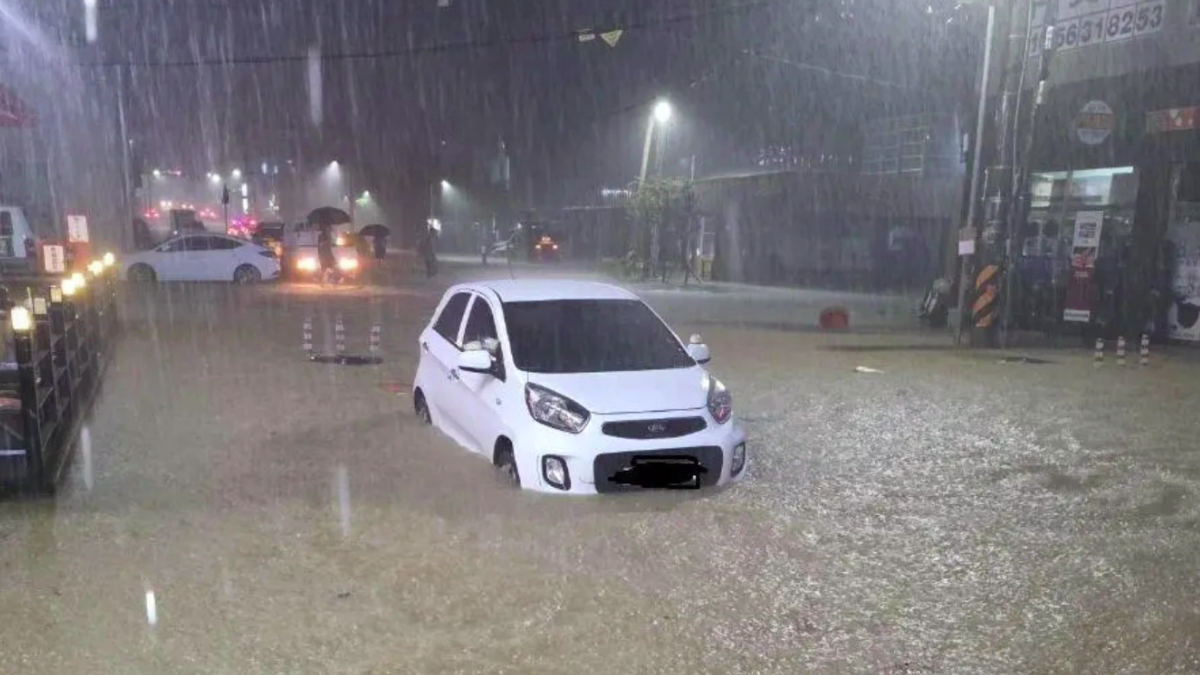
Flooding in Muan, South Korea on August 4, 2025. Credit: Arya Tamia
Heavy rains and severe flooding lashed southern South Korea through August 4, with the Korea Meteorological Administration (KMA) recording extreme hourly and daily precipitation across multiple provinces.
The heaviest rainfall was recorded in Muan County, South Jeolla, where authorities reported 289.6 mm (11.4 inches) of accumulation, including 142.1 mm (5.6 inches) rain falling in just one hour.
One fatality was confirmed in Muan County, where a man in his 60s was found dead in a stream after being swept away by strong currents. However, authorities have not confirmed whether the death was flood-related.
Local authorities described this as a once-in-200-year event, with some areas receiving over 200 mm (7.9 inches) of rain within 24 hours between August 3 and 4. Hapcheon recorded 212.3 mm (8.4 inches), Goryeong reported 196.5 mm (7.7 inches), and more than 100 mm (3.9 inches) was reported in multiple inland and coastal cities through August 4.
Evacuation orders were issued for 1 836 households encompassing 2 523 residents in six administrative regions: Busan, Gwangju, South Chungcheong, South Jeolla, North Gyeongsang, and South Gyeongsang. As of August 4, 2 498 individuals remained in temporary shelters.
South Korea’s Central Disaster and Safety Countermeasures Headquarters elevated its emergency response level from Stage 1 to Stage 2. The national crisis alert level was raised from “Caution” to “Alert” at 23:00 LT on August 3.
To reduce risk, the Ministry of the Interior and Safety ordered temporary closures of high-risk areas, including riversides, underpasses, ferry routes, and sections of national parks.

I am an Assistant Editor and Severe Weather & Science Journalist at The Watchers, specializing in real-time severe weather coverage, geophysical event reporting, and research-driven scientific analysis. You can reach me at rishav(at)watchers(.)news.

Commenting rules and guidelines
We value the thoughts and opinions of our readers and welcome healthy discussions on our website. In order to maintain a respectful and positive community, we ask that all commenters follow these rules.