
Peru floods: 170 000 affected people, 1 105 destroyed houses

Image credit: Major mudslide in Peru's Arequipa region on January 26, 2017.
Emergencies due to heavy rains, floods and landslides have been occurring in northern regions of Peru since January 31, 2017. Floods hit after a period of near drought conditions.
Nationwide, more than 170 000 people have been affected by floods and landslides by February 7. Of those, 85 000 are in Lambayeque, the worst affected.
The government issued a State of Emergency Declaration for three departments in the north on February 4. By February 6, this number increased to 9.
National Emergency Operations center reported around 27 300 severely affected people. 24 700 of them are people recently affected in Lambayeque.
On February 6, the government said at least 22 people died in recent floods and landslides. 1 105 houses were destroyed, 54 schools and 47 health centers damaged, and 215 km (133 miles) of roads severely affected.

On January 26, heavy rain caused violent mudslide in Peru's Arequipa region. The sad event resulted in deaths of 3 people on the Panamerican Sur Highway.

On the same day, a 50-room, colonial-era hotel collapsed into the Sicra River in the town of Lircay, central Peru. All guests were evacuated before the collapse and there were no reports of injuries.
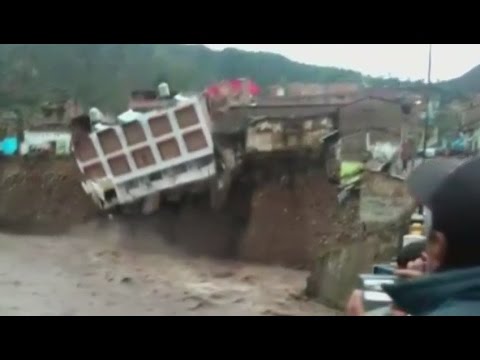
The National Service of Meteorology and Hydrology warned that heavy rains will continue and will increase in the coming months, affecting particularly central and southern regions.
More floods and landslides are expected.
Peru's rainy season lasts from November to April. The wettest months are January through April.

The Watchers team and our contributors bring the latest on extreme weather, earthquakes, volcanic eruptions, space weather, and all things science. We're all about making sense of the natural world and keeping you informed on what’s happening. Got a tip or a question? Hit us up using the form at newstips!
Published in the last 24 hours
- In September 1859, a solar storm lit up the night sky so brightly that gold miners in the Rocky Mountains woke up after midnight and started cooking breakfast, convinced the aurora glowing over their camp was the sunrise Epicenter
- A patch of warm Pacific water that could become the strongest El Niño in more than 70 years sits thousands of miles from any American town, yet it is already the main reason NOAA expects a wetter winter across the South and a milder one across the North
- A 19-year-old Nebraska teacher reportedly tied her pupils together with twine and led them to safety through a blizzard in January 1888 Epicenter
- NASA built the Opportunity rover to last 90 days on Mars, and Martian winds helped keep it alive for nearly 15 years by blowing dust off its solar panels, until a planet-wide dust storm in 2018 blocked sunlight and silenced the rover Epicenter
