
The next generation of space suits
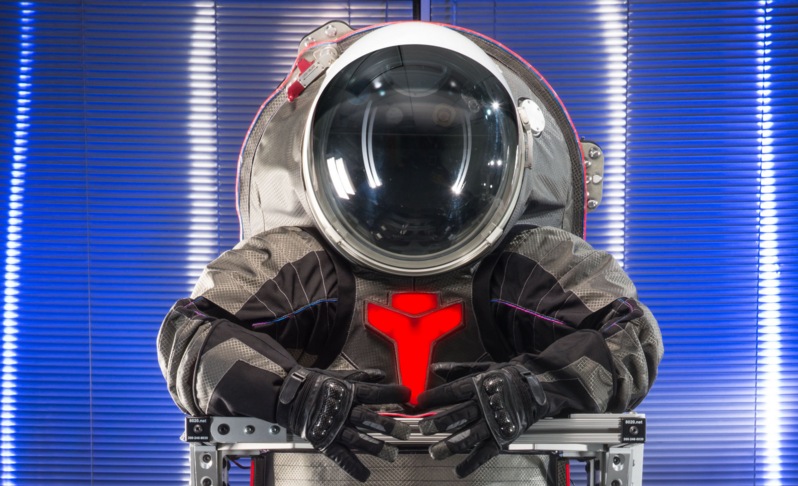
Featured image: The Z-2 space suit. Image credit: NASA
The next generation of suit technologies is being developed by a team of NASA's experts. The space suits have been designed to aid in deep space exploration by incorporating parts of advanced technologies such as carbon dioxide removal and water evaporation systems. They have been made by keeping in mind the space crew's need to work more efficiently and safely, NASA announced last month.
Mobility and fit of a pressurized space suits have been highly regarded in keeping the astronauts productive, so NASA's experts designed a new generation of space-walking suits empowered with a regenerable carbon dioxide removal and water evaporation systems that have proven highly efficient in providing individuals with breathing air and temperature regulation.

The EMU suit type pictured above on the left, the PXS (advanced prototype) in the middle and the Z-2 on the right. Image credit: NASA
Some of the newly designed suits include the Extravehicular Mobility Unit (EMU) operation suit on ISS, the Prototype exploration suit (PXS) and the Z-2 advanced prototype shown on the image above.
For example the Z-2 suit is designed to maximize astronauts productivity on a planetary surface. It is light weight, highly durable suit capable of withstanding long missions in highly unwelcome environments such as the one found on Mars while the PXS type of space suit is focused on improving suit fit and performance while at the same time keeping the required additional equipment for long term missions to low-Earth orbit and beyond minimal.

Z-2 space suit. Credit: NASA

Z-2 space suit rear view. Credit: NASA
The PXS suit design was based on a new approach of incorporating sizing feature that could one day be 3-D printed on-orbit, in transit, or on Mars to achieve a customized fit for any crew member or change the orientation of bearings to optimize EVA mobility for different mission phases.

Published in the last 24 hours
- Male toads abandoned a pond in Italy five days before a deadly 2009 earthquake, while a scientist was counting them Epicenter
- An asteroid was spotted 19 hours before it exploded over Sudan in 2008, and students picked its pieces off the desert Epicenter
- A wave up to 3 m (10 feet) high rose out of Lake Michigan on a sunny June morning in 1954 and swept fishermen off Chicago’s piers, and when a second came 10 days later, warnings had cleared the shore Epicenter
- Just 12 inches of rushing water can carry away most cars, and more than half of US flood drownings happen to people who drive into flood water Epicenter
