
Typhoon Sanba threatens Japan and Korea

Image credit: TW
According to The Joint Typhoon Warning Center (JTWC), Sanba had strengthened from a moderate tropical storm to a typhoon equivalent to a Category 1 hurricane. Typhoon Sanba (Karen) poses a growing threat to southwestern Japan and South Korea.
Sanba is spinning over the southern Philippines Sea, to the north and east of the Philippines with heavy rainfall. JTWC reports that the center of Typhoon Samba is located 745 nm south of Kadena AB, Okinawa. The system is moving at speed of 7 knots at northwestward direction.
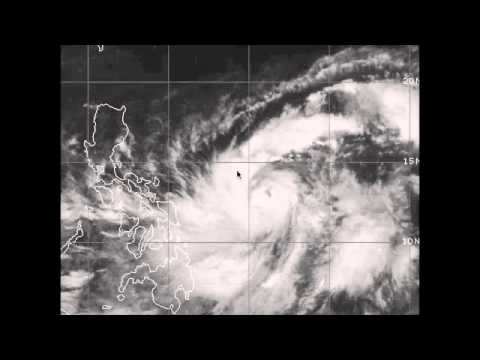

Very warm waters make environment favorable of further strengthening, possibly into a major typhoon. Sanba will reach Okinawa by Sunday (local time). Structural damage, power outages and flooding are expected.
Okinawa endured a hard hit from Typhoon Bolaven in August and a previous blow from Haikui.
Moisture from the typhoon, ahead of Sanba, will meet with a stalled front draped across South Korea. Several inches of rain may deluge southeastern areas before the typhoon approaches the Korean Peninsula a couple of days after nearing Okinawa. Rainfall since July has been well above normal across portions of South Korea. Seoul, the capital and largest city of South Korea, has received nearly 40 inches (1 meter) of rain since July.


Satellite Animations
- Storm-Centered Infrared (MTSAT; NOAA/SSD)
- Storm-Centered Infrared (Aviation Color Enhancement) (MTSAT; NOAA/SSD)
- Storm-Centered Water Vapor (MTSAT; NOAA/SSD)
- Storm-Centered Visible (MTSAT; NOAA/SSD)
- Storm-Centered Visible (Colorized) (MTSAT; NOAA/SSD)
- Tropical West Pacific Infrared (MTSAT2; NOAA)
- Tropical West Pacific Enhanced Infrared (MTSAT2; NOAA)
- Tropical West Pacific Water Vapor (MTSAT2; NOAA)
- Tropical West Pacific Visible (MTSAT2; NOAA)

Published in the last 24 hours
- Cyclone Akvan weakens after landfall near Gopalpur; more than 300 000 evacuated in Odisha, India
- High Risk of excessive rainfall covers Florida’s Space Coast as St. Johns River near Cocoa reaches 5.67 m
- Four small asteroids will pass close to Earth from November 21 to 23
- A broad low over southeastern Florida and the northwestern Bahamas has a 30 percent chance of subtropical or tropical development within 48 hours and a 50 percent chance within 7 days, the National Hurricane Center says
