
Partial solar eclipse seen from space
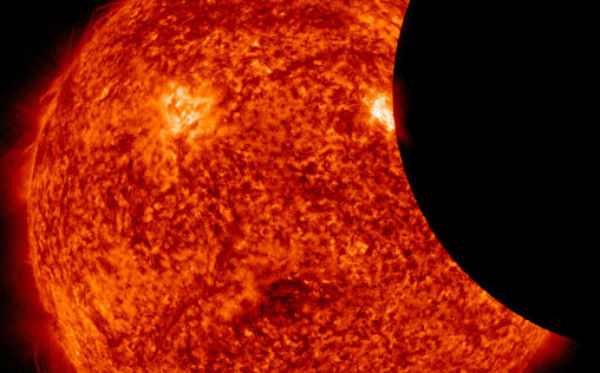
Image credit: TW
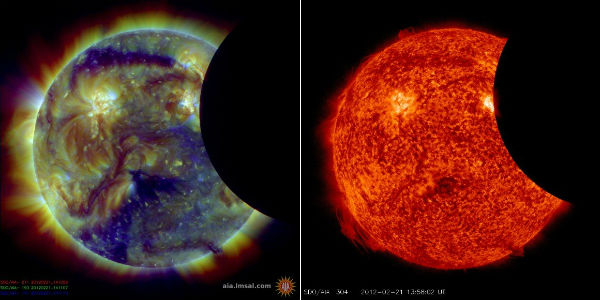
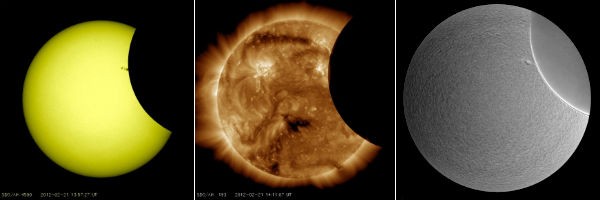
The new Moon passed briefly in front of the sun, positioning itself between SDO spacecraft and Sun, producing a partial solar eclipse on February 21 at 14:11 UTC (about 9:11 a.m. EST). No ground observers could spot it, it was visible only from space. It was a fairly shallow transit, but the Moon covered a bright active region. NASA’s Solar Dynamics Observatory (SDO) took stunning image from geosynchronous orbit approximately 36,000 km above Earth’s surface using a bank of 16 megapixel cameras. You can watch the movie of this eclipse thanks to Steele Hill, SDO Media Specialist at the Goddard Space Flight Center.
The next solar eclipse visible from Earth’s surface occurs on May 20, 2012: video
Images courtesy of NASA/SDO and the AIA, EVE, and HMI science teams.


Commenting rules and guidelines
We value the thoughts and opinions of our readers and welcome healthy discussions on our website. In order to maintain a respectful and positive community, we ask that all commenters follow these rules.