• Record-breaking heat to peak through July 14 from the Great Basin to the Northern Plains, U.S.

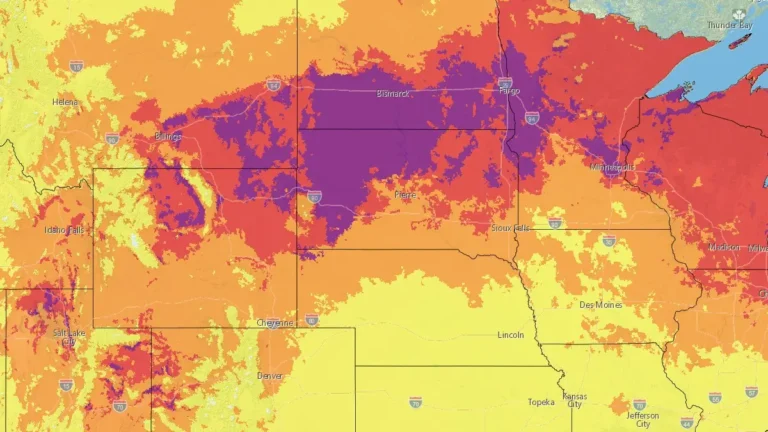
    Dangerous and potentially record-breaking heat is forecast to peak through July 14, 2026, across the western and north-central United States. Billings, Montana, already shattered its all-time temperature record on July 12, while Salt Lake City, Utah, tied for its second-highest reading ever, just short of its own all-time mark. More locations could still challenge records as the heat continues into Tuesday. Very warm nights are adding to the danger by increasing heat stress over several consecutive days.
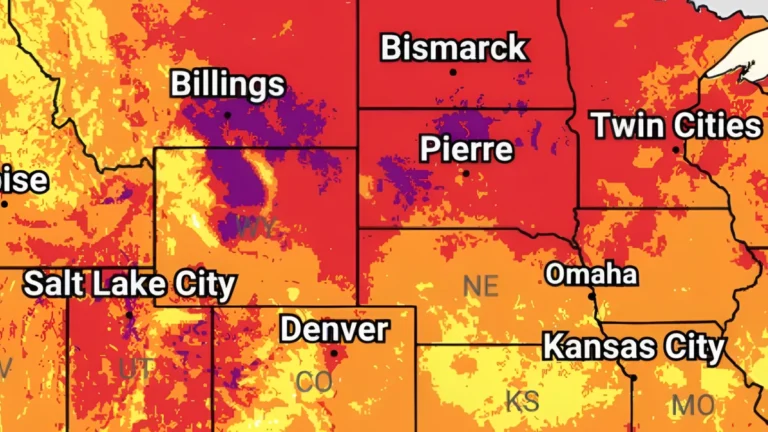

  • Dangerous heat wave to spread across the Western and Central US, maximum temperatures up to 43°C (110°F)

    The first widespread and significant heat wave of the summer is forecast to develop across the Intermountain West and Plains beginning Friday, July 10, 2026. Widespread temperatures above 38°C (100°F) are forecast, with isolated highs of up to 43°C (110°F). The Weather Prediction Center (WPC) forecasts widespread Major (Level 3) to locally Extreme (Level 4) HeatRisk between Friday and Wednesday, July 10 and 15.

  • Record-high temperatures at the Potomac River linked to localized fish kill in Maryland

    Record-breaking water temperatures at the Potomac River on July 4, 2026, are being linked to a localized fish kill in Maryland. The water temperatures reached a record high of 34.7°C (94.4°F) near Little Falls amid a record-breaking heatwave. Significant fish mortality was reported along a stretch of the river between White’s Ferry and Violette’s Lock soon after.

  • New Jersey reports 29 suspected heat-related deaths after prolonged early July heat wave

    Health officials in New Jersey have increased the number of suspected heat-related deaths associated with last week’s extreme heat wave to 29, on Monday, July 6, 2026. A prolonged heat wave brought temperatures above 38°C (100°F) and dangerous heat index values approaching 43°C (110°F) across parts of the state over the Independence Day weekend. Most fatalities are yet to be certified as heat-related deaths by the forensics department, hence the toll remains preliminary.

  • Dangerous heat wave continues into July 4 as record temperatures spread across the eastern U.S.

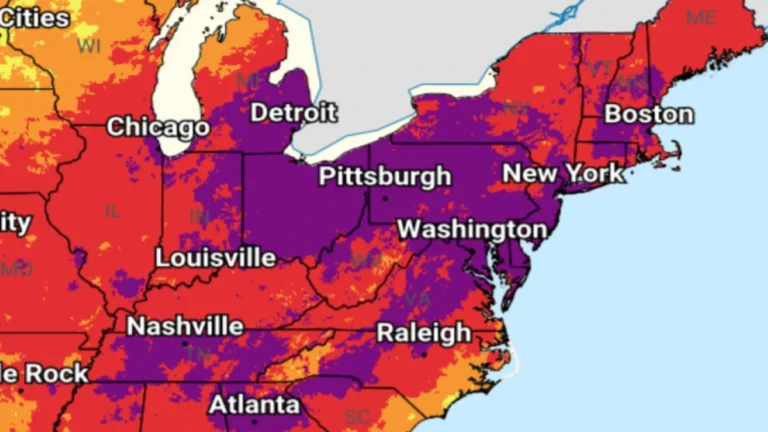
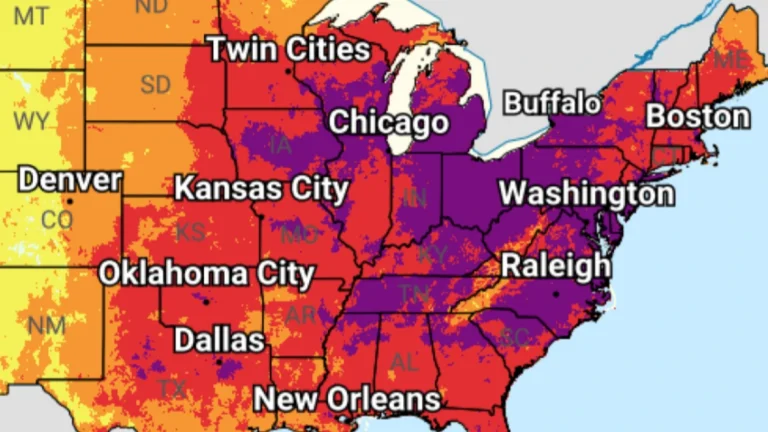
    A dangerous heat wave continued to intensify across much of the central and eastern United States on Friday, July 3, 2026. Numerous daily temperature records have already broken and more are expected through the Fourth of July holiday weekend. The National Weather Service (NWS) warned of widespread Major to Extreme HeatRisk and heat index values reaching 46°C (115°F).

  • Extreme heat alerts cover portions of 31 U.S. states, heat index up to 46°C (115°F)

    Extreme Heat Warnings, Extreme Heat Watches, and Heat Advisories are in effect across 31 U.S. states after the National Weather Service (NWS) issued a series of heat alerts on June 29, 2026. Peak heat index values are forecast to reach 46°C (115°F), with dangerous heat and humidity expected to persist into early July across parts of the Midwest, Northeast, Southeast, and central United States.

  • Extreme Heat Watches and Heat Advisories issued across Illinois, Missouri, Kansas, Iowa, Nebraska, and South Dakota

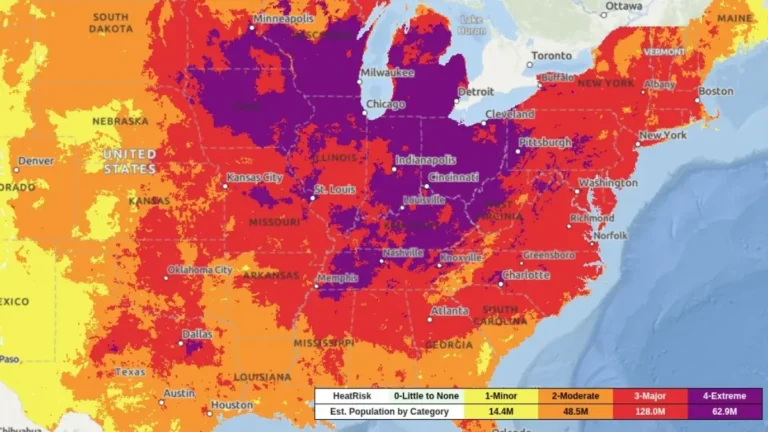
    Heat Advisories and Extreme Heat Watches have been issued across parts of Illinois, Missouri, Kansas, Iowa, Nebraska and South Dakota ahead of intensifying heatwave beginning Sunday, June 28, 2026. Heat index values are forecast to exceed 38°C (100°F) across much of the region, with some areas expected to reach 41 to 43°C (105 to 110°F) through Tuesday or Thursday, depending on location.

  • Heat Advisories in effect across central U.S., heat index values up to 42°C (108°F) forecast

    Dangerous heat is expected across much of the central United States on June 9, 2026, with multiple National Weather Service offices warning that heat index values will reach 38 to 42°C (100 to 108°F) during the afternoon and evening. Heat Advisories remain in effect across Kansas, Missouri, Arkansas, Tennessee, Mississippi, Iowa, Nebraska, South Dakota, Minnesota, and Wisconsin, with the most dangerous conditions forecast across the Mid-South.