• Earth could enter into dusty meteor shower from Comet ISON’s tail

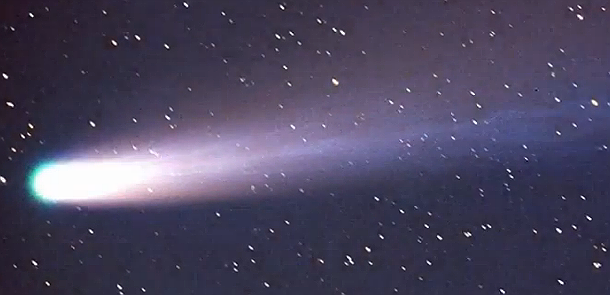
    Excitement and anticipation are rising as comet ISON approaches its close encounter with the Sun in November 2013. An observation of the comet in January 2013 by NASA's Swift spacecraft, when ISON was still near the orbit of Jupiter, showed that it was already…

  • Lyrid meteor shower peaks on April 22, 2013

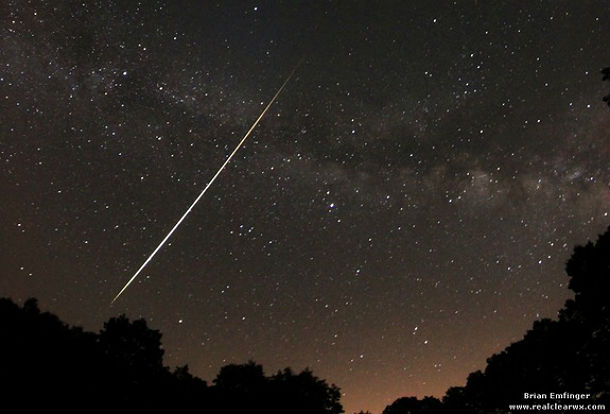
    Earth is approaching the debris field of ancient Comet Thatcher, source of the annual Lyrid meteor shower. Every year in late April Earth passes through the dusty tail of Comet Thatcher (C/1861 G1), and the encounter causes a meteor shower – the Lyrids.Flakes of

  • 2013 Quadrantid meteor shower peaks tonight

    The annual Quadrantids are the first meteor shower in 2013 and it will peak overnight, or more precisely, the first six hours of the morning of January 3rd. Unfortunately, the northern-hemisphere’s Quadrantid maximum, due around 13:30 UTC on January 3, has a

  • 2012 Geminid meteor shower

    Last night Earth passed through a stream of dusty debris from Comet 3200 Phaethon and sky observers around globe witnessed amazing Geminid meteor shower, with more than 120 meteors per hour at the peak.Earth now slowly exits 3200 Phaethon’s debris stream and the

  • Observing 2012 Geminid meteor shower

    Observing at the Northern Hemisphere started as early as December 6, when one meteor every hour or so could be visible. During the next week, rates increase until a peak of 50-80 meteors per hour is attained on the night of December 12/13. By December 18 meteor shower

  • Geminid meteor shower and visible asteroids in December 2012

    If you’re planning to skywatch this December, this video will take you through some of the notable objects in the sky this month, including a meteor shower, large asteroids in the asteroid belt, and an array of constellations.Video courtesy of Space.comBeginning in

  • Leonid meteor shower peak tonight

    This year’s annual Leonid meteor shower is expected to peak tonight. Although Leonids can sometimes be seen at rate of more than thousands meteors per hour, a stream of debris from Comet 55P/Tempel-Tuttle which orbits the sun every 33 years, is forecasted to display