• First visible-light aurora on Mars detected from the surface

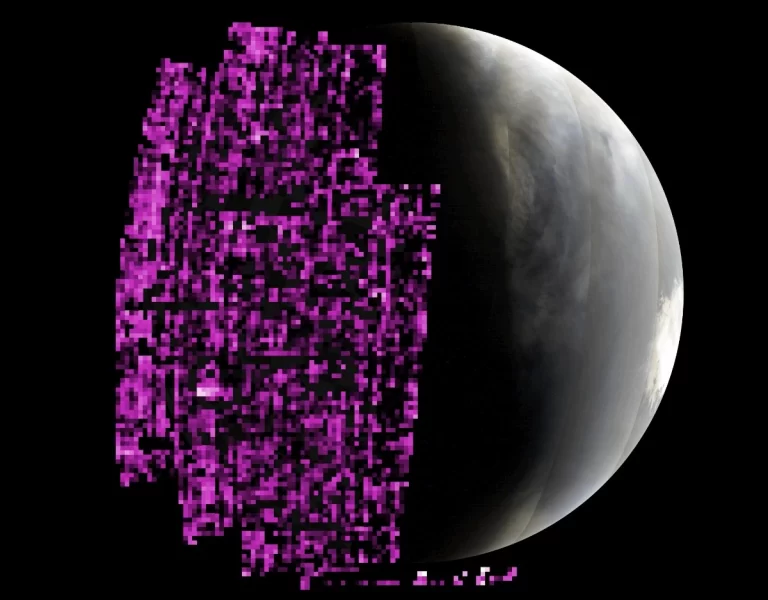
    A visible aurora has been recorded from the surface of Mars for the first time. NASA’s Perseverance rover detected a faint green glow of atomic oxygen triggered by a solar storm, confirming long-standing predictions about atmospheric emissions. The detection provides a new way to study Martian space weather from the surface.

  • New model links Mars’ molten core to hemispheric magnetic field anomaly

    A new study proposes that Mars once had a fully molten core, potentially explaining the planet’s hemispheric magnetic field asymmetry. The model links this anomaly to heat loss concentrated in the southern hemisphere, driven by differences in crustal thermal conductivity. The findings offer new insight into Mars’ early interior dynamics and atmospheric evolution.

  • Evidence of rain and snow on ancient Mars

    Geologists from the University of Colorado Boulder report that extensive valley networks on Mars were likely formed by widespread precipitation, challenging previous theories that attributed their formation to runoff from melting ice caps. Using landscape evolution models and topographic data from NASA missions, the researchers found that valley head elevations across Mars’ southern highlands are more consistent with rain or snowmelt than with localized ice melting.

  • Mars’ magnetic history examined in new study

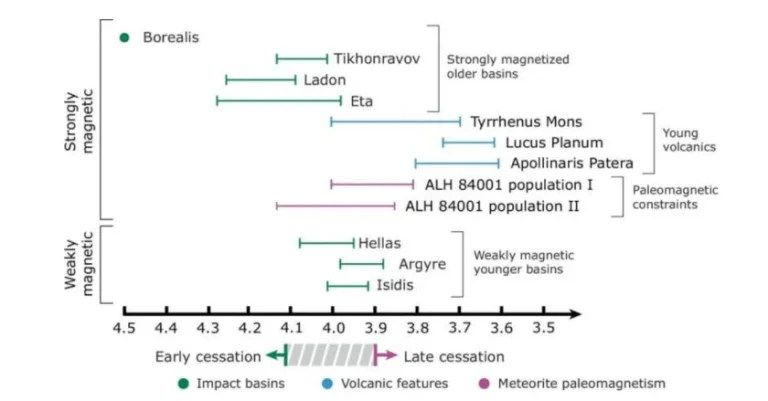
    New research published in Nature Communications suggests that Mars’ magnetic field, which may have helped retain the planet’s atmosphere and surface water, existed until approximately 3.9 billion years ago—lasting longer than prior estimates of 4.1 billion years. The updated timeline offers a clearer picture of Mars’ early environment, potentially shedding light on its habitability.

  • Epic solar storm impacts Mars

    May 2024 saw increased solar activity, leading to numerous significant events including a rare G5 – Severe geomagnetic storm and a powerful solar flare directed at Mars on May 20. This event, estimated at X12, sent X-rays, gamma rays, and charged particles toward the red planet, providing valuable data for future Mars missions.

  • Giant volcano discovered in Mars’ Tharsis volcanic province

    Scientists at the 55th Lunar and Planetary Science Conference in The Woodlands, Texas, announced the discovery of a vast volcano and a potential glacier ice sheet in Mars’ Tharsis volcanic province, near the equator. The finding, based on images from spacecraft orbiting Mars since 1971, highlights a volcano provisionally named “Noctis” and suggests the presence of glacier ice beneath a volcanic deposit. This discovery opens new avenues for studying Mars’ geological evolution and future exploration.