• Discovery of electromagnetic wave reveals new phenomenon affecting Earth’s radiation belts

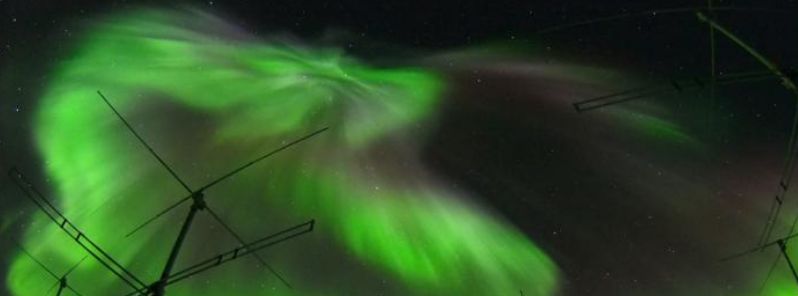
    Researchers at the University of Alaska Fairbanks identified a new electromagnetic wave called the “specularly reflected whistler.” This wave, caused by low-latitude lightning, challenged earlier notions by revealing that lightning energy can escape the ionosphere and enter the magnetosphere, impacting space weather dynamics. The discovery of the “specularly reflected whistler” which is an electromagnetic wave…
  • First measurements of Earth’s ionosphere

    Researchers have used the largest atmospheric radar in Antarctica to make the first measurements of Earth's ionosphere. Observations in the southern hemisphere are significant in finding out the global features of both the atmosphere and the ionosphere. The…

  • Scientists discover why satellites black out over equator

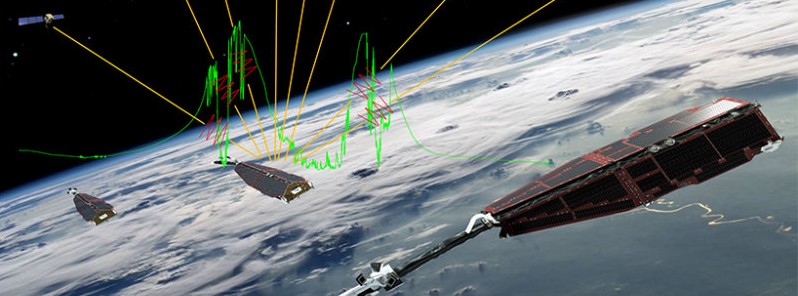
    ESA's Swarm satellite trio has discovered why GPS navigation systems on low-orbiting satellites sometimes black out when they fly over the equator between Africa and South America. Swarm itself has experienced this anomaly numerous times before its scientists…

  • Sprites form at plasma irregularities in the lower ionosphere

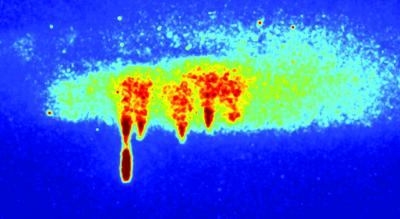
    Atmospheric sprites have been known for nearly a century, but their origins were a mystery. Now, a team of researchers has evidence that sprites form at plasma irregularities and may be useful in remote sensing of the lower ionosphere."We are trying to understand t

  • New research to focus on energy distribution in upper atmosphere

    “Understanding interaction between the Earth’s magnetic field, or magnetosphere, and its upper atmosphere – known as the thermosphere/ionosphere – is especially important this year and in 2014, said Yue Deng, an assistant physics professor at University of Texas.

  • Venus Express reveals new facts about Venus’ ionosphere

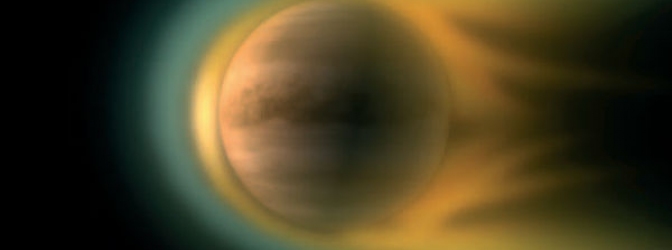
    On January 29, 2013, ESA revealed observations made by the spacecraft in August 2010, when it studied the effect of reduced solar wind on planet's ionosphere. Researchers found that planet’s ionosphere ballooned outward on the planet’s…

  • One of the strongest geomagnetic storms in years subsiding

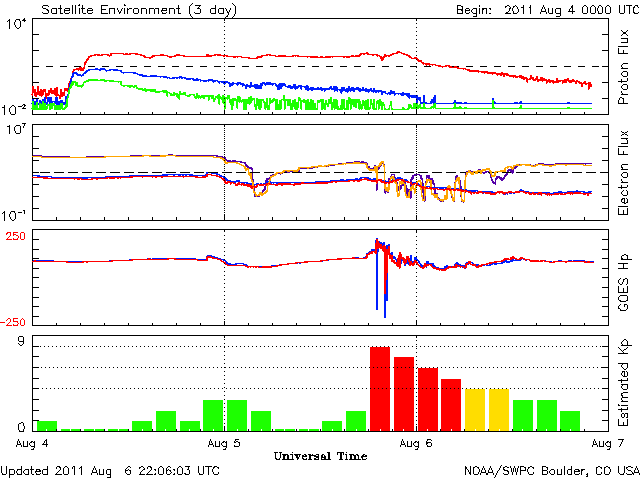
    Earth's magnetic field is still reverberating from a CME strike on August 5th that sparked one of the strongest geomagnetic storms in years. Registering 8 on the 0 to 9 "K-index" scale of magnetic disturbances, the storm, at its maximum, sparked…

  • Geomagnetic storm still in progress but lingering

    A geomagnetic storm is in progress. It began on August 5th around 18:00 UT when a CME struck Earth's magnetic field. At its peak during the hours just after impact, the storm registered 8 on the 0 to 9 "K-index" scale of geomagnetic disturbances,…