• Extreme drought and rainfall years in the western Mediterranean now occur about ten times more often

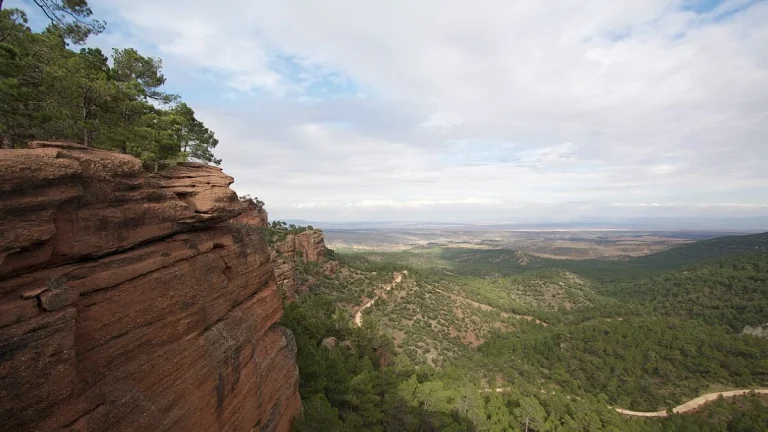
    A five-century precipitation record reconstructed from tree rings in eastern Spain shows that extreme drought and rainfall years have become roughly ten times more frequent since 2000 than at any point since the early 1500s.

  • Solar Orbiter observations reveal avalanche-like reconnection powering a solar flare

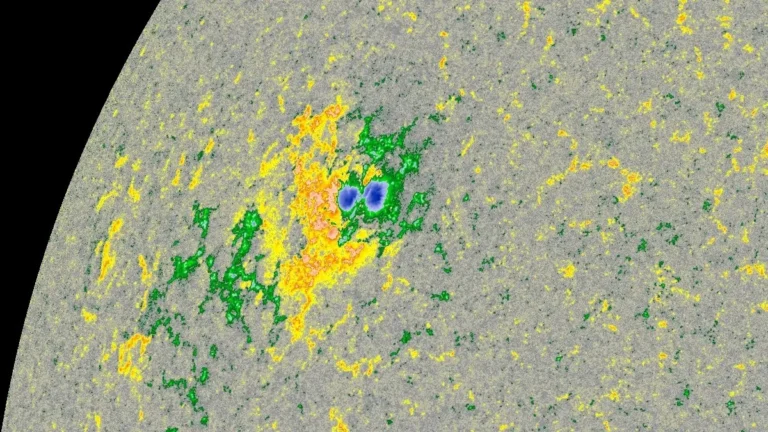
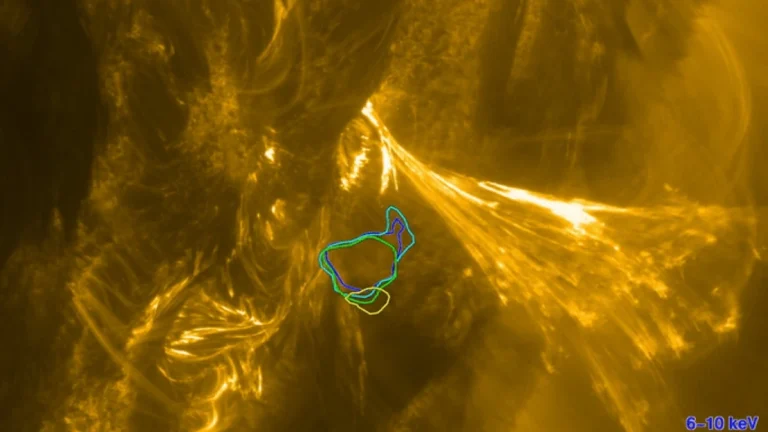
    Solar Orbiter has provided direct observational evidence that avalanche-like magnetic reconnection can power a solar flare. The mechanism was observed during a close approach to the Sun on September 30, 2024, as an M7.7-class flare evolved over roughly 40 minutes before reaching peak intensity. The results, published today in Astronomy & Astrophysics, confirm long-standing avalanche models previously supported mainly by statistical flare studies.

  • What is a solar radiation storm and why it matters

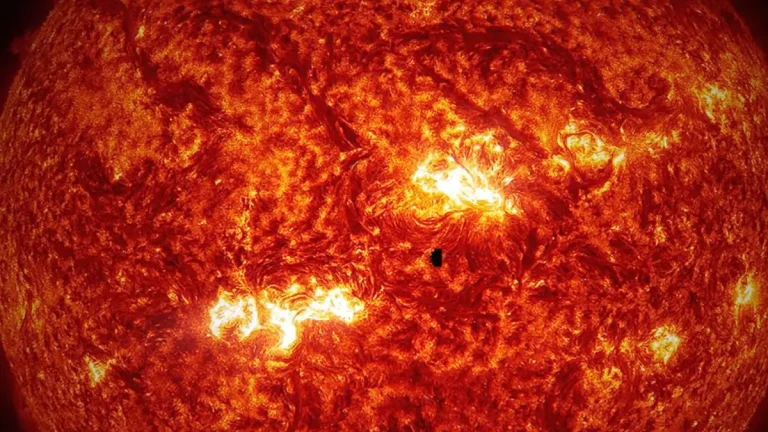
    Solar radiation storms are extreme space weather phenomena in which high-energy particles from the Sun reach near-Earth space, posing operational risks to satellites and aviation. The latest rare S4 – Severe event on January 19, 2026, is the strongest since 2003, providing an opportunity to explain what solar radiation storms are and why scientists monitor them from Earth’s orbit to surface detectors.

  • After five years of monitoring, scientists map Popocatépetl’s interior in 3D

    Before dawn, while most of central Mexico sleeps, a small group of scientists climbs the dark slopes of Popocatépetl, one of the country’s most active volcanoes. Their goal is to recover seismic instruments that, after five years of continuous monitoring, have allowed researchers to construct the first complete three-dimensional image of the volcano’s interior. The model reveals multiple zones where magma accumulates beneath the crater, extending to depths of about 18 km (11 miles), and offers new insight into how Popocatépetl functions and how its eruptions may develop.

  • Scientists identify rare jet-forced wind pattern behind 2025 Los Angeles urban firestorm

    When powerful northerly winds swept through Los Angeles on January 7, 2025, they unleashed one of the most destructive urban firestorms in U.S. history. A new study attributes those winds to a rare “jet-forced Santa Ana” pattern — a collision of upper-level atmospheric forces that produced gusts over 35 m/s (80 mph), destroyed more than 16 000 structures, and killed 31 people. The event struck ahead of the first winter rain, after months of near-record dryness that left vegetation tinder-dry.

  • Yellowstone’s silent chemistry reveals the secret of its missing sulfur dioxide

    Yellowstone smells like sulfur, boils with heat, and vents enormous volumes of gas – yet one of volcanology’s most important signals is missing. The near-absence of sulfur dioxide reveals why Yellowstone’s magma stays deep, quiet, and chemically transformed long before reaching the surface.

  • Interstellar comet 3I/ATLAS reveals signs of metal, carbon, and possible cryovolcanism

    New analyses of interstellar comet 3I/ATLAS show that this rare visitor is a carbon-rich, metal-bearing body with an unusually bright coma dominated by carbon dioxide, suggesting a complex chemistry possibly linked to catalytic and cryovolcanic processes.

  • New climate pattern discovered in the tropics may extend storm prediction weeks ahead

    Researchers from the Institute of Science and Technology Austria (ISTA) and collaborators have identified a previously unknown cyclic climate pattern, the tropics-wide intraseasonal oscillation (TWISO), evident across tropical regions on 30–60-day timescales. The discovery, described as one of the most significant advances in climate dynamics, may help improve medium-range forecasts by revealing a predictable rhythm in tropical activity.