
High radiation levels measured at sunken Soviet submarine K-278 Komsomolets site
Sunken Soviet submarine K-278 Komsomolets in the Norwegian Sea continues to release radioactive material more than three decades after sinking on April 7, 1989, according to a 2026 study. Measurements show extremely high concentrations of radionuclides near the wreck, while rapid dilution in surrounding seawater limits broader environmental impact.
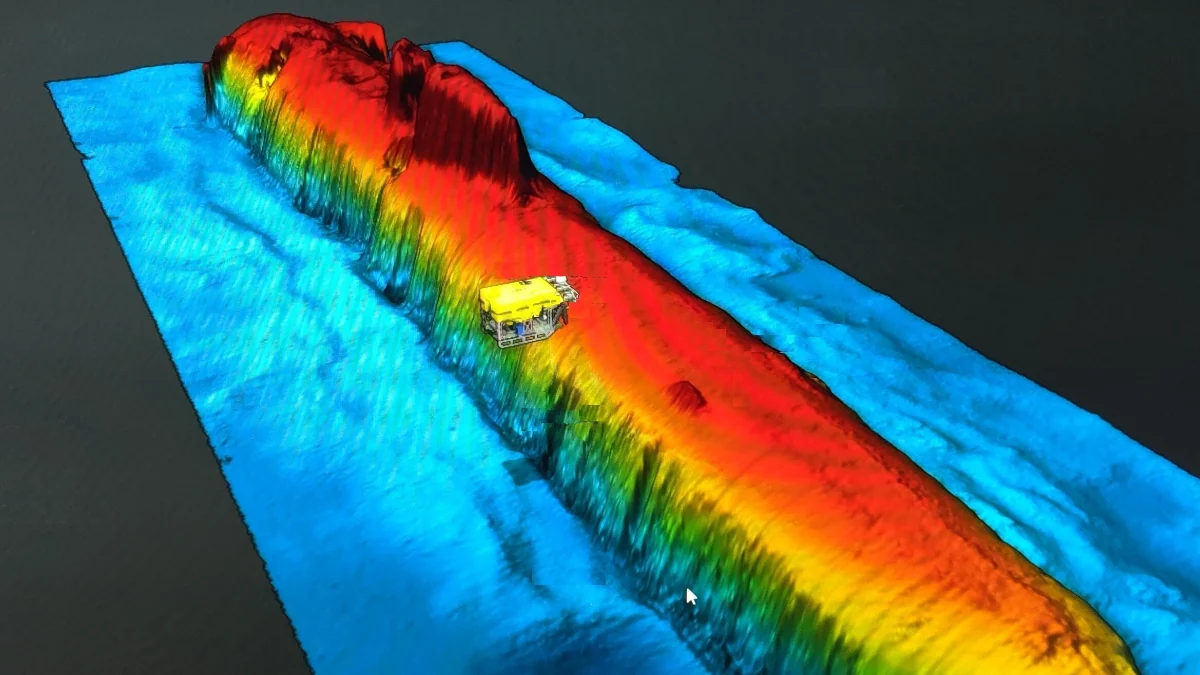
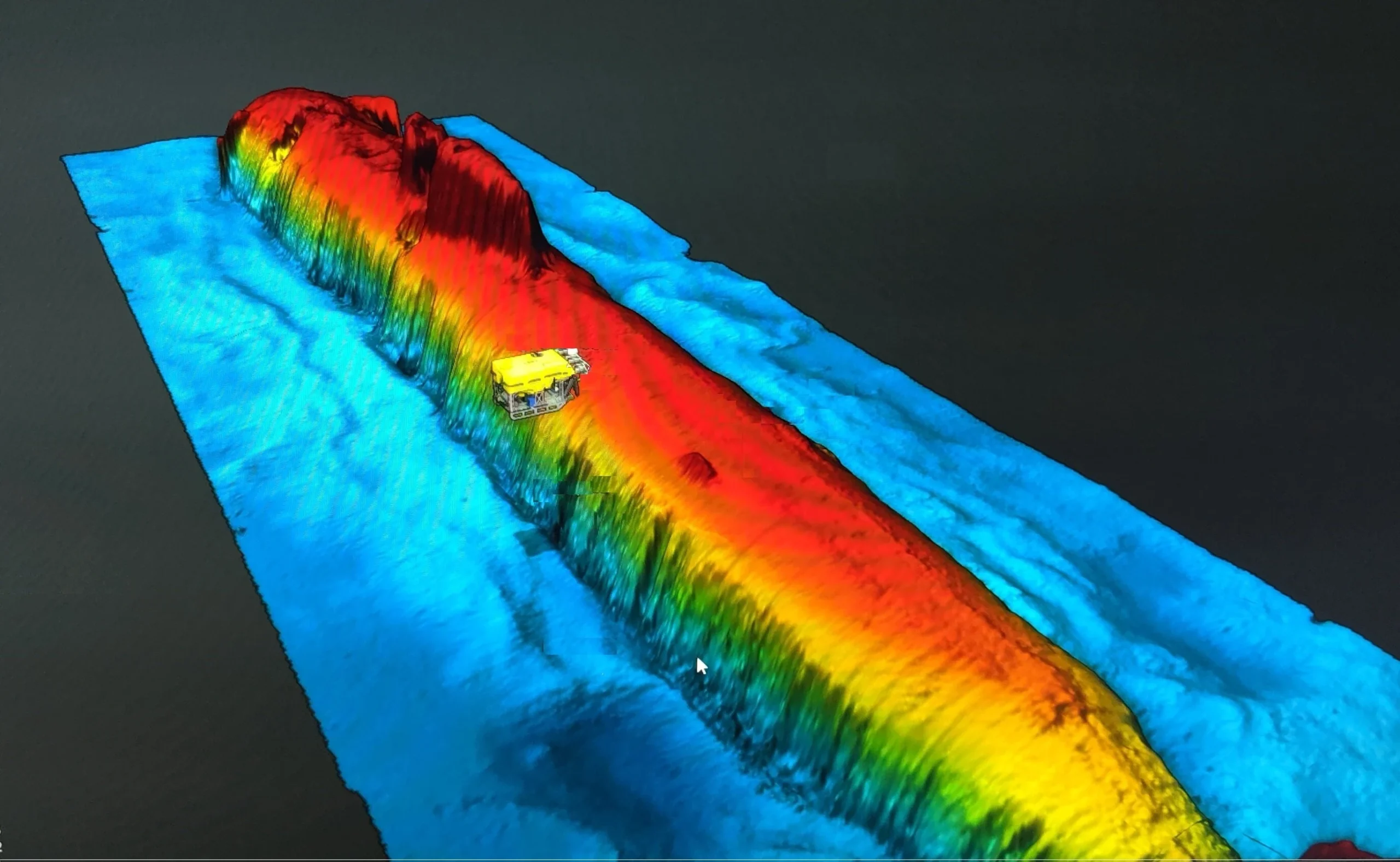
High-resolution side scan sonar image of Komsomolets on the seafloor of the Norwegian Sea. Credit: Institute of Marine Research
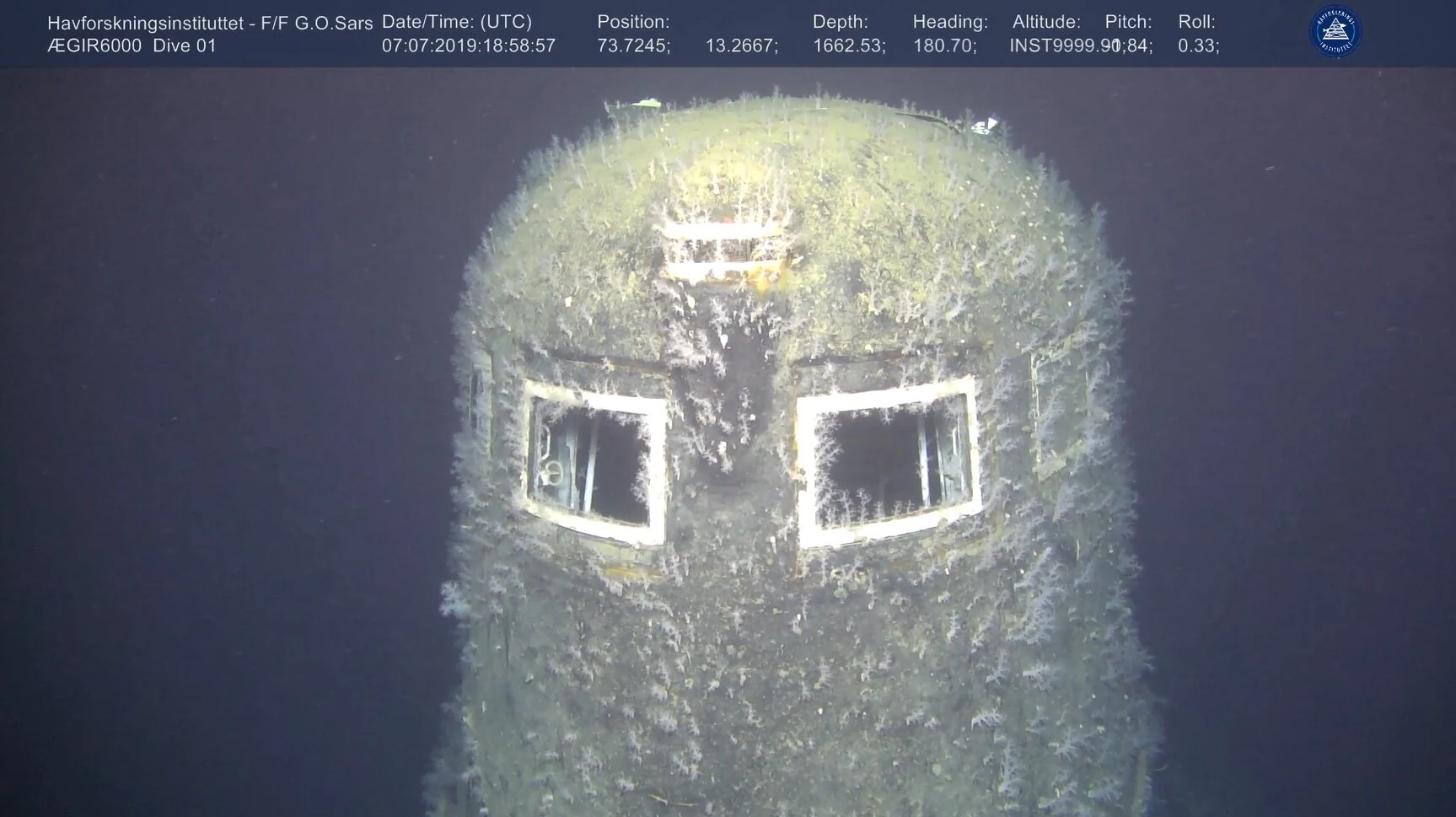
Sunken Soviet submarine K-278 Komsomolets, resting at a depth of approximately 1 700 m (5 577 feet) in the Norwegian Sea, remains an active source of radioactive contamination more than three decades after its loss.
The vessel sank on April 7, 1989, after a fire onboard, and contained a nuclear reactor and nuclear-armed torpedoes that had been subject to long-term structural degradation in the deep-sea environment.
A study published in the Proceedings of the National Academy of Sciences (PNAS) on March 23, 2026, confirms that radioactive material continues to escape from the wreck.
The leak originates from the reactor compartment and associated structural pathways, including damaged sections of the hull where corrosion has progressively compromised containment barriers installed in the early 1990s.
Measurements near the identified leakage points show extremely elevated concentrations of radionuclides. Strontium-90 and cesium-137 levels reach up to 400 000 and 800 000 times above local background levels, respectively. During observed release events, cesium-137 concentrations in surrounding water increased by approximately 1 000 times compared to baseline samples.
Additional radionuclides, including plutonium and uranium, have also been detected at elevated concentrations, with plutonium levels measured at up to 66 times above historical baselines. The observations suggest ongoing degradation of nuclear fuel within the reactor compartment under prolonged exposure to seawater and high-pressure deep-sea conditions.
The release of radioactive material isn’t continuous but occurs in intermittent pulses.
Underwater observations have shown visible plumes of contaminated water escaping the wreck, confirming episodic discharge behavior. While the exact trigger is not known yet, the observed pattern is consistent with progressive structural degradation and localized release pathways.
Despite the extremely high radiation levels measured at source points, the environmental impact remains limited in spatial extent. Rapid dilution in the surrounding deep-sea water column reduces radionuclide concentrations to near-background levels within a relatively short distance from the wreck. Oceanographic conditions at the site further constrain the spread of contaminants and limit transfer into wider circulation.
Long-term monitoring over the last few decades hasn’t identified a significant accumulation of radionuclides in the broader marine environment surrounding the wreck. Current evidence indicates that contamination remains confined to the immediate vicinity, with no measurable large-scale ecological impact under present conditions.
Containment measures applied in the early 1990s, including sealing of structural breaches, were designed with an expected lifespan of 20–30 years. The observed leakage is consistent with the gradual degradation of these materials under corrosive deep-sea conditions.
The long-term evolution of the site remains uncertain. Continued corrosion of reactor components and surrounding structures may influence leakage behavior over time, although current observations indicate that release remains intermittent and spatially limited.
References:
1 J.P. Gwynn, H.E. Heldal, H. Teien, A. Volynkin, S.M. Jerome, & O.C. Lind, Status of the sunken nuclear submarine Komsomolets in the Norwegian Sea, Proc. Natl. Acad. Sci. U.S.A. 123 (13) e2520144123, https://doi.org/10.1073/pnas.2520144123

I am an Assistant Editor and Severe Weather & Science Journalist at The Watchers, specializing in real-time severe weather coverage, geophysical event reporting, and research-driven scientific analysis. You can reach me at rishav(at)watchers(.)news.

Commenting rules and guidelines
We value the thoughts and opinions of our readers and welcome healthy discussions on our website. In order to maintain a respectful and positive community, we ask that all commenters follow these rules.