
New eruptive episode at Kīlauea produces strong lava fountaining and high sulfur dioxide emissions
Episode 37 of the ongoing Kīlauea eruption began at 14:30 HST on November 25, 2025 (00:30 UTC, November 26), producing sustained lava fountains about 120 m (400 feet) high from the north vent inside Halemaʻumaʻu crater. The eruption remains confined within Hawaiʻi Volcanoes National Park, with no impacts beyond the summit area. Seismic tremor intensified at the onset, and sulfur dioxide (SO2) emissions rose to around 50 000 tonnes per day, generating volcanic gas plumes and vog drifting southwest under light northeast winds.
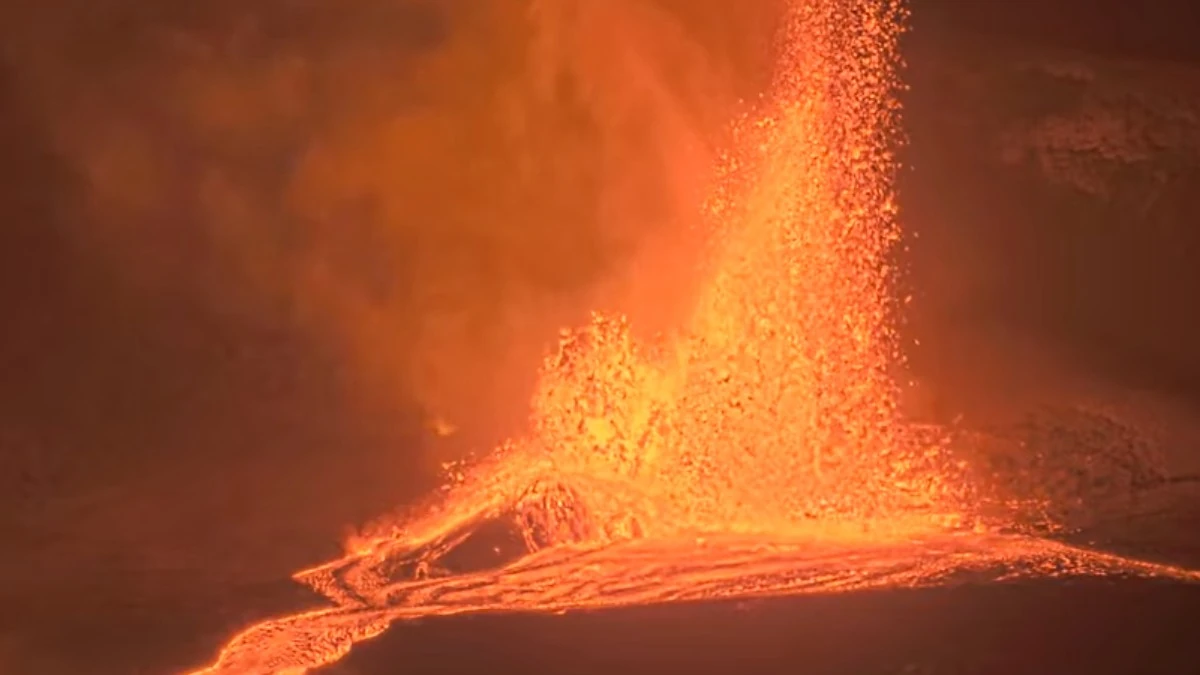
Eruption at Kilauea volcano on November 26, 2025. Credit: USGS/HVO
The Hawaiian Volcano Observatory (HVO) reported sustained lava fountains reaching approximately 120 m (400 feet) from the north vent inside Halemaʻumaʻu crater at about 00:30 UTC on November 26. The eruption was accompanied by a sharp increase in volcanic tremor and a summit tilt reversal from inflation to deflation.
Fountain heights increased rapidly through the afternoon as the eruption intensified. Based on patterns observed in previous episodes of this ongoing eruption sequence, such increases often precede brief periods of very high fountaining.
Past episodes have produced incandescent lava jets exceeding 300 m (1 000 feet) and eruption plumes rising up to 6 000 m (20 000 feet) above ground level.
Episode 37 was preceded by small, sporadic spattering that began on November 21 and transitioned to sustained activity following continuous overflows recorded at 14:15 HST on November 25. Inflationary tilt prior to eruption onset reached about 22 microradians.
No impacts to communities or nearby airports have been reported, and flight operations at Kona (KOA) and Hilo (ITO) airports are unaffected.
Since December 23, 2024, Kīlauea has shown a pattern of episodic summit activity, with short fountaining events typically lasting less than a day and separated by several days of quiet.
HVO monitoring indicates no deformation or seismic changes in the East Rift Zone or Southwest Rift Zone, suggesting magma storage remains restricted to the summit region.
Sulfur dioxide (SO2) emissions during the current episode are estimated at about 50 000 tonnes per day, producing visible volcanic gas plumes and vog (volcanic smog) downwind of the summit.
According to the National Weather Service (NWS), winds are light and blowing from the northeast, carrying gases and fine volcanic particles toward the southwest.
Downwind areas may experience fallout of Pele’s hair, fine strands of volcanic glass formed by lava fountains, along with minor ash, scoria, and reticulite fragments. These materials generally settle within 1–3 km (1–2 miles) of the eruptive vents but can be transported more than 15 km (10 miles) under suitable wind conditions.
Residents and visitors are advised to minimize contact with Pele’s hair due to the risk of skin and eye irritation.
The summit area remains closed to the public due to persistent hazards, including unstable crater walls, ground cracking, and rockfalls that can occur during or between eruptive episodes.
Kīlauea’s Volcano Alert Level remains at WATCH, and the Aviation Color Code at ORANGE, indicating confined but vigorous summit activity.
Live views of the eruption
References:
1 Volcano update for Kilauea, Hawaii – HVO – November 26, 2025

I'm a dedicated researcher, journalist, and editor at The Watchers. With over 20 years of experience in the media industry, I specialize in hard science news, focusing on extreme weather, seismic and volcanic activity, space weather, and astronomy, including near-Earth objects and planetary defense strategies. You can reach me at teo /at/ watchers.news.

Commenting rules and guidelines
We value the thoughts and opinions of our readers and welcome healthy discussions on our website. In order to maintain a respectful and positive community, we ask that all commenters follow these rules.