
First August snowfall in 15 years recorded in the High Tatras, Poland
Snowfall was recorded in Poland’s High Tatras mountains on August 24, 2025, for the first time in August since 2010, as temperatures dropped to -3°C (26.6°F) at the summit of Kasprowy Wierch. The event was driven by an Arctic air mass that moved across Poland over the weekend.
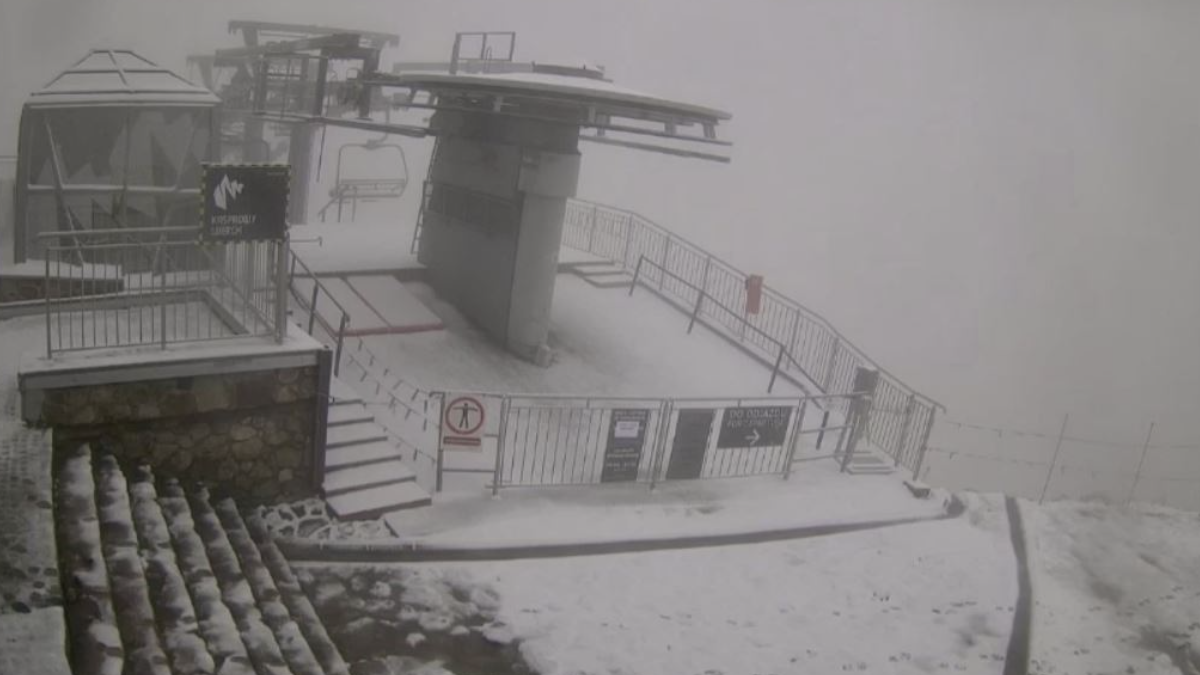
First August snowfall since 2010 at Kasprowy Wierch in Polands Hgh Tatra Mountians on August 24, 2025. Credit: ferozwala
Poland’s High Tatras Mountains recorded their first August snowfall in 15 years on August 24, 2025, as temperatures dropped to -3°C (26.6°F) under the influence of an Arctic air mass.
The snowfall began on the night of August 23 and continued into August 24, following the arrival of cold air sweeping across Poland over the weekend.
At the summit of Kasprowy Wierch (1 987 m / 6 519 feet), temperatures dipped to -3°C (26.6°F) overnight, resulting in localized snow accumulation. While snowfall can occur in any month at the highest elevations of the Polish Tatras, the last recorded August event was in 2010. An even earlier occurrence was noted in July 2011.
In Poland, snow fell in the Tatra Mountains for the first time in 15 years.
— World News (@ferozwala) August 25, 2025
At the summit of #Kasprowy_Wierch (1987 meters), the temperature dropped to 3 degrees Celsius below zero.#Tatra_Mountains #Poland pic.twitter.com/9amdXrjngg
Forecasters expect a rise in temperatures by midweek due to warmer southern air flows reaching the region, making it unlikely that the snow cover will persist beyond a few days.
The Tatra Mountains form the natural border between Slovakia and Poland and represent the highest section of the Carpathian range.
The mountains span approximately 750 km² (290 mi²), with the majority, around 600 km² (232 mi²), located in Slovakia. The highest peak, Gerlach (2 655 m / 8 710 feet), lies north of Poprad. Poland’s highest peak, Rysy (2 499 m / 8 200 feet), is situated near the Slovak border.

Rishav Kothari is Editor-in-Chief of The Watchers, where he runs the newsroom and covers earthquakes, volcanoes, severe weather and space weather.
Published in the last 24 hours
- Second nationwide US flight halt since 9/11: how the November 13 FAA ground stop compares with September 2001 and January 2023 Epicenter
- FAA grounds all departing flights across the US after communications outage hits air traffic control centers nationwide
- In September 1859, a solar storm lit up the night sky so brightly that gold miners in the Rocky Mountains woke up after midnight and started cooking breakfast, convinced the aurora glowing over their camp was the sunrise Epicenter
- A patch of warm Pacific water that could become the strongest El Niño in more than 70 years sits thousands of miles from any American town, yet it is already the main reason NOAA expects a wetter winter across the South and a milder one across the North
