
Unusually strong summer atmospheric river brings heavy rainfall to Washington
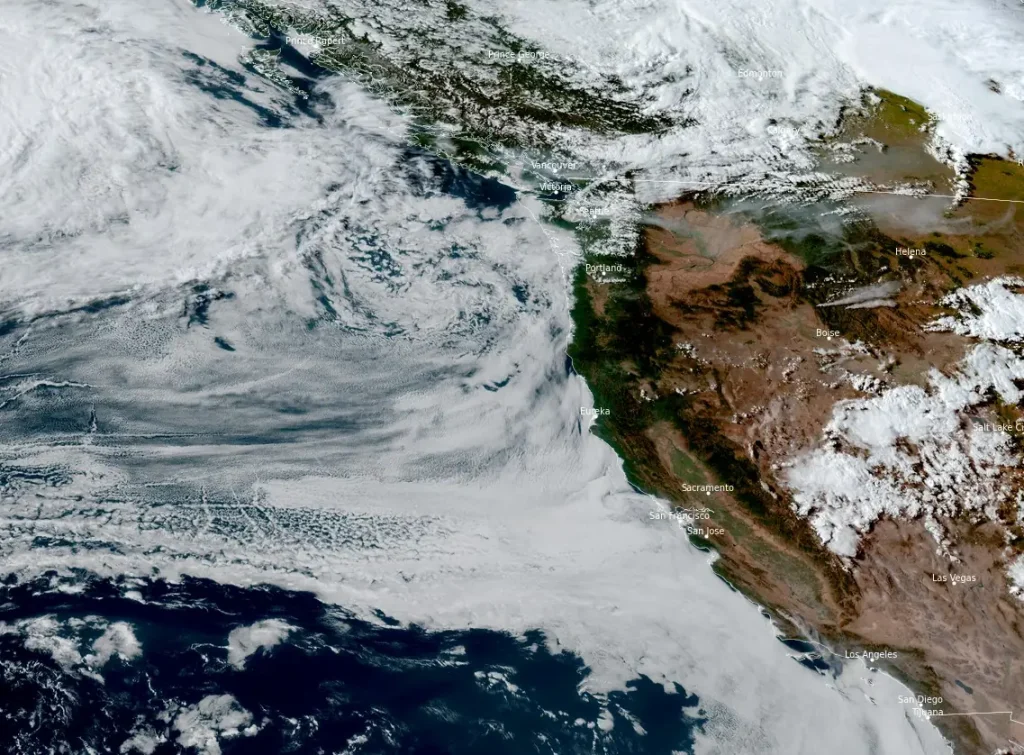
An unusually strong summer atmospheric river made landfall over the Pacific Northwest late on August 14, 2025, reaching AR 3 along the Washington coast and producing 75–200 mm (3–8 inches) of rain across parts of western Washington.
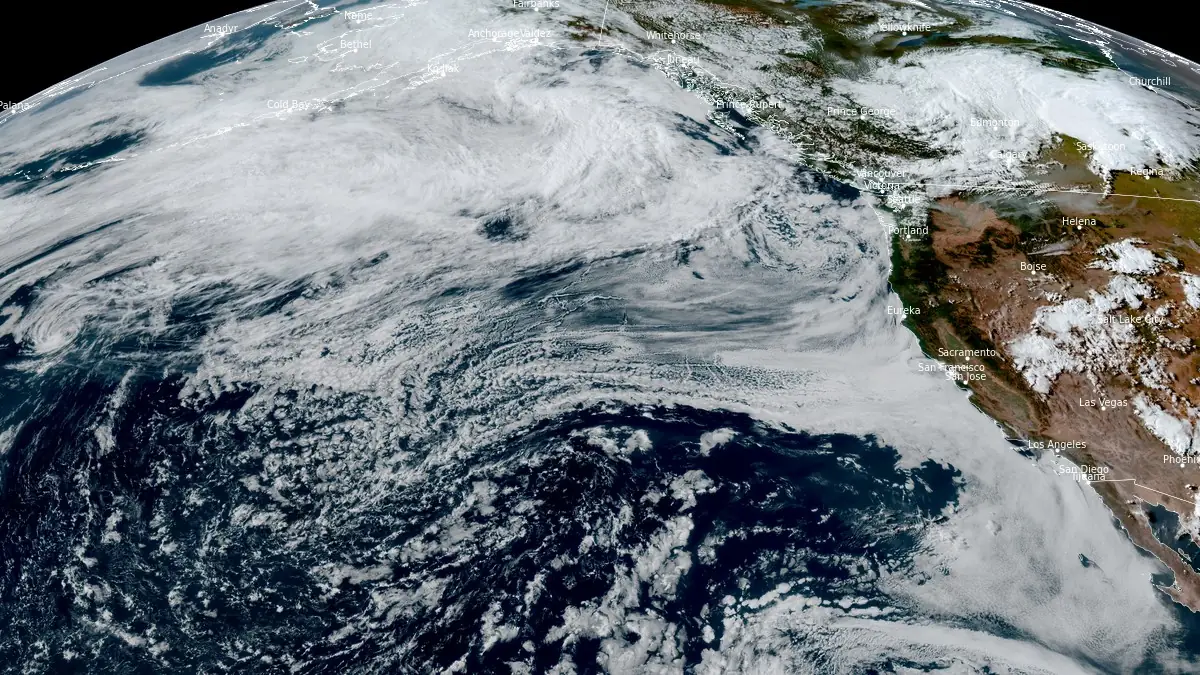
Satellite image of atmospheric river impacting Pacific Northwest on August 14, 2025. Credit: NOAA/GOES-West, RAMMB/CIRA, The Watchers
An unusually potent summer atmospheric river (AR) made landfall over the Pacific Northwest late on August 14, bringing widespread rainfall to western Washington.
Analyses from the Global Ensemble Forecast System (GEFS) indicated AR 3 (on a scale of 1–5) conditions along much of the Washington coast and AR 2 in portions of the Cascades foothills, including the Green River Basin.
The event developed within a plume of very moist air extending eastward from the Western Pacific. On August 15, Salem, Oregon, recorded precipitable water of 45 mm (1.79 inches), the city’s third highest on record and the highest for summer.
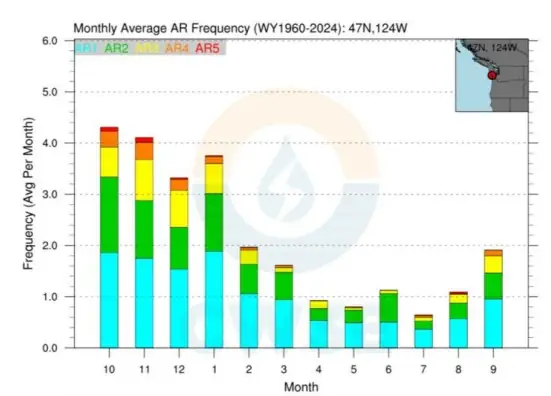
Integrated vapor transport (IVT) peaked at 851 kg m−1 s−1. At Grays Harbor County, Washington, this ranked as the fifth-strongest August AR observed since 1960, with only 14 August ARs reaching AR 3 or greater at that location in that period, according to the Center for Western Weather and Water Extremes.
Estimated precipitation totals reached 75–200 mm (3–8 inches) across parts of the Olympic Peninsula and Washington Cascades, with 25–75 mm (1–3 inches) in the Green River Basin. Despite the heavy rainfall, hydrologic impacts were limited due to dry antecedent soil conditions and low antecedent streamflow.
Atmospheric rivers of this intensity are uncommon in the Pacific Northwest during summer. While winter ARs more often produce significant flooding, the combination of event timing and pre-event dryness limited runoff efficiency during this episode.

Teo Blašković founded The Watchers in 2011 and edited it until 2026, covering seismic and volcanic activity, extreme weather, space weather and near-Earth objects. Articles on this page are his archive.
Published in the last 24 hours
- High Risk of excessive rainfall covers Florida’s Space Coast as St. Johns River near Cocoa reaches 5.67 m
- People who stayed put through the 2017 hurricanes were more often the ones with flood insurance, a survey of 2,557 Gulf Coast residents found, and the authors suggest the policy may have made the storm feel less dangerous Epicenter
- Four small asteroids will pass close to Earth from November 21 to 23
- Cyclone Akvan weakens after landfall near Gopalpur; more than 300 000 evacuated in Odisha, India
