
Bryce Fire in Arizona rapidly spreads to 1 170 ha (2 900 acres)
The Bryce Fire near Fort Thomas, Arizona, has burned 1 172 ha (2 896 acres) and remains 25% contained as of May 11, 2025. No structures have been reported damaged, but pre-evacuation notices have been issued for nearby residents.

The Bryce Fire spotted over containment lines on the N/NW side. Image credit: AZ Dept. Forestry and Fire Management
The Bryce Fire started on May 7, about 4.8 km (3 miles) west of Pima along US-70 in Graham County, Arizona. Initially reported at 65 ha (160 acres) with 80% containment by May 8, the fire spread rapidly due to high winds on May 9. By May 11, it had grown to 1 172 ha (2 896 acres), burning through dense tamarisk stands in the Gila River bottom near Eden. Containment remains at 25%, with the fire exhibiting extreme behavior, including torching and long-range spotting.
About 240 personnel, including hotshot crews, hand crews, engines, water tenders, and bulldozers, were assigned, with firefighters employing both direct and indirect tactics, such as constructing dozer lines and preparing River Road as a holding feature. Overnight firing operations along River Road have helped protect homes and infrastructure in Fort Thomas.
Aviation support includes helicopters dropping water buckets and water-scooping aircraft drafting from San Carlos Reservoir. Single-engine air tankers were grounded on May 9 after proving ineffective.
A Temporary Flight Restriction (TFR) is in effect, and officials have warned that unauthorized drones could disrupt aerial operations. The fire has damaged multiple power and gas lines, though no structures have been reported destroyed.
 Firefighters deployed on the N/NW side. Image credit: AZ Dept. Forestry and Fire Management
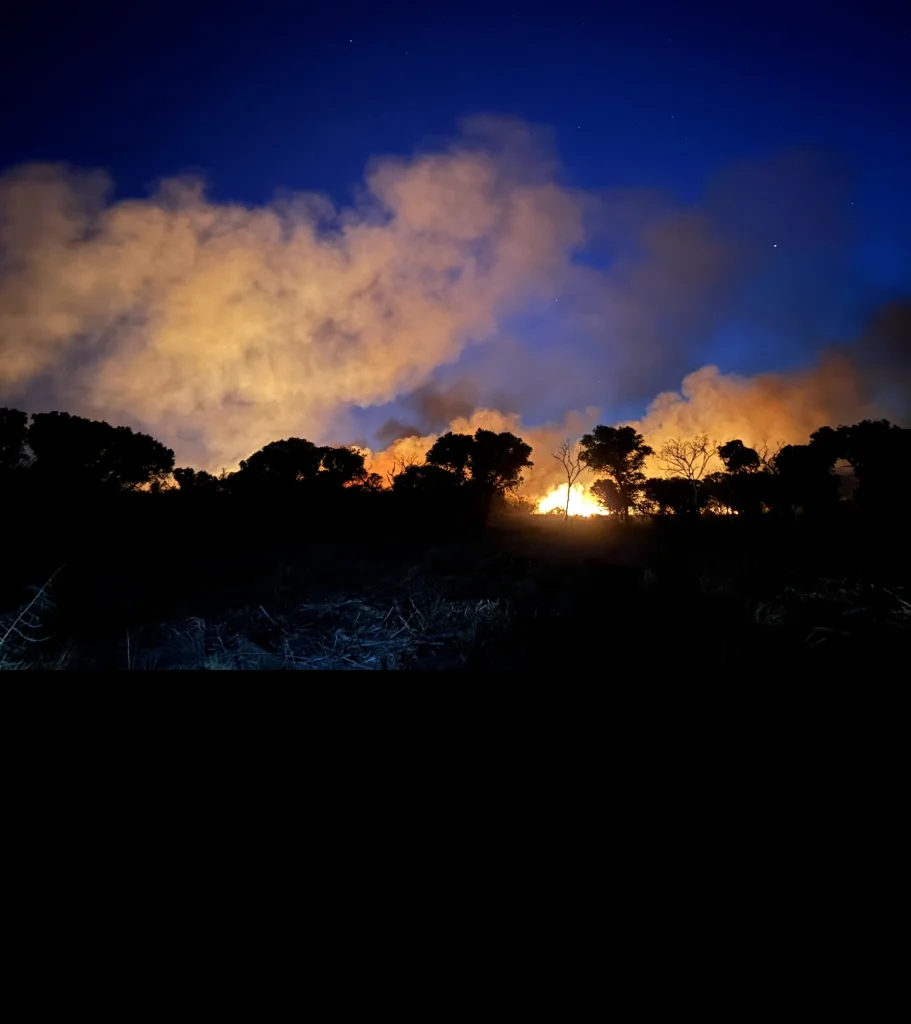 Bryce Fire stayed active through the night. Image credit: AZ Dept. Forestry and Fire Management
 Bryce fire stayed active most of the day particularly on NW side. It is burning w/n Gila River bottom in tamarisk. Image credit: AZ Dept. Forestry and Fire Management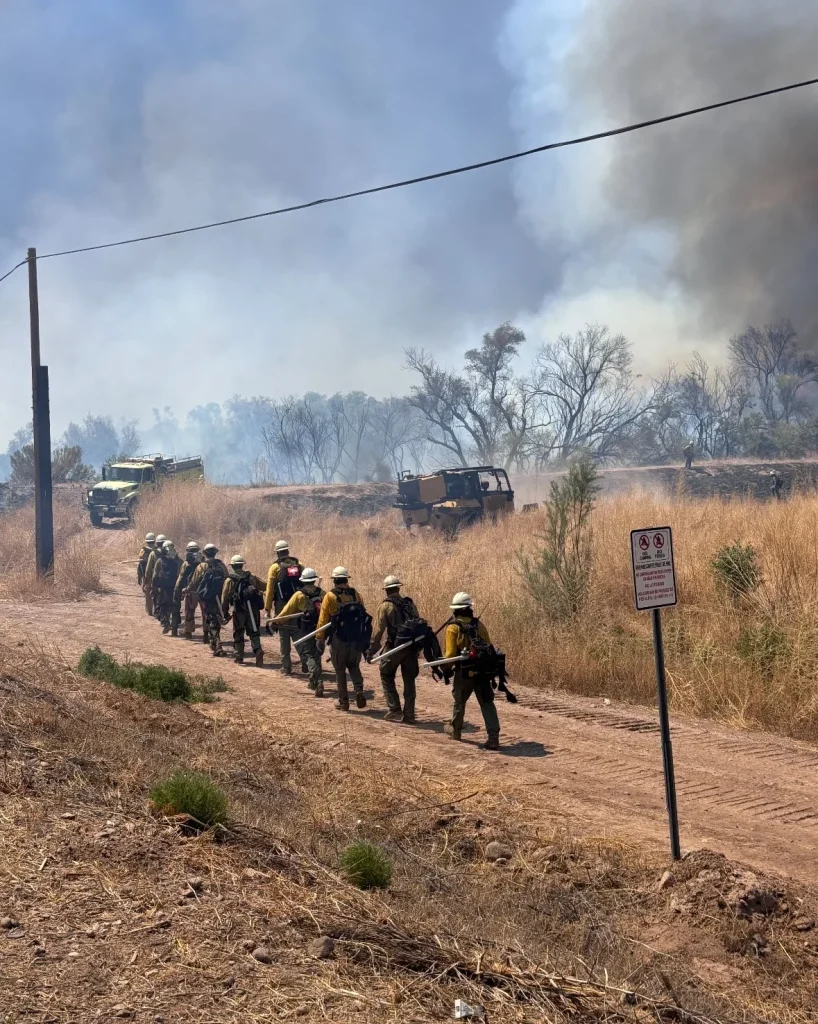
 Bryce fire stayed active most of the day particularly on NW side. It is burning w/n Gila River bottom in tamarisk. Image credit: AZ Dept. Forestry and Fire Management
 Mapping mission for the Bryce Fire reports the incident at 2,896 acres. Image credit: AZ Dept. Forestry and Fire Management
 The Bryce Fire spotted over containment lines on the N/NW side. Image credit: AZ Dept. Forestry and Fire Management


On May 11, temperatures reached approximately 35 °C (95 °F) with southeast winds of 34–42 km/h (21–26 mph) and gusts up to 60 km/h (37 mph).
A Fire Weather Watch was issued for May 12 and later upgraded to a Red Flag Warning due to continued gusty winds. The invasive tamarisk vegetation produces intense flames and thick black smoke, complicating suppression efforts.
The Graham County Sheriff’s Office has issued “SET” pre-evacuation notices for homes between Eden Road and Fort Thomas on the north side of US-70, as well as for residences in the Gila River corridor. Some residents have voluntarily evacuated, but no mandatory evacuations are in effect. US-70 remains open between Fort Thomas and Safford, though drivers have been cautioned about possible closures and drifting smoke.
The Southeast Zone Type 3 Incident Management Team assumed command of the fire on May 10. Crews are focusing on the fire’s northern flank, where high winds pose the greatest challenge. Objectives include keeping the fire north of US-70, east of Fort Thomas, and within the riverbed, while protecting agricultural lands, homes, and infrastructure. Contingency dozer lines are being scouted as a backup measure.
On May 9, the fire jumped a 7.5–9 m (25–30 feet) containment line on its northern end, driven by winds and fueled by tamarisk. This resulted in a 10 km (6 miles) push north and northeast, significantly increasing the fire’s size. Updated mapping on May 10 revised the area to 927 ha (2 290 acres), with May 11 estimates reaching 1 172 ha (2 896 acres).
Local media and official updates confirm that the fire was human-caused, although the specific cause remains under investigation. Fire crews continue working to hold and strengthen existing containment lines, with helicopters cooling hot spots to facilitate safer ground operations. The Arizona Department of Forestry and Fire Management (DFFM) provides regular updates through InciWeb and social media.

I’m a science journalist and researcher at The Watchers, contributing to the Epicenter edition, where I cover peer-reviewed scientific research and emerging discoveries across Earth and space sciences. With a background in astronomy and a passion for environmental science, I’ve worked in shark and coral conservation in Fiji, conducting reef and shark-behavior research, contributing to mangrove restoration, and earning PADI Open Water and Coral Reef Certifications. I bring a blend of scientific rigor and storytelling to illuminate the discoveries shaping our planet and beyond.

Commenting rules and guidelines
We value the thoughts and opinions of our readers and welcome healthy discussions on our website. In order to maintain a respectful and positive community, we ask that all commenters follow these rules.