
Floods and landslides claim 48 lives, damage nearly 60 000 homes in Ecuador since January
Severe floods and landslides have killed at least 48 people and affected more than 182 000 across Ecuador since January 1, causing widespread damage to homes, infrastructure, and agriculture in 23 of the country’s 24 provinces.
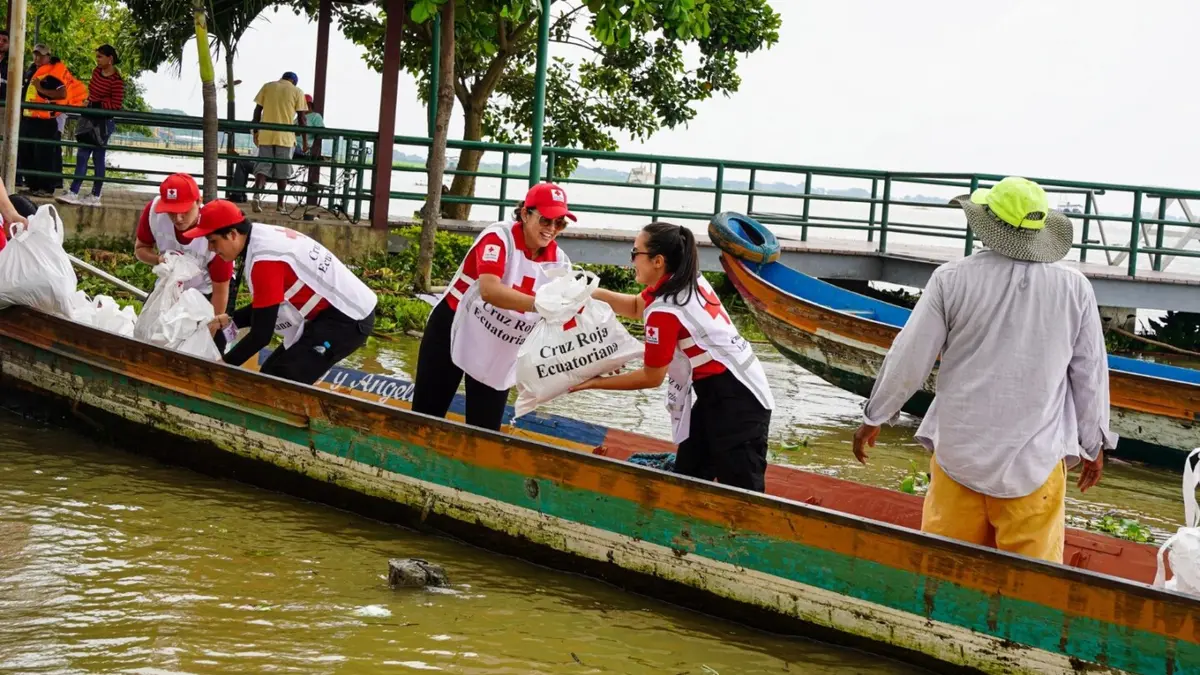
Volunteers from the Ecuadorian Red Cross distribute emergency supplies by boat in flood-affected communities. Image credit: The Red Cross
As of May 6, the National Secretariat for Risk Management (SNGR) has recorded 2 947 adverse events since the start of the year, including 1 322 landslides and 1 163 floods across 23 provinces, resulting in 48 deaths and 134 injuries. Western and coastal provinces such as Manabí, Los Ríos, and Guayas are among the worst affected.
More than 182 000 people have been affected, with 44 338 displaced to shelters or host households. SNGR reports that 61 149 buildings have been damaged or destroyed, including 59 286 homes affected and 770 completely destroyed. Evacuations were concentrated in Manabí, where 89 800 people were affected, and in Los Ríos, with 49 000 affected.
Infrastructure damage includes 147 km (91 miles) of highways and 61 bridges damaged, with 29 bridges destroyed. Flooding has impacted water treatment facilities and power lines, disrupting essential services. In addition, 112 schools have been damaged, affecting access to education in several provinces.
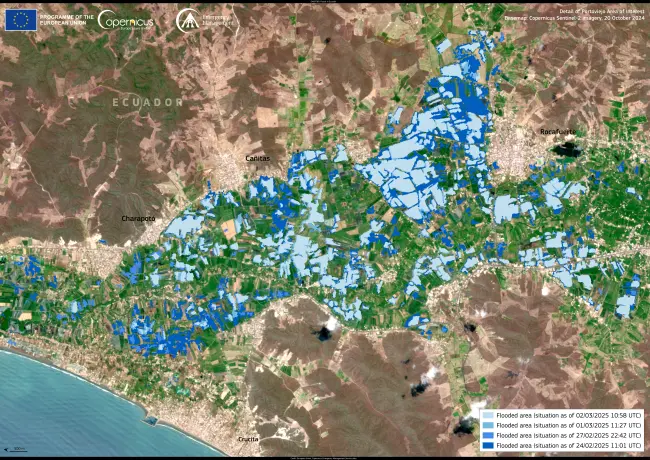
Agricultural damage includes the destruction of 22 974 ha (56 780 acres) of crops and the loss of 96 000 livestock.
A landslide triggered by heavy rainfall caused a rupture in the SOTE oil pipeline on March 13 in Esmeraldas province, releasing approximately 25 000 barrels of crude oil into nearby river systems. Operated by state-run Petroecuador, the pipeline was buried under more than 225 000 m3 (7.9 million ft3) of soil. The spill contaminated the Caple, Viche, and Esmeraldas rivers, raising significant environmental concerns. Emergency containment and cleanup operations were initiated, but authorities have not yet disclosed the full extent of ecological damage.
Health authorities have reported more than 9 500 confirmed cases of dengue fever since the onset of the rainy season. The outbreak has been attributed to persistent standing water left behind by repeated flooding, creating favorable breeding conditions for Aedes aegypti mosquitoes. The Ministry of Public Health has launched intensified vector control campaigns, including fumigation and public awareness efforts in the most affected provinces.
A 60-day state of emergency was declared on February 26 in eight provinces and later expanded. Military, police, and engineers have been mobilized. Relief operations are being coordinated by the National Comité de Operaciones de Emergencia (COE), with local COEs active in the impacted cantons. Shelters are currently housing tens of thousands of displaced residents.
International assistance includes support from the European Union through the Civil Protection Mechanism, activated on March 6, providing water pumps, tents, and food supplies.
Since February 26, the Copernicus Emergency Management Service (EMS) has issued 83 flood maps. The Red Cross, United Nations, and NGOs are delivering clean water, medical assistance, and cash transfers to 43 000 people.
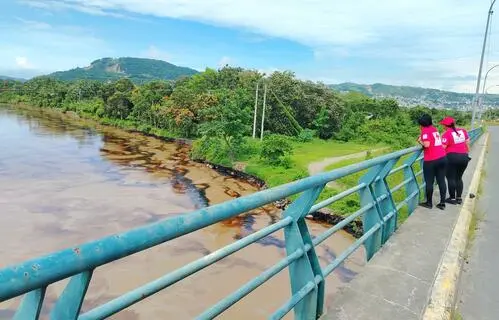
Forecasts indicate moderate to heavy rainfall continuing through May, especially in western provinces, increasing the risk of additional flooding and landslides. The National Institute of Meteorology and Hydrology (INAMHI) and SNGR have maintained red and orange alerts in high-risk areas. Mosquito control operations have been intensified due to ongoing health threats posed by standing water.
To mitigate future risks, government agencies are reinforcing riverbanks and pre-positioning emergency supplies in flood-prone regions. The United Nations Office for the Coordination of Humanitarian Affairs (UN OCHA) and the Global Disaster Alert and Coordination System (GDACS) continue to monitor the situation. A “Green” alert remains in effect, indicating a moderate national risk level.
Authorities are urging residents to comply with evacuation orders and avoid flooded areas.

I’m a science journalist and researcher at The Watchers, contributing to the Epicenter edition, where I cover peer-reviewed scientific research and emerging discoveries across Earth and space sciences. With a background in astronomy and a passion for environmental science, I’ve worked in shark and coral conservation in Fiji, conducting reef and shark-behavior research, contributing to mangrove restoration, and earning PADI Open Water and Coral Reef Certifications. I bring a blend of scientific rigor and storytelling to illuminate the discoveries shaping our planet and beyond.

Commenting rules and guidelines
We value the thoughts and opinions of our readers and welcome healthy discussions on our website. In order to maintain a respectful and positive community, we ask that all commenters follow these rules.