
Large landslide disrupts water supply to 400 000 near Quito, Ecuador
A landslide near Quito, Ecuador, damaged the La Mica-Quito Sur pipeline around 23:00 local time (LT) on July 9, 2025, rupturing 350 m (1 150 feet) of pipe and suspending water supply to six southern parishes, affecting approximately 88 700 families.
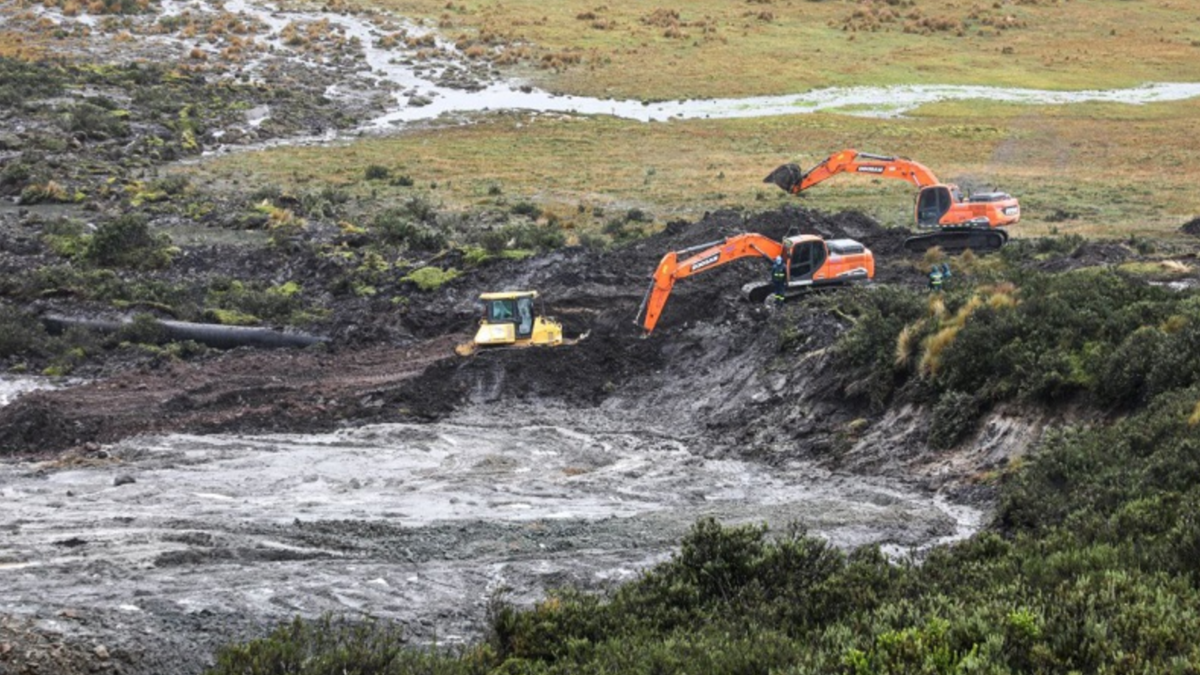
Image credit: Quito Informa
A landslide in the La Mica region, located southeast of Quito, Ecuador, caused severe damage to the La Mica-Quito Sur pipeline at around 23:00 LT on July 9. The rupture affected 350 m (1 150 feet) of 1 m (3.2 feet) steel pipeline, which serves as a critical conduit for potable water to the southern districts of the city.
Six parishes, Guamaní, La Ecuatoriana, Chillogallo, Argelia, Quitumbe, and Turubamba, were left without water, impacting an estimated 88 707 families or 400 000 individuals. The landslide occurred 10 km (6.2 miles) from the reservoir intake point and followed days of persistent rainfall that destabilized the surrounding terrain.
On July 10, Quito’s municipal emergency operations committee (COE-M) declared a water emergency. Authorities mobilized over 60 tanker trucks, 4 inflatable cisterns each holding 25 m³ (890 square feet), and portable water stations, prioritizing service to hospitals, health centers, educational facilities, markets, and vulnerable communities.
Approximately 120 000 m³ (4.24 million square feet) of material was displaced by the landslide, according to municipal sources. Removal operations have been ongoing using heavy machinery in the affected zone.
To repair the rupture, the Empresa Pública Metropolitana de Agua Potable y Saneamiento (EPMAPS) sourced over 300 m (984 feet) of high-density polyethylene (HDPE) piping from Cuenca to replace the damaged steel section. Installation of replacement infrastructure began between July 14 and 17, with expedited logistics implemented due to the scale of the emergency.
Security forces were deployed to monitor water distribution points and prevent illegal resale or hoarding of tanker-supplied water. Coordination between Quito’s municipal government and the National Risk and Emergency Management Service of Ecuador (SNGRE) continues to monitor the situation and ensure the integrity of the remaining pipeline network.
References:
1 Estas son las 11 cosas que debe saber sobre la rotura de tubería en La Mica – Quito Informa – July 14, 2025

I’m a science journalist and researcher at The Watchers, contributing to the Epicenter edition, where I cover peer-reviewed scientific research and emerging discoveries across Earth and space sciences. With a background in astronomy and a passion for environmental science, I’ve worked in shark and coral conservation in Fiji, conducting reef and shark-behavior research, contributing to mangrove restoration, and earning PADI Open Water and Coral Reef Certifications. I bring a blend of scientific rigor and storytelling to illuminate the discoveries shaping our planet and beyond.
Published in the last 24 hours
- In September 1859, a solar storm lit up the night sky so brightly that gold miners in the Rocky Mountains woke up after midnight and started cooking breakfast, convinced the aurora glowing over their camp was the sunrise Epicenter
- A patch of warm Pacific water that could become the strongest El Niño in more than 70 years sits thousands of miles from any American town, yet it is already the main reason NOAA expects a wetter winter across the South and a milder one across the North
- A 19-year-old Nebraska teacher reportedly tied her pupils together with twine and led them to safety through a blizzard in January 1888 Epicenter
- NASA built the Opportunity rover to last 90 days on Mars, and Martian winds helped keep it alive for nearly 15 years by blowing dust off its solar panels, until a planet-wide dust storm in 2018 blocked sunlight and silenced the rover Epicenter
