
Hundreds evacuate erupting Fuego volcano, Guatemala
Nearly 900 people were evacuated after Guatemala’s Fuego volcano erupted on March 9, 2025, prompting an Orange Alert and emergency response.
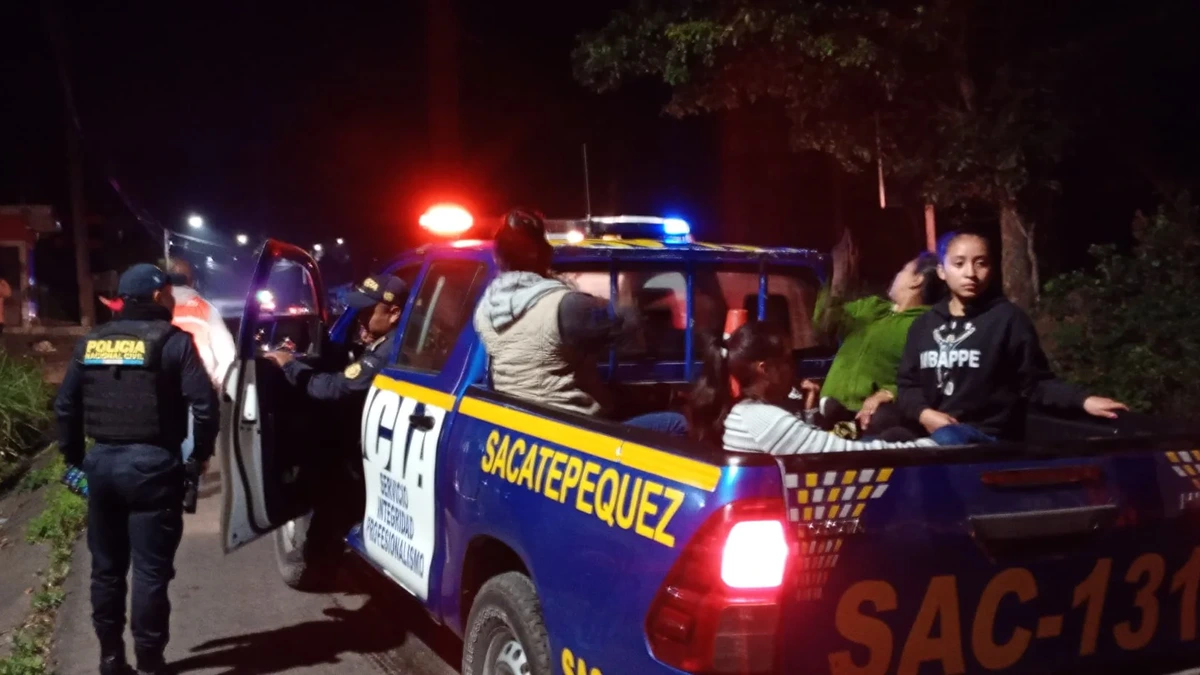
Community members from Las Lajitas are being evacuated to the municipal hall of San Juan Alotenango on March 10, 2025. Image credit: CONRED
125 families, approximately 900 residents, had been relocated from El Porvenir in Alotenango, as confirmed by the National Coordinator for Disaster Reduction (CONRED) on March 10, due to eruption at the Fuego volcano. Evacuees were transported to the Alotenango municipal hall, where temporary accommodations were arranged.
The eruption began at approximately 03:00 UTC on March 9, according to the National Institute of Seismology, Volcanology, Meteorology, and Hydrology (INSIVUMEH), marking the first major activity after 49 days of quiescence.
Effusive eruption continued into March 10, producing incandescent fountains rising 500 m (1 640 feet) above the crater. Dense columns of gas and ash reached 6 km (19 685 feet) a.s.l., dispersing northwest and west over distances of 100 to 120 km (62–75 miles).
During the peak of the eruption, pyroclastic flows, a fast-moving mixture of hot gases, ash, and volcanic debris, moved down the Las Lajas, El Jute, Seca, and Ceniza ravines.
INSIVUMEH also reported loud explosion sounds comparable to those of a train engine, which were heard several kilometers away.
An Orange Alert was declared on March 9 due to the increased danger, and emergency response protocols were put in place. Guatemala follows a four-tier alert system, beginning with a Green Alert, which indicates normal monitoring with no immediate threats. A Yellow Alert is issued when authorities prepare response plans and raise public awareness.
The Orange Alert, currently in effect, signifies high danger, leading to the mobilization of response teams and possible evacuations. The most severe level, Red Alert, is declared when mandatory evacuations and emergency measures are required.
Following the declaration of the Orange Alert, CONRED mobilized humanitarian aid for evacuees, and local leaders participated in emergency planning meetings to coordinate response efforts.
The government closed National Route 14, a key highway connecting the southern region with the city of Antigua, due to hazards associated with the eruption, while classes in affected municipalities, including Escuintla, Siquinalá, and San Pedro Yepocapa, were suspended.
Ashfall was reported in San Miguel Pochuta, Chimaltenango, raising concerns about respiratory hazards and agricultural impacts.
CONRED issued recommendations urging residents to follow official directives, avoid ravines due to lahar risks, and prepare a 72-hour emergency kit. The Guatemalan Volcanic Surveillance Observatory (OGVV) advised air traffic precautions, as strong seasonal winds could disperse ash over greater distances. The Guatemalan Tourism Institute (INGUAT) temporarily restricted tourist access to the Fuego and Acatenango volcanoes.
The risk of lahars remains high, along with the presence of rainfall, because of heavy ash deposits in several ravines and ongoing seismic activity. Emergency services remain on high alert as the volcano continues emitting pyroclastic flows and ash columns reaching up to 4.8 km (15 748 feet) above sea level (a.s.l.).
Fuego, standing at 3 763 m (12 346 feet), is among the most active volcanoes in Central America. Its deadliest eruption occurred on June 3, 2018, when pyroclastic flows devastated San Miguel Los Lotes and parts of Alotenango, killing 215 people and leaving many more missing.
References:
1 Boletin Diario Vulcanologia – Fuego – INSIVUMEH – March 10, 2025
2 Fuego volcano eruption: orange alert declared and residents evacuated – PRENSA IBRE – March 10, 2025

Rishika holds a Master’s in International Studies from Stella Maris College, Chennai, India, where she earned a gold medal, and an MCA from the University of Mysore, Karnataka, India. Previously, she served as a Research Assistant at the National Institute of Advanced Studies, Indian Institute of Science, Bengaluru, India. During her tenure, she contributed as a Junior Writer for Europe Monitor on the Global Politics website and as an Assistant Editor for The World This Week. Her work has also been published in The Hindu newspaper, showing her expertise in global affairs. Rishika is also a recipient of the Women Empowerment Award at the district level in Haryana, India, in 2022.

Commenting rules and guidelines
We value the thoughts and opinions of our readers and welcome healthy discussions on our website. In order to maintain a respectful and positive community, we ask that all commenters follow these rules.