
Delhi under Red alert as extreme temperatures strike northwest India
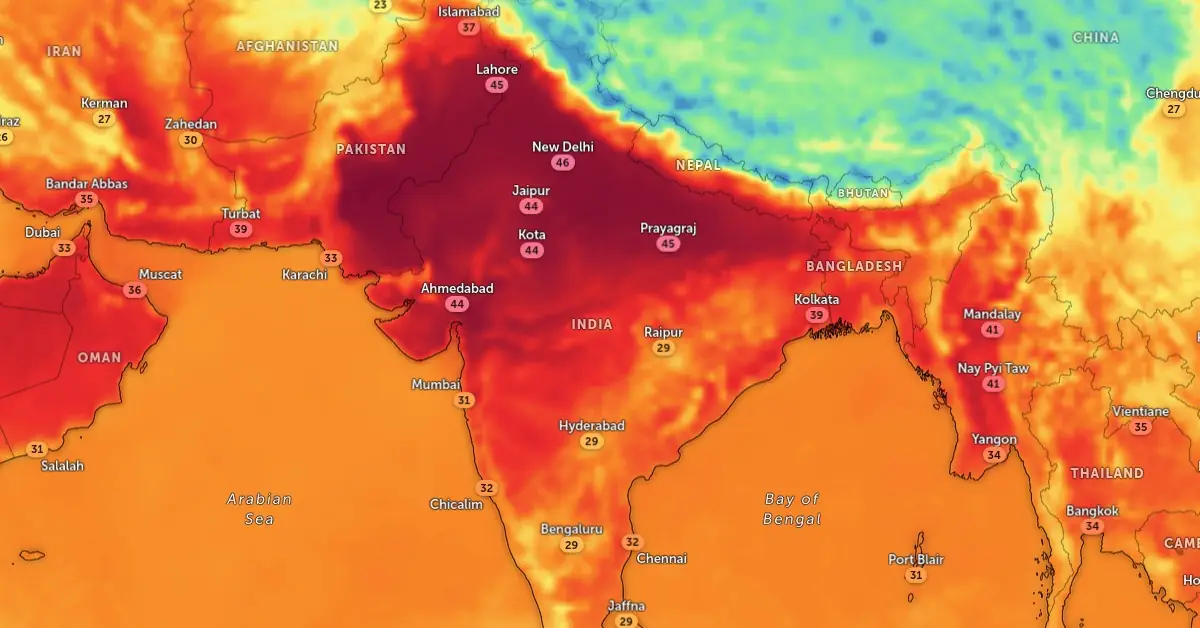
Featured image: GFS model temperature at 10:00 UTC on May 18, 2024. Credit: Zoom Earth, GFS, The Watchers
Parts of northwest India are experiencing severe heatwave conditions on Saturday, May 18, 2024, with the capital New Delhi under a Red alert as very high temperatures strike parts of the country. The India Meteorological Department has issued warnings for several states, anticipating persistent heat wave conditions over the next 5 days.
A severe heatwave has gripped northwest India this week, including the capital New Delhi where a Red alert is in effect as extreme temperatures sweep through. The forecast calls for a gradual rise in temperatures over the next few days in Central India, East India, and Maharashtra, with heatwave conditions expected to persist in specific pockets across different states.
The India Meteorological Department (IMD) has issued warnings for several states, urging residents in affected regions to remain cautious and apply preventive measures to combat the heat.
The Red alert areas, encompassing West Rajasthan, Punjab, Haryana, Chandigarh, and Delhi, are facing a very high risk of heat-related illnesses and heat strokes in the days ahead, particularly posing a threat to vulnerable individuals. Extreme care and precautionary measures are strongly advised in these regions.
Orange alert areas, including East Rajasthan, Uttar Pradesh, and Bihar, are experiencing high temperatures and an increased likelihood of heat-related symptoms. Recommendations urge individuals to stay cool, avoid dehydration, and take necessary precautions, especially for vulnerable groups.
In regions under the Yellow alert, such as Madhya Pradesh, Gujarat State, Jharkhand, Gangetic West Bengal, Odisha, and Uttarakhand, moderate temperatures prevail with a moderate health concern for vulnerable populations. Guidelines suggest wearing appropriate clothing and staying hydrated to mitigate potential risks.


Recent temperature observations have revealed maximum temperatures exceeding 40 °C (104 °F) in various areas, with temperatures soaring above normal levels by 2 – 4 °C (3.6 – 7.2 °F) in several regions.
On May 17, New Delhi reported temperatures reaching up to a scorching 47.4 °C (117.3 °F) — the highest of the season.
Other areas in the capital experienced similarly high temperatures: Mungeshpur at 46.5 °C (115.7 °F), Aya Nagar at 46.2 °C (115.2 °F), and Jafarpur at 45.9 °C (114.6 °F). Nearby areas such as Noida and Gurugram reported temperatures of 45.2 °C (113.4 °F) and 44.6 °C (112.3 °F), respectively.
Forecasts indicate that maximum temperatures will continue to rise by 2 – 4 °C (3.6 – 7.2 °F) in central India over the next five days, and by 2 – 3 °C (3.6 – 5.4 °F) in East India and Maharashtra over the next three days.
Heat wave conditions are expected to persist in many parts of Rajasthan, Punjab, Haryana, Chandigarh, and Delhi until May 22. West Uttar Pradesh will experience severe heat wave conditions on May 18 and 19, while East Uttar Pradesh will face similar conditions until May 22.
Isolated pockets in Uttarakhand, Gujarat, Madhya Pradesh, Bihar, Gangetic West Bengal, Jharkhand, and Odisha will also experience heat wave conditions.
Amidst the heatwave, several states have announced summer vacations. Delhi, Rajasthan, Jharkhand, and Uttar Pradesh are among the states implementing summer breaks to mitigate the impact of the extreme temperatures. Government and government-aided schools in Delhi will have summer vacations from May 11 to June 30. Private schools are expected to follow similar schedules, with most announcing holidays by May 20 or 21.
Rajasthan’s government schools will observe summer vacations from May 17 to June 30, while in Uttar Pradesh, vacations for primary and upper primary students will start on May 20 and continue until June 25 or June 18, depending on the district.
The heatwave coincides with a crucial general election period, raising concerns about health risks for voters and campaigners exposed to the scorching conditions.
Soma Sen Roy, a scientist at the IMD, has urged people to avoid outdoor activities during the afternoon, drink plenty of water, and wear loose-fitting clothes. Special caution is advised for the elderly and other vulnerable populations to stay indoors and hydrated during this period of extreme heat.
References:
1 Press release 18-05-2024 – IMD – 14:30 IST
2 Heat Wave Alert: Delhi, Rajasthan Schools To Be Shut Until June 30 – News 18 – May 18, 2024

I'm a dedicated researcher, journalist, and editor at The Watchers. With over 20 years of experience in the media industry, I specialize in hard science news, focusing on extreme weather, seismic and volcanic activity, space weather, and astronomy, including near-Earth objects and planetary defense strategies. You can reach me at teo /at/ watchers.news.

Commenting rules and guidelines
We value the thoughts and opinions of our readers and welcome healthy discussions on our website. In order to maintain a respectful and positive community, we ask that all commenters follow these rules.