
Agricultural disaster after record rains cause catastrophic floods in British Columbia, Canada

Image credit: BC Transportation
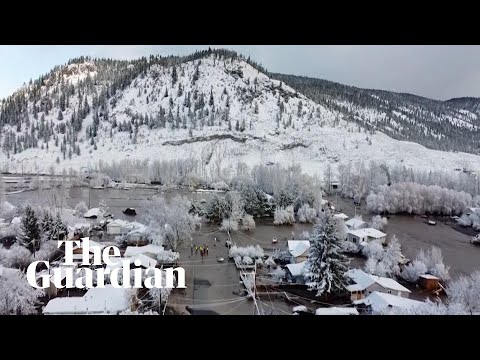
British Columbia has declared a state of emergency on November 17, 2021, after several days of heavy rain caused catastrophic floods in parts of the province. At least 1 person has been killed but officials fear the death toll will rise.
Another atmospheric river event hit British Columbia and parts of the U.S. Northwest over the past weekend, dropping record-breaking rain. Parts of the region received more than 2 months of average rainfall in just 48 hours, causing rivers to overflow and low-lying plains to flood.1
The resulting floods destroyed roads and bridges, submerged homes and farmland, leaving at least 1 person dead.
B.C. Agriculture Minister Lana Popham said hundreds of farms have been affected provincewide, many in the Fraser Valley. Nearly in tears, she described the widespread flooding as an agricultural disaster.2
The region has been one of the hardest hit by floods, with evacuation orders still in effect for the city of Abbotsford — home to roughly half of all the dairy farms in British Columbia.
In addition, thousands of animals have perished in the floods and the government says it will work to get veterinarians into farms to treat animals. Some of the animals that escaped the floods are expected to be euthanized.
Some highways were closed after numerous landslides, including Highway 7 from Hope to Vancouver where as many as 100 vehicles were trapped between two landslides.1
As of November 18, nearly 20 000 people are still out of their homes across the province.
According to data provided by Environment Canada, rainfall records have been broken in around 20 locations, including Abbotsford which recorded 100.4 mm (3.95 inches) on November 14, breaking the previous record of 48.9 mm (1.92 inches) set in 1998.3
From November 13 to 15, Hope in Fraser Valley Regional District recorded 225 mm (8.85 inches) of rain.
During the same period, Squamish recorded 206 mm (8.11 inches), Coquihalla Summit 252 mm (9.92 inches), West Vancouver 157 mm (6.18 inches), and Agassiz 208 mm (8.18 inches).

References:
1 Atmospheric river hits British Columbia, causing major floods and landslides, Canada – The Watchers
2 Mammoth cleanup to begin in B.C. as flood waters recede – CBC
3 Canada and USA – Hundreds Rescued or Evacuated After Floods and Landslides in West – FloodList

Teo Blašković founded The Watchers in 2011 and edited it until 2026, covering seismic and volcanic activity, extreme weather, space weather and near-Earth objects. Articles on this page are his archive.
Published in the last 24 hours
- A 19-year-old Nebraska teacher reportedly tied her pupils together with twine and led them to safety through a blizzard in January 1888 Epicenter
- NASA built the Opportunity rover to last 90 days on Mars, and Martian winds helped keep it alive for nearly 15 years by blowing dust off its solar panels, until a planet-wide dust storm in 2018 blocked sunlight and silenced the rover Epicenter
- In the winter of 1811–12, earthquakes near New Madrid, Missouri, shook so hard that witnesses saw the Mississippi River flow backward, and the shaking left a brand-new lake in Tennessee Epicenter
- On 28 August 1859 a solar storm shocked telegraph operators and threw sparks on other lines, and on 2 September Boston to Portland clerks unhooked their batteries and kept sending for more than two hours on the aurora's current alone. Epicenter

Commenting rules and guidelines
We value the thoughts and opinions of our readers and welcome healthy discussions on our website. In order to maintain a respectful and positive community, we ask that all commenters follow these rules.