
Wildfires in northern India
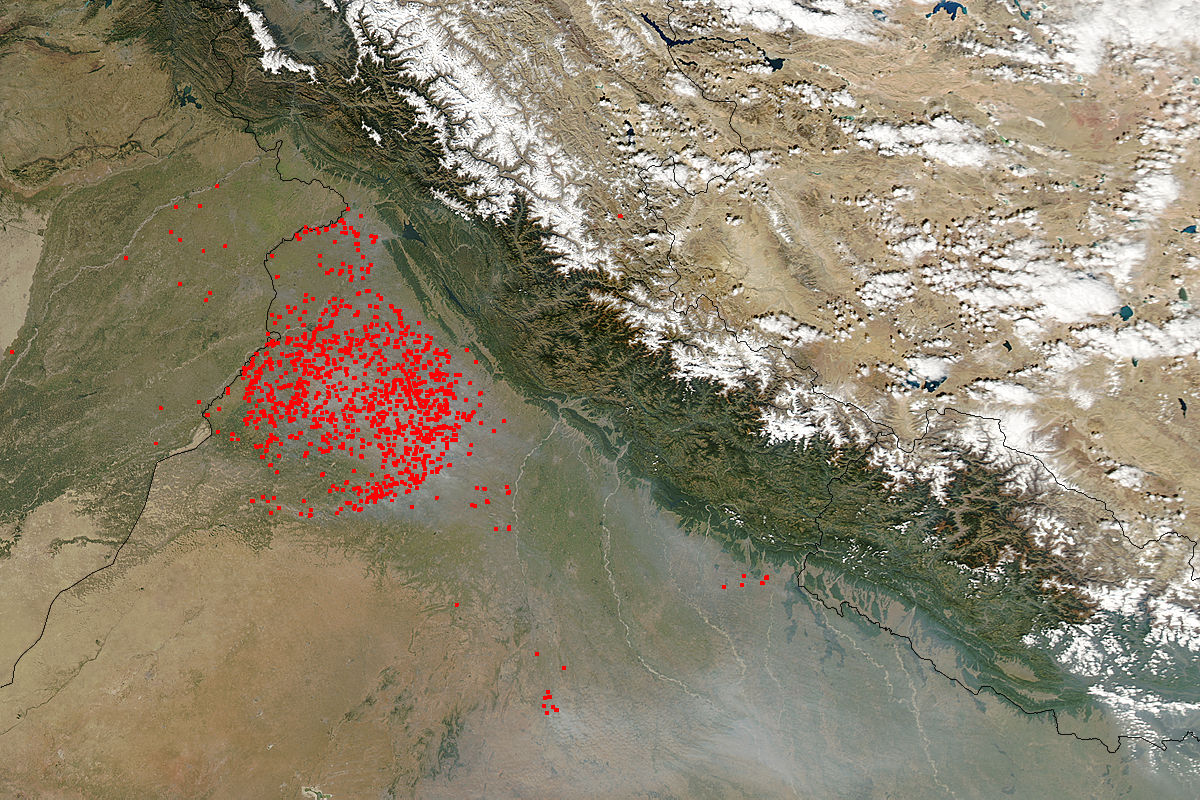
Image credit: TW
The fire season was well underway in northern India as many dozens of fires burned near the Pakistan border in late October, 2011. The Moderate Resolution Imaging Spectroradiometer (MODIS) aboard the Aqua satellite captured this true-color image on October 27, 2011.
Most of the fires are located in the Punjab region, a state in northwest India which makes up only about 2 percent of the country’s land, but provides more than 50 percent of its grains. During monsoon season, which normally runs from June to November, heavy rainfall makes farming difficult. As the rains end, farmers begin to clear land for summer crops. One of the most important tools used to prepare land for cropping, in the traditional agricultural system, is fire.
Although fire does remove brush, it has detrimental effects. The most obvious is air pollution. The smoke from the agricultural fires can be seen blowing to the southeast, covering the land with a substantial veil of smoke. The Himalaya Mountains form a strong barrier to air movement, trapping smoky air on the southern side, where it accumulates and mingles with pollution from industry and cars. The resultant haze can be irritating to human lungs and harmful to those who have underlying illness. (MODIS)

Published in the last 24 hours
- A Virginia park ranger was struck by lightning seven times and lived, even though three of the strikes set his hair on fire Epicenter
- The hole in the ozone layer over Antarctica was about twice the size of the US this year, and scientists say it would have been bigger still if ozone-eating chemicals were at their 2000 levels Epicenter
