• 1 killed, another injured after house under construction collapses in Austin due to strong winds, Texas

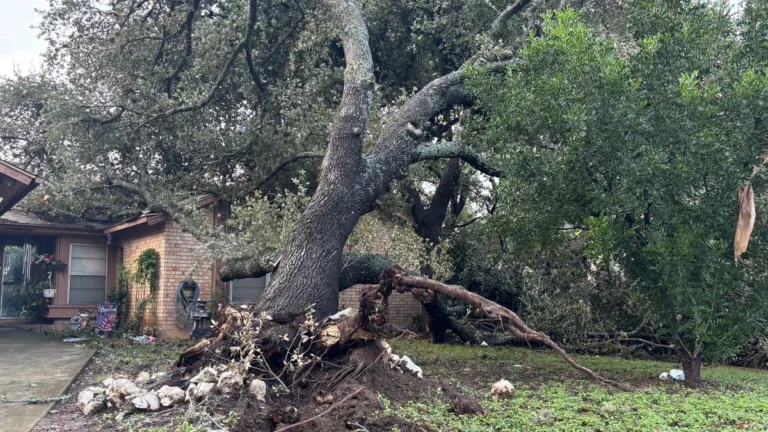
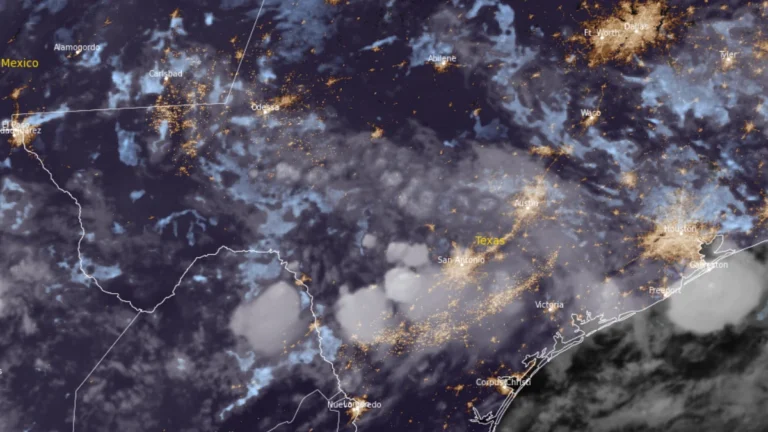
    A two-story house under construction collapsed at 12002 Salvador Street in south Austin at about 16:20 CDT (21:20 UTC) on August 27, 2026, during strong thunderstorm winds, killing one construction worker and trapping another. Four workers were at the site; two escaped, while rescuers extracted the surviving trapped worker at approximately 17:15 CDT (22:15 UTC). The initial emergency call preceded a National Weather Service (NWS) severe thunderstorm warning for central Travis County by about 35 minutes.
  • Ross Fire grows to 32 400 ha (80 000 acres), Texas

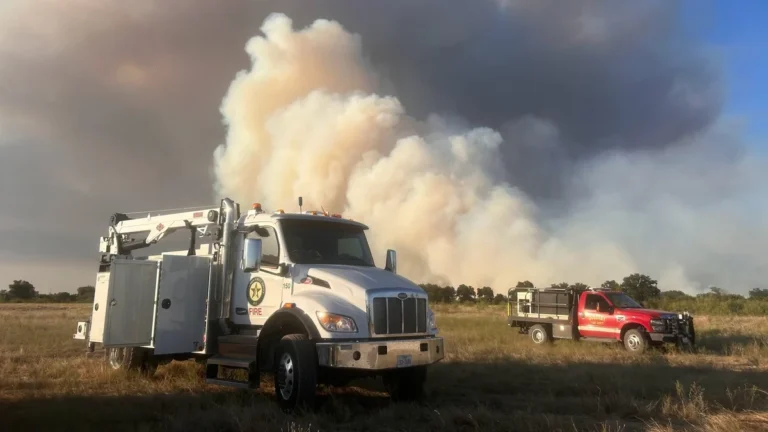
    Around 630 homes were evacuated as the Ross Fire exploded in size, spreading from Palo Pinto County into neighboring Jack County on August 25, 2026. It had burnt least 20 200 ha (50 000 acres), and was 12% contained after damaging or destroying structures in the area. Residents in affected parts of southern Jack County were instructed to evacuate east along County Road 2210 toward U.S. Highway 281.

  • M5.0 earthquake joins small group of major Texas Panhandle events

    A rare M5.0 earthquake struck northwestern Roberts County in the Texas Panhandle at 05:21 CDT (10:21 UTC) on July 23, 2026. This is the fourth earthquake at or above M5.0 in the Texas Panhandle since 2011. Nearly 91% of all known Panhandle earthquakes since 1907 were below that threshold.

  • Tropical Storm Bertha makes landfall in St Bernard Parish, Louisiana, heads toward upper Texas coast

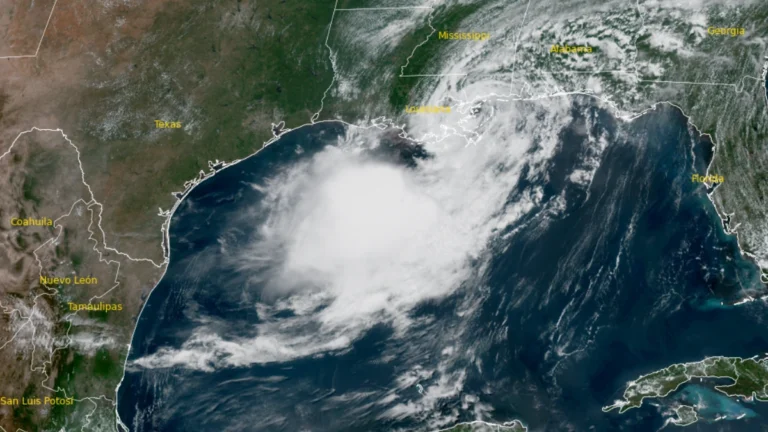
    Tropical Storm Bertha made landfall at approximately in St. Bernard Parish, Louisiana at approximately 13:50 CDT (18:50 UTC)on July 22, 2026, with maximum sustained winds of 72 km/h (45 mph). Storm surge of up to 1 m (3 feet), rainfall totals of 25 to 100 mm (1 to 4 inches) with isolated amounts reaching 150 mm (6 inches), and isolated flash flooding remain possible across portions of the central and western Gulf Coast through July 24.

  • Two killed and 230 rescued as catastrophic flash floods strike Texas

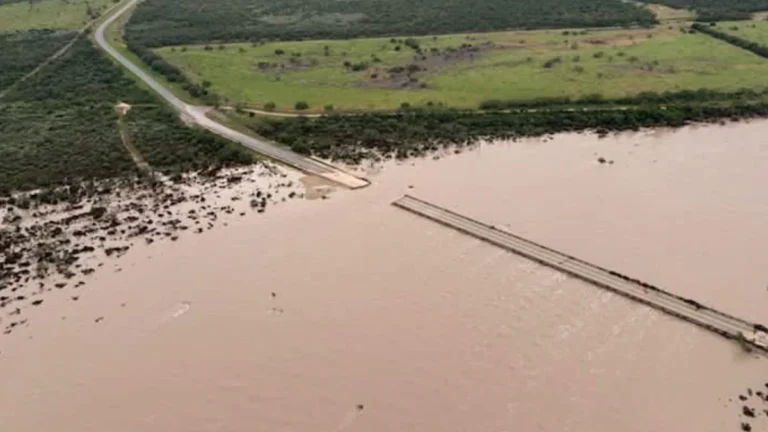
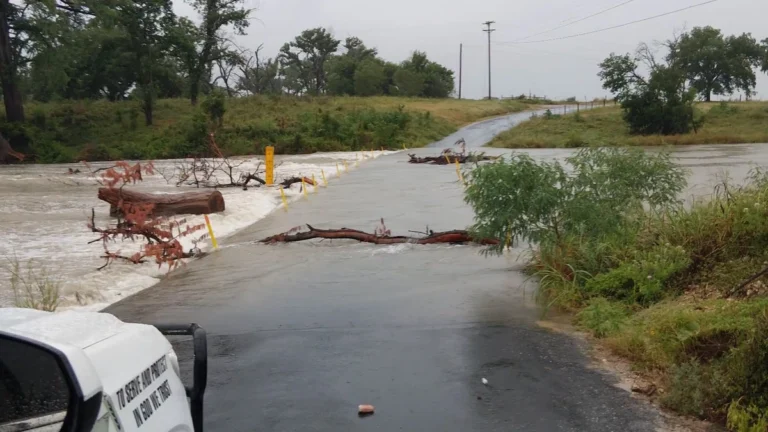
    At least two people were killed and 230 rescued after repeated thunderstorms produced catastrophic flash flooding across the Texas Hill Country and south-central Texas on July 16, 2026. Up to 711 mm (28 inches) of rain fell in northern Uvalde County over three days, while the Guadalupe River at Comfort rose more than 9 m (30 feet) in under three hours and crested near 11.3 m (37 feet). Texas deployed more than 2 350 emergency responders and over 1 400 response assets as flood waves moved through several river basins.

  • Large Guadalupe River flood wave prompts Flash Flood Emergency after confirmed EF1 tornado in San Antonio, Texas

    A large flood wave moved downstream along the Guadalupe River through the Texas Hill Country on July 16, 2026, prompting a Flash Flood Emergency from Center Point to Bergheim as emergency crews expanded rescues across south-central and western Texas. The event followed a preliminary EF1 tornado confirmed in northwest San Antonio on July 15, but the main active hazard had shifted to life-threatening flash flooding across the Guadalupe basin and Uvalde County.

  • Texas flash flooding prompts water rescues near Uvalde, tornado reported in San Antonio

    High-water rescues, road closures, and shelter operations were reported across parts of South-Central Texas on July 14, 2026, after heavy rain produced flash flooding west of San Antonio. Governor Greg Abbott issued a disaster declaration for 59 counties, and the National Weather Service (NWS) warned that dangerous flash-flood conditions would continue across affected areas through the end of the week.

  • Moderate Risk of excessive rainfall issued, life-threatening flash floods forecast for south-central Texas

    A Moderate Risk (Level 3 of 4) of excessive rainfall is in effect for parts of south-central Texas through Tuesday morning, July 14, 2026. Repeated thunderstorms threaten are expected to produce life-threatening flash flooding across portions of southwest Texas. Forecast guidance shows a greater than 70% chance of rainfall exceeding 76 mm (3 inches) and a more than 50% chance of totals above 127 mm (5 inches) within the Moderate Risk area, while the National Water Center (NWC) expects considerable flooding impacts to last through Thursday, July 16

  • High concentrations of Saharan dust affect Puerto Rico and U.S. Virgin Islands, moving west toward Florida and Texas

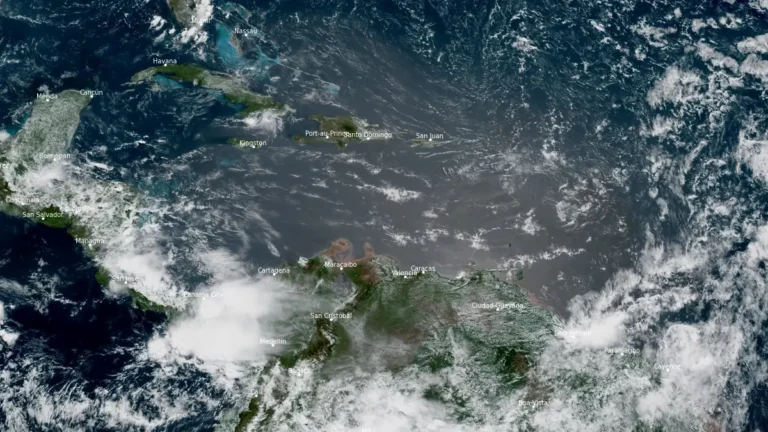
    High concentrations of Saharan dust are affecting Puerto Rico and the U.S. Virgin Islands on June 26, 2026, reducing visibility and air quality as the Saharan Air Layer (SAL) moves west. Drier Saharan air is forecast to reach South Florida from late Saturday, June 27, followed by a dust plume over Southeast Texas late Sunday, June 28, where hazy skies and reduced air quality are possible.