
Dust storm triggers multi-vehicle crash on U.S. 287 in northern Texas
A multi-vehicle crash occurred on U.S. 287 near Quanah, Hardeman County, Texas, on March 15, 2026, after strong winds generated blowing dust that rapidly reduced visibility and created dangerous driving conditions.
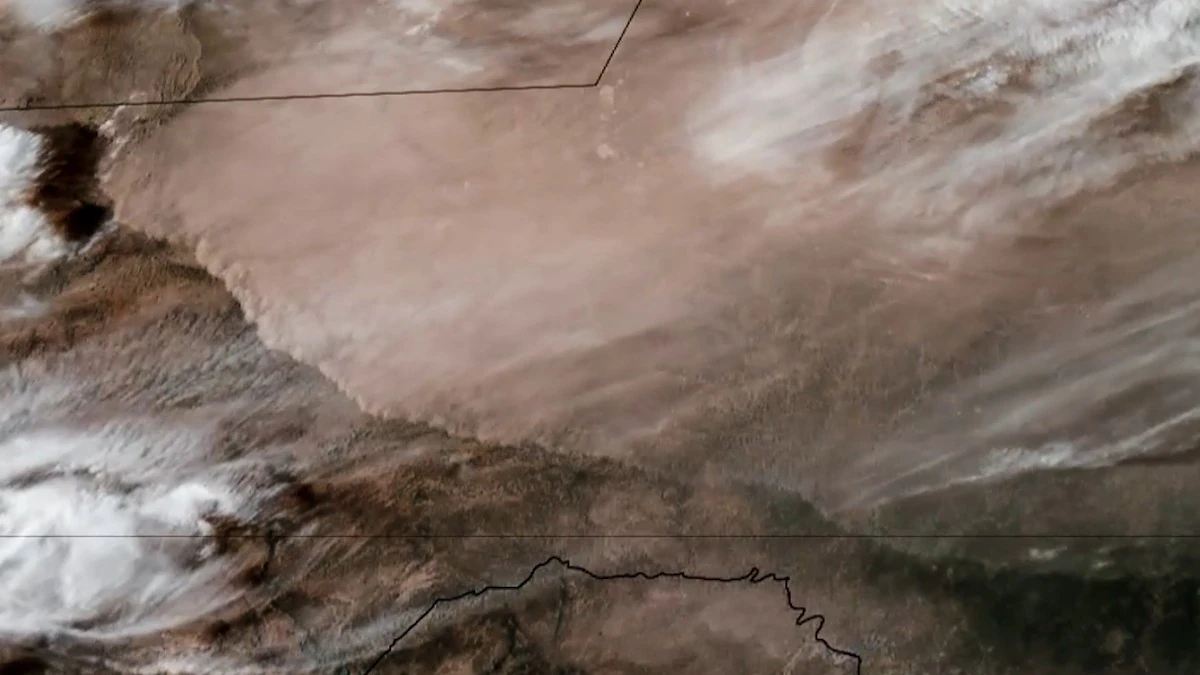
Satellite image of dust storm sweeping through Texas on March 15, 2026. Credit: NOAA/GOES-19, RAMMB/CIRA, The Watchers
A multi-vehicle crash occurred on U.S. Highway 287 near Quanah in Hardeman County, northern Texas, on March 15, after strong winds generated blowing dust that rapidly reduced visibility and created dangerous driving conditions.
Video footage recorded in the area shows dense dust moving across the highway as vehicles traveled through the corridor. Visibility deteriorated rapidly as wind-driven dust swept across the roadway, making it difficult for drivers to see vehicles ahead.
Multiple vehicles were involved in the crash during the period of reduced visibility. Authorities had not yet released confirmed information on the exact number of vehicles involved or whether injuries were reported at the time of reporting.
Similar dense blowing dust was observed near Amarillo, Texas, approximately 240 km (150 miles) northwest of Quanah:
The crash occurred as a strong weather system moved across the southern Plains, producing powerful winds across western and northern Texas. The National Weather Service (NWS) warned that blowing dust could significantly reduce visibility and create hazardous driving conditions across the region.
Forecast information for the Quanah area indicated strong winds with gusts potentially reaching 89–105 km/h (55–65 mph) during the event. Winds of this strength can easily lift loose soil and dust from dry fields and roadside surfaces, producing localized dust storms that sharply reduce visibility along highways.
Dust storms across the southern Plains can develop rapidly when strong winds move across dry terrain with limited vegetation cover. Airborne dust can spread across roadways within seconds, producing sudden visibility drops that pose serious hazards to drivers.
NWS cautions that visibility in blowing dust can fall to near zero in some locations during strong wind events, particularly in open rural areas where wind speeds are higher, and surface soils are more easily mobilized.

I'm a dedicated researcher, journalist, and editor at The Watchers. With over 20 years of experience in the media industry, I specialize in hard science news, focusing on extreme weather, seismic and volcanic activity, space weather, and astronomy, including near-Earth objects and planetary defense strategies. You can reach me at teo /at/ watchers.news.

Commenting rules and guidelines
We value the thoughts and opinions of our readers and welcome healthy discussions on our website. In order to maintain a respectful and positive community, we ask that all commenters follow these rules.