Moderately strong M8.6 solar flare erupts from Region 3234
A moderately strong solar flare measuring M8.6 erupted from Active Region 3234 at 17:50 UTC on February 18, 2023. The event started at 17:35 and ended at 17:56 UTC.

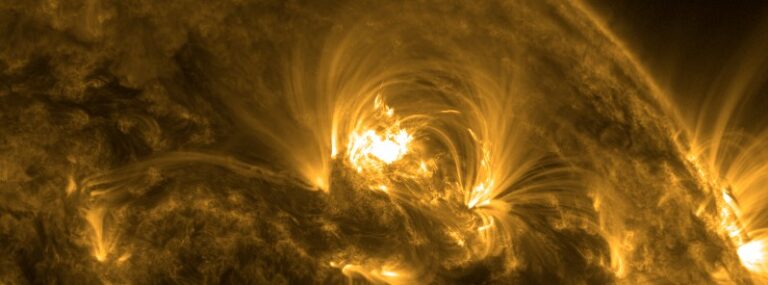
A moderately strong solar flare measuring M8.6 erupted from Active Region 3234 at 17:50 UTC on February 18, 2023. The event started at 17:35 and ended at 17:56 UTC.
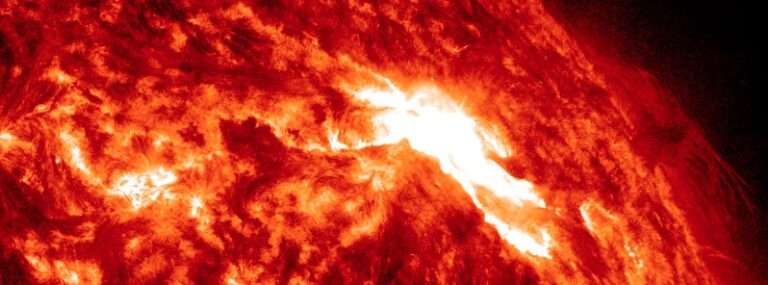
A long-duration solar flare measuring M6.3 erupted from Active Region 3229 at 19:44 UTC on February 25, 2023. The event started at 18:40 and ended at 20:27 UTC.
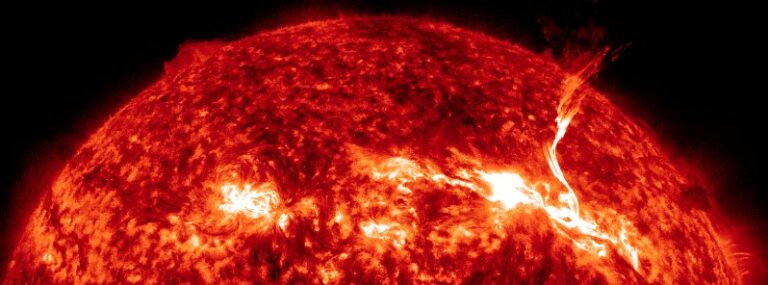
A long-duration M3.7 solar flare erupted from Active Region 3234 at 20:30 UTC on February 24, 2023, producing a large coronal mass ejection (CME). The event was associated with a filament eruption.
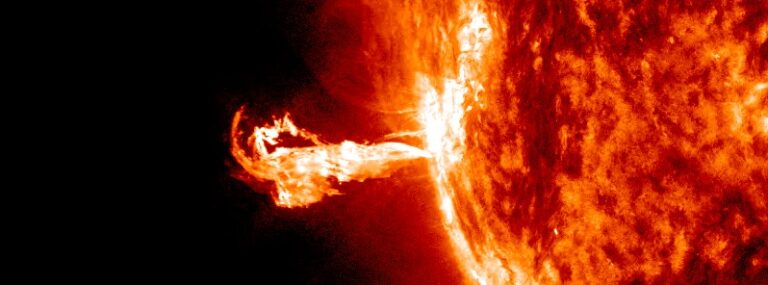
Our sun displayed high levels of activity in 24 hours to 12:30 UTC on February 9, including multiple low-level M-class solar flares and coronal mass ejections (CMEs) observed on the southeast and southwest limbs.
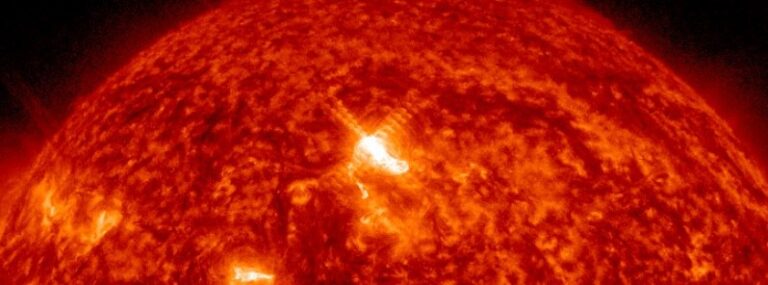
Active Region 3213 rapidly emerged on the visible disk on February 6 as just a few sunspots but has since grown into a mature, magnetically-complex sunspot group, producing several M-class flares, including a double-peaked flare that began at 22:46 and peaked at 23:07 as M6.3. The first peak was registered as M3.8 at 22:58 UTC.
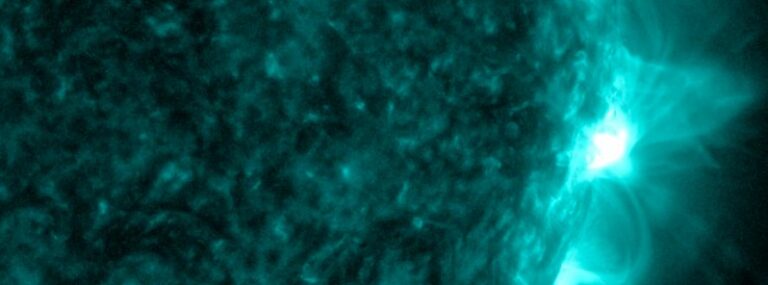
Solar activity has reached moderate levels in 24 hours to 12:30 UTC on January 25, with a long-duration M4.6 flare peaking at 10:11 UTC today.
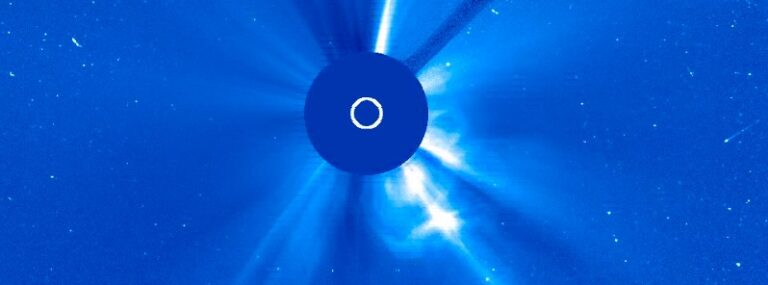
Solar activity reached high levels in the past 24 hours, with the strongest event being an M6.0 flare from Region 3191. This event was accompanied by a Type II radio sweep and a Coronal Mass Ejection (CME) signature, however, analysis and modeling indicate that no Earth-directed component was produced. A CME was also observed off the southwest limb at 22:00 UTC on January 14, with analysis and modeling suggesting the possibility of a glancing blow on January 19.
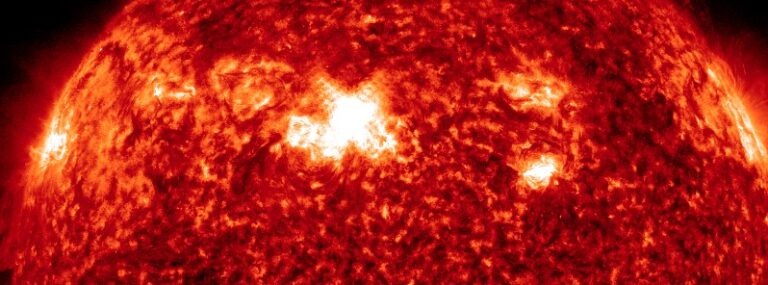
Geomagnetic storms reaching G1 – Minor levels are likely on January 4 and 5, 2023 due to combined effects of a coronal mass ejection (CME) that left the Sun on December 30 and coronal hole high speed stream (CH HSS) effects. Solar activity is expected to be at low levels, with a chance for M-class flares through January 28.
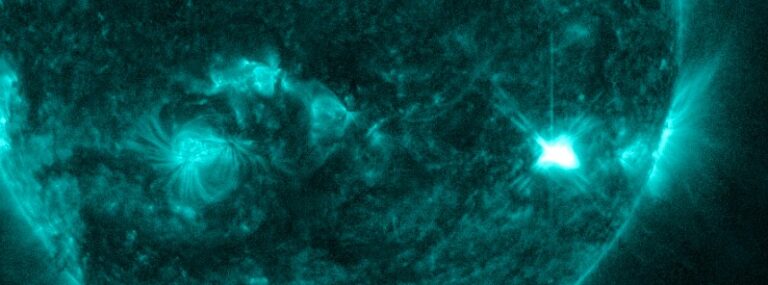
Multiple M- and C-class solar flares were detected on December 14, 2022, with the strongest being M6.2 at 14:42 UTC. While several coronal mass ejections (CMEs) were produced, none of them appears to be Earth-directed.
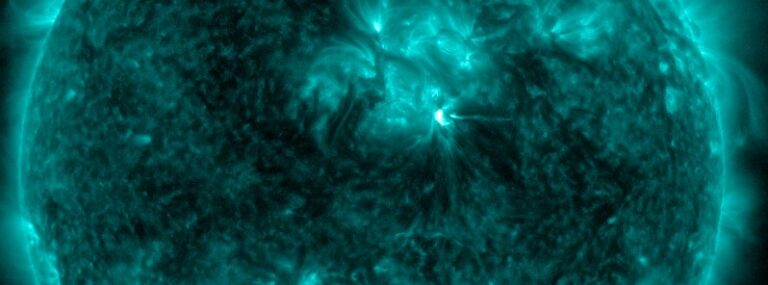
Two M1.2 solar flares erupted from Active Region 3141 (Beta-Gamma-Delta) on November 11, 2022 – the first at 07:14 and the second at 11:40 UTC. The region is located at the center of the solar disk — coronal mass ejections (CMEs) produced by it are likely to be Earth-directed.
