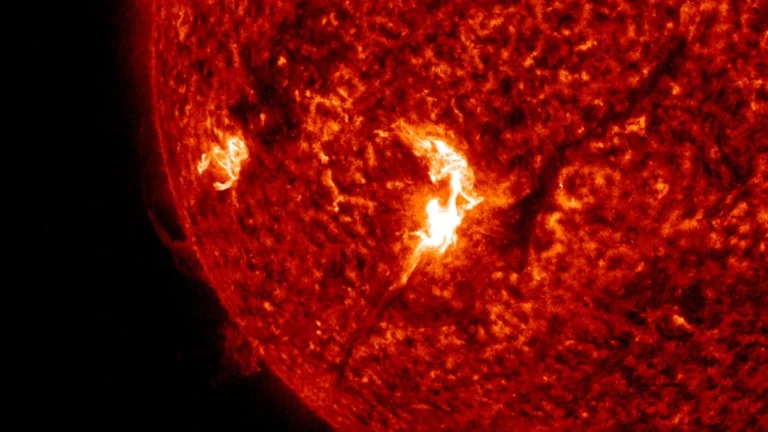
• M6.9 solar flare produces Earth-directed CME, G2 geomagnetic storm watch issued for August 28

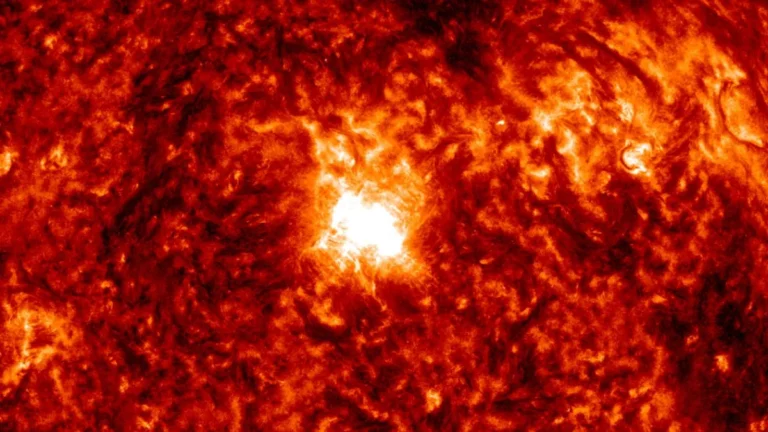
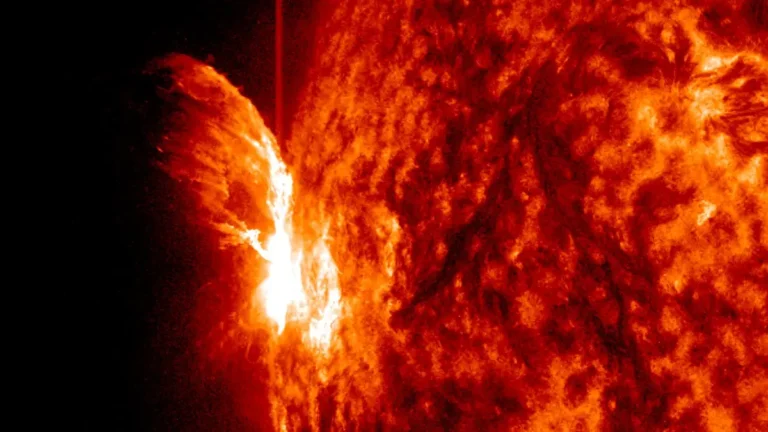
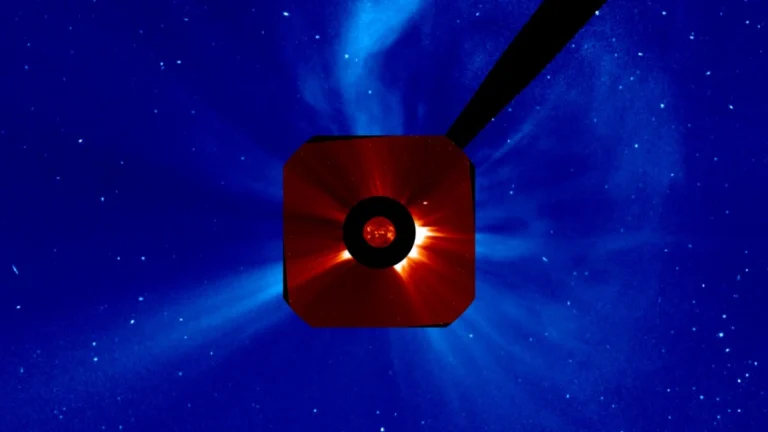
    A strong M6.9 solar flare erupted from Active Region 4513 near the center of the visible solar disk at 10:02 UTC on August 25, 2026, causing an R2 – Moderate radio blackout. NOAA’s Space Weather Prediction Center (SWPC) said the associated CME and a second CME linked to a C4.7 flare and filament eruption later that day contained Earth-directed components, prompting a G2 – Moderate Geomagnetic Storm Watch for August 28. A G1 – Minor watch is in effect for August 27 due to an approaching coronal-hole high-speed stream.
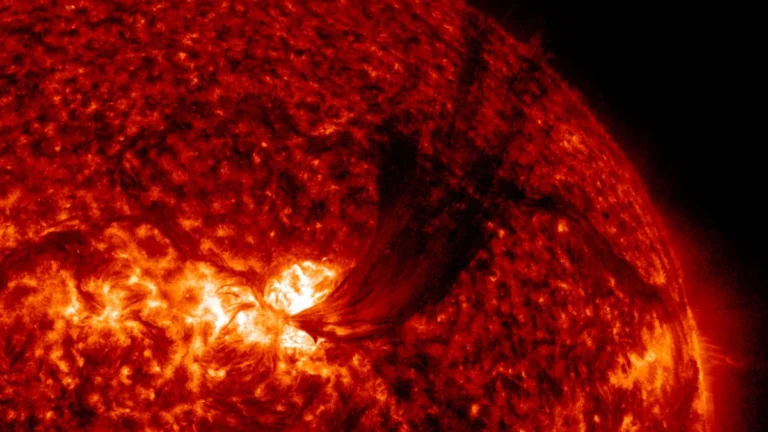
  • Long-duration M1.9 flare produces Earth-directed CME, G1-G2 geomagnetic storm conditions forecast for August 2

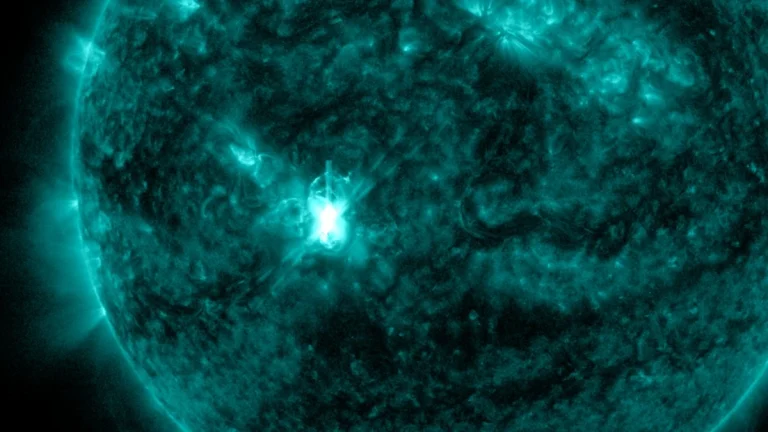
    A long-duration M1.9 flare from Active Region 4492 coincided with a filament eruption near N20W67, producing an eruptive sequence associated with an Earth-directed partial-halo CME and an S1 – Minor solar radiation storm on July 30, 2026. WSA-Enlil model runs placed a possible CME arrival at Earth early on August 2, when NOAA’s Space Weather Prediction Center expects G1-G2 (Minor-Moderate) geomagnetic storm conditions.

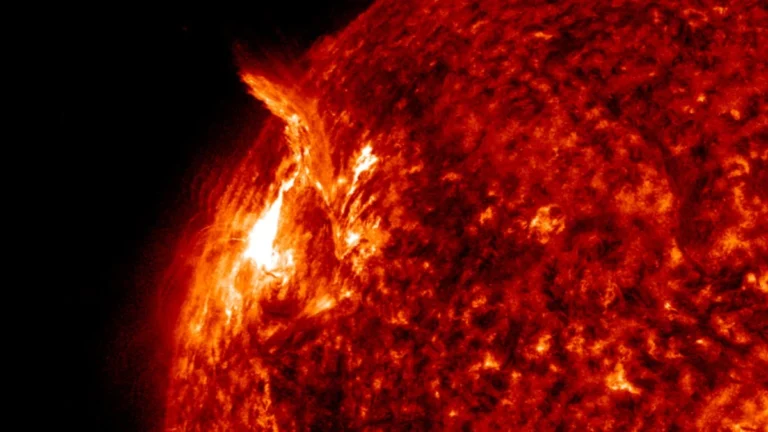
  • M9.3 and M7.7 solar flares erupt from AR 4455, launching Earth-directed CMEs

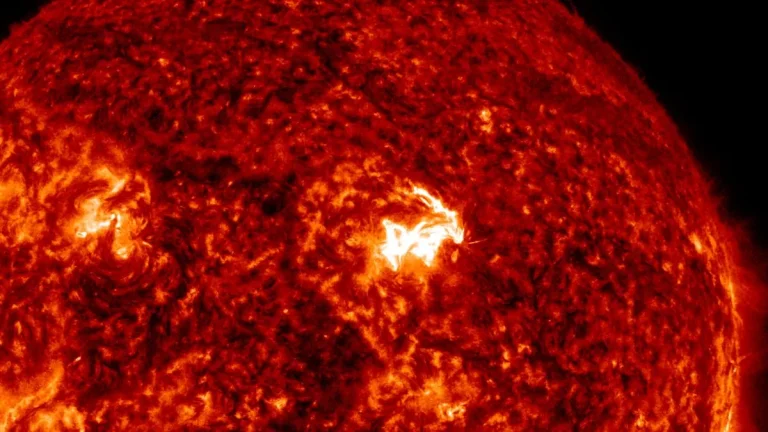
    A strong solar flare measuring M9.3 at its peak erupted from Active Region 4455 at 01:36 UTC on June 3, 2026, producing an Earth-directed coronal mass ejection (CME). The event started at 01:22 UTC and ended at 01:43 UTC. At 07:00 UTC, another strong solar flare — M7.7 — erupted from the same region and produced another Earth-directed CME.

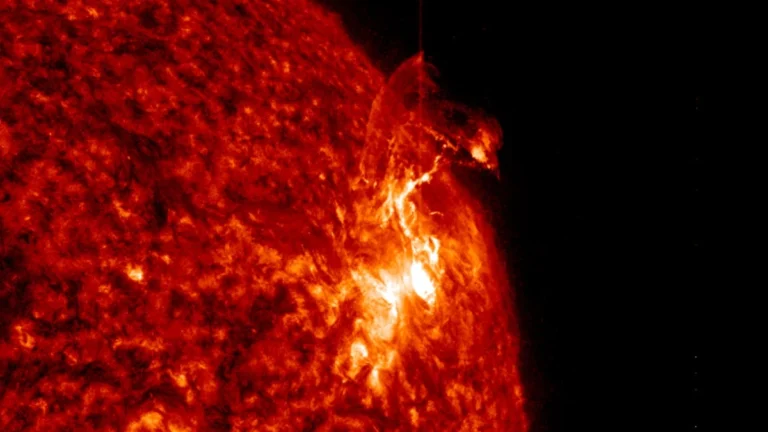
  • Solar activity increases as Region 4420 moves toward disk center, raising potential for Earth-directed CMEs

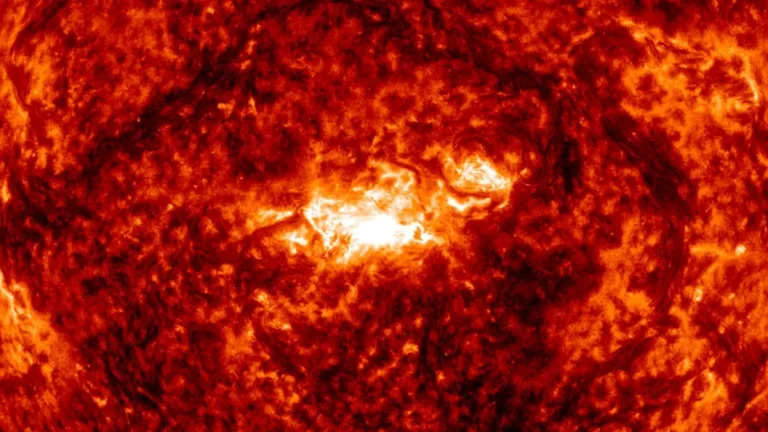
    Multiple M-class solar flares, including M1.6 and M4.4, erupted on April 23, 2026, producing coronal mass ejections (CMEs). Meanwhile, Active Region 4420 exhibited significant growth in area and magnetic complexity as it moves toward the center of solar disk, raising the potential for Earth-directed CMEs in the days ahead.

  • Impulsive M7.5 solar flare erupts from Earth-facing Region 4409, geomagnetic conditions remain elevated

    A strong solar flare measuring M7.5 erupted from Active Region 4409 at 01:17 UTC on April 4, 2026. The event started at 01:07 and ended at 01:23 UTC. No radio signatures indicating a coronal mass ejection (CME) were detected, despite the region’s position near the center of the solar disk, where any CME produced would likely be Earth-directed. Forecast conditions indicate solar activity will likely remain at moderate levels through April 6, with a slight chance of X-class flares, while geomagnetic conditions are expected to reach G1 – Minor to G2 – Moderate storm levels on April 4 under the combined influence of the April 1 CME and a negative polarity coronal hole high-speed stream.

  • Geomagnetic storms possible this weekend as CME from M1.0 solar flare heads toward Earth

    An M1.0 solar flare erupted from Active Region 4373 at 08:58 UTC on February 13, 2026, launching a coronal mass ejection (CME) expected to glance Earth around February 15–16. SWPC forecasts G1 – Minor to isolated G2 – Moderate geomagnetic storm conditions as the CME interacts with a co-rotating interaction region and a positive-polarity coronal-hole high-speed stream.