• NASA telescopes detect unusual chemistry in interstellar comet 3I/ATLAS

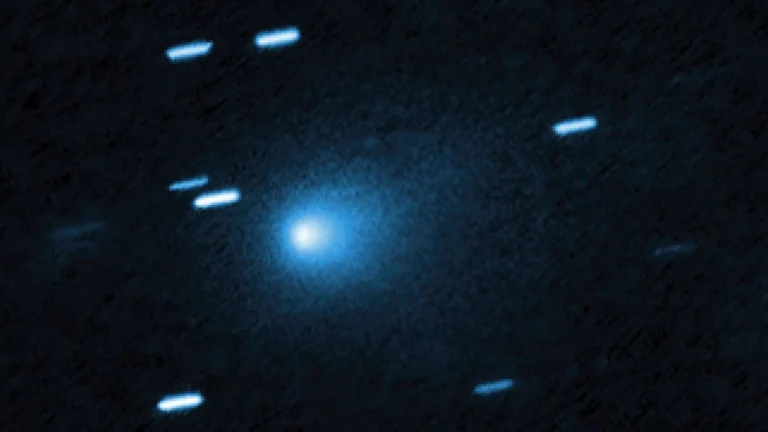
    NASA released the first results of James Webb Space Telescope (JWST) observations of interstellar comet 3I/ATLAS on August 25, 2025, showing a coma dominated by carbon dioxide. The comet was observed on August 6, and complementary data from Hubble and SPHEREx confirm unusual volatile ratios.

  • Auroras on Jupiter flash in seconds, defying old models

    The largest planet in the solar system is putting on a show no telescope has fully caught before. New data from the James Webb Space Telescope shows the gas giant’s auroras flickering in bursts measured in seconds, not minutes. Scientists now face fresh questions about where that power comes from.

  • Signs of life detected on exoplanet K2-18b

    Researchers using the James Webb Space Telescope have detected molecules in the atmosphere of exoplanet K2-18b that may indicate potential biological activity. The analysis revealed the presence of dimethyl sulfide and dimethyl disulfide—compounds that, on Earth, are primarily produced by biological processes.

  • Webb detects the farthest Type Ia supernova

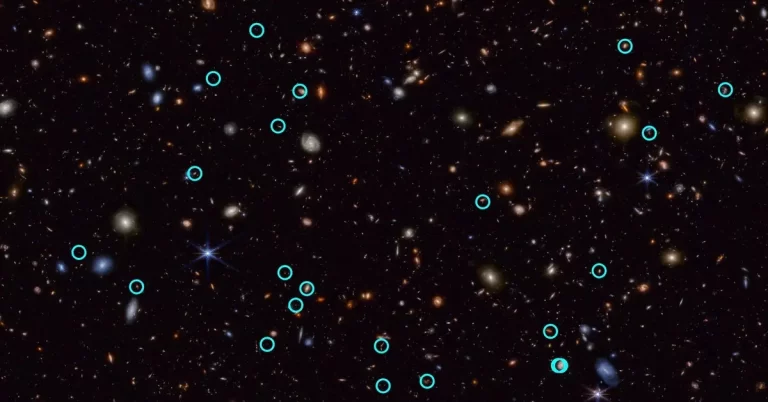
    Astronomers using the James Webb Space Telescope (JWST) found the most distant Type Ia supernovae yet detected, demonstrating JWST’s ability to study extraterrestrial processes.

  • Space telescopes reveal massive asteroid collision in Beta Pictoris

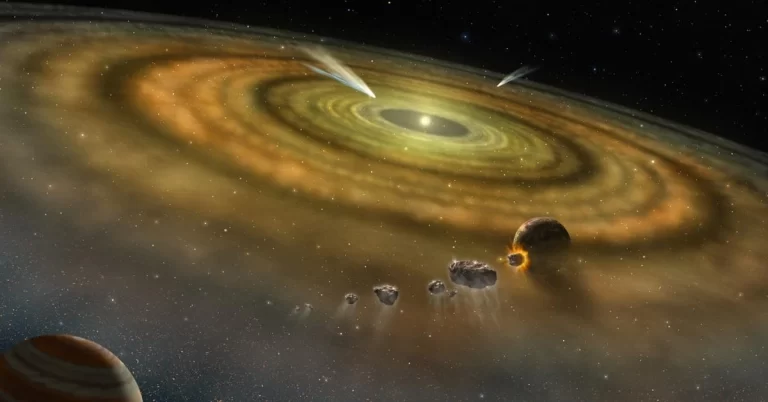
    The combined data from NASA’s JWST and Spitzer Space Telescopes revealed a massive asteroid collision in the Beta Pictoris system, providing a unique view into the early stages of planet formation. This result emphasizes the dynamic character of young planetary systems and the importance of asteroid impacts in their evolution.

  • James Webb telescope hit by micrometeoroid, sustains no major damage

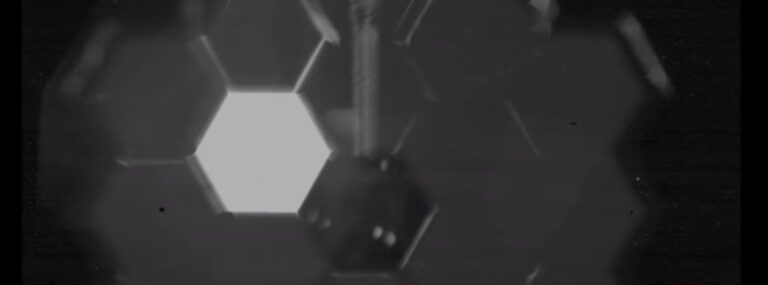
    Between May 23 and 25, 2022, NASA’s James Webb Space Telescope sustained a micrometeoroid impact to one of its primary mirror segments. While such strikes are an unavoidable aspect of operating any spacecraft, this most recent impact was larger than was modeled, and beyond what could have been tested on the ground.