
Why the 1935 Labor Day Hurricane remains unmatched in U.S. history
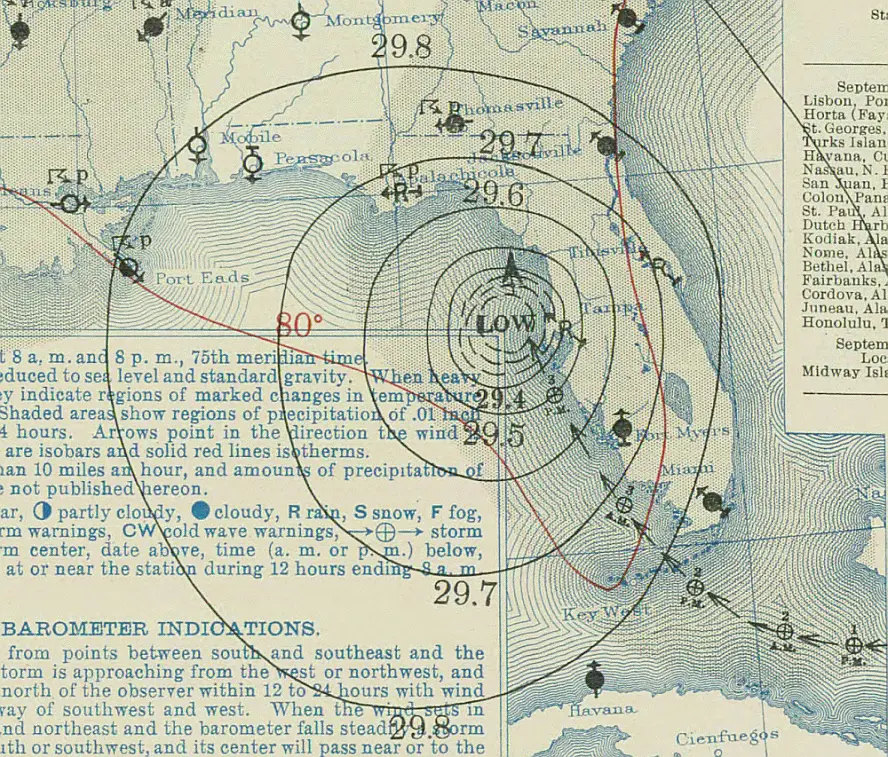
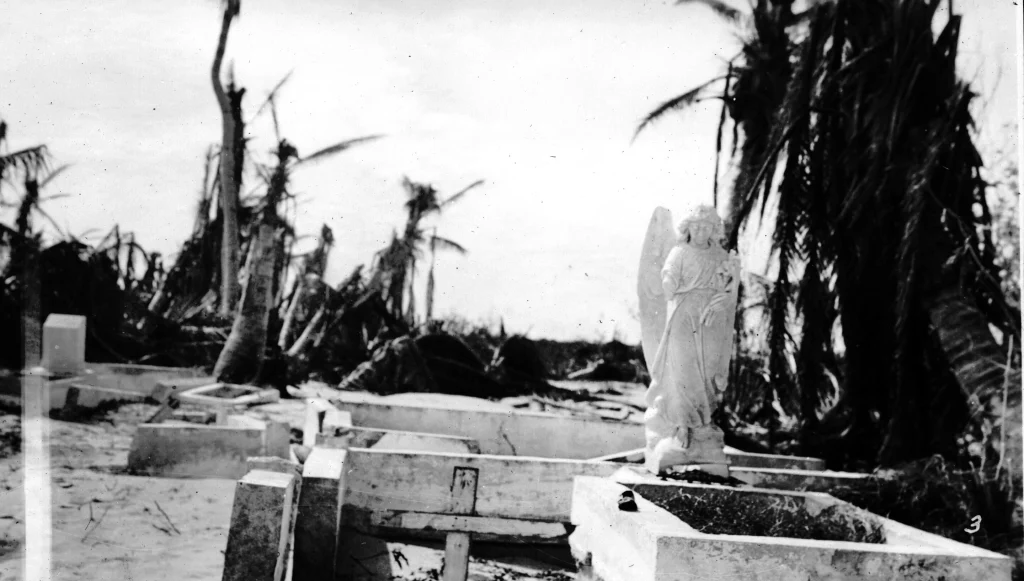
The 1935 Labor Day Hurricane made landfall on Long Key, Florida, at approximately 20:40 LT on September 2, producing sustained winds near 295 km/h (185 mph), a central pressure of 892 mb (26.35 inHg), and storm surge over 5.5 meters (18 feet). The storm killed more than 400 people, including hundreds of World War I veterans housed in federal work camps, and obliterated nearly every structure along a 64 km (40 mile) stretch of the Upper Keys between Tavernier and Marathon, where entire communities were reduced to bare slabs by wind and surge.

Wreckage and destroyed homes in the Florida Keys after the hurricane. Credit: Wikimedia Commons
The 1935 Labor Day Hurricane remains both a benchmark in Atlantic hurricane intensity and a cautionary case of systemic failure, showing how delayed action and neglect can turn a natural disaster into a human catastrophe.
On September 2, 1935, a hurricane of unprecedented force struck the Florida Keys, erasing entire communities in a matter of hours. Over 400 people were killed, many of them World War I veterans in government camps, awaiting evacuation that never came.
Ninety years later, the 1935 Labor Day Hurricane stands as a meteorological milestone and a grim lesson in disaster mismanagement, policy neglect, and the perils of underestimating compact cyclones.
The 1935 Labor Day Hurricane developed east of the Bahamas on August 29 and rapidly intensified as it moved westward. By the time it struck Long Key, Florida, at approximately 20:40 LT (01:40 UTC on September 3), it had reached Category 5 intensity on the modern Saffir–Simpson scale, a classification not used at the time.
The storm’s core was exceptionally small, with the radius of maximum winds estimated at as little as 10–15 km (6–9 miles), concentrating catastrophic force within a narrow corridor. Maximum sustained winds likely reached 295 km/h (185 mph), and central pressure dropped to 892 hPa (26.35 inHg) — still the lowest recorded at U.S. landfall.

The storm made landfall at Long Key and devastated a 65 km (40 mile) stretch from Tavernier to Marathon. Islamorada and adjacent camps were hit with full force. Buildings constructed to 1920s standards offered no resistance. The hurricane’s compactness meant the highest winds were confined to a narrow zone, intensifying localized destruction but sparing locations even 30 km (18 miles) away.
A storm surge of 5–6 m (16–20 feet) swept across Islamorada, Long Key, and Matecumbe, destroying nearly all structures. The Florida East Coast Railway, which extended to Key West via the Overseas Railroad, suffered catastrophic failure. The embankment and steel bridges were dislodged or submerged, marking the end of an ambitious engineering era.
The Overseas Railroad was never rebuilt. Instead, its roadbed was converted into the Overseas Highway, completed in 1938 and still serving as the main road link to Key West.
Among the 400–485 fatalities were over 250 World War I veterans working in three government camps as part of a Depression-era public works program. They lived in tents and wooden barracks, many debilitated by health issues or trauma.
Despite forecasts indicating a strong hurricane, evacuation requests were delayed by bureaucratic hesitation. A relief train dispatched from Miami was ordered too late. It derailed at Islamorada just minutes before the storm peak, killing several on board. Autopsies later revealed that most fatalities were due to drowning, indicating the storm surge, not wind, was the primary killer.
Public outrage followed, directed not only at the scale of the losses but at the evident failures of evacuation planning, the delayed relief train, and the perception that vulnerable veterans had been left deliberately unprotected.
President Franklin D. Roosevelt ordered investigations after an internal Veterans Administration report identified negligence in evacuation planning, particularly the failure to move vulnerable veterans out of low-lying camps. Yet in the storm’s immediate aftermath, official statements framed the catastrophe as an “act of God,” deflecting responsibility from federal agencies.
That narrative was quickly challenged, most prominently by Ernest Hemingway, who traveled to Islamorada days later and published his essay Who Murdered the Vets?, a searing indictment accusing Washington of abandoning the very men it had sent to the Keys to work.

While the Florida Keys bore the brunt of the destruction, the storm’s reach was far wider — rainfall extended up the Eastern Seaboard, with 425 mm (16.7 inches) recorded in Easton, Maryland, and coastal flooding and crop losses reported across Georgia and the Carolinas.
The hurricane made a second landfall near Cedar Key on September 4 as a weaker system before turning extratropical.

Meteorological legacy: Still unmatched at landfall
Despite nine decades of Atlantic hurricane records, the 1935 Labor Day Hurricane retains several unmatched metrics:
- Lowest barometric pressure at U.S. landfall: 892 hPa
- Highest sustained landfall winds: ~295 km/h (185 mph)
- Most compact Category 5 storm on record
- Highest fatality rate per kilometer of coastline affected in the U.S.
Other Category 5 U.S. landfalls, Camille (1969), Andrew (1992), and Michael (2018), surpassed it in economic damage due to population growth but not in raw atmospheric violence.
Modern analogs include Hurricane Dorian (2019) in the Bahamas, which also stalled and maintained a tight core. But the Labor Day Hurricane remains singular in how rapidly it intensified and how abruptly it erased infrastructure.
Policy aftermath
The destruction of the Overseas Railroad led to its right-of-way being sold to the state, eventually becoming the Overseas Highway.
The hurricane also accelerated discussions on federal responsibility in hazard planning. The U.S. Weather Bureau (now National Weather Service) began efforts to modernize forecasts, though comprehensive change lagged until post-WWII.
The event foreshadowed later failures in evacuation and disaster management, from Hurricane Audrey (1957) to Katrina (2005) and remains a benchmark in ethical discussions about vulnerable populations in hazard zones.
With modern forecasting, satellite data, and Doppler radar, such a storm would trigger full-scale evacuations today. But the 1935 Labor Day Hurricane reminds us that it is not only meteorology that kills — it is delay, misjudgment, and inequality in who gets saved.

I’m a science journalist and researcher at The Watchers, contributing to the Epicenter edition, where I cover peer-reviewed scientific research and emerging discoveries across Earth and space sciences. With a background in astronomy and a passion for environmental science, I’ve worked in shark and coral conservation in Fiji, conducting reef and shark-behavior research, contributing to mangrove restoration, and earning PADI Open Water and Coral Reef Certifications. I bring a blend of scientific rigor and storytelling to illuminate the discoveries shaping our planet and beyond.

Commenting rules and guidelines
We value the thoughts and opinions of our readers and welcome healthy discussions on our website. In order to maintain a respectful and positive community, we ask that all commenters follow these rules.