• 2024 M7.4 Chile quake reveals hidden mechanism that amplifies earthquake power

    A study published recently in Nature Communications shows that the 2024 M7.4 Calama earthquake in northern Chile ruptured deeper than expected, breaking through thermal limits once thought to prevent seismic rupture and revealing a new process that can intensify deep earthquakes.

  • The role of ENSO in shaping global rainfall, storms and temperature patterns

    The El Niño–Southern Oscillation (ENSO) is one of the primary drivers of year-to-year climate variability, influencing rainfall, monsoons, heat extremes and storm patterns worldwide. Late 2025 observations indicated a weak La Niña, with many climate models projecting a transition toward neutral conditions early in 2026.

  • Jet stream and its role in global weather and aviation

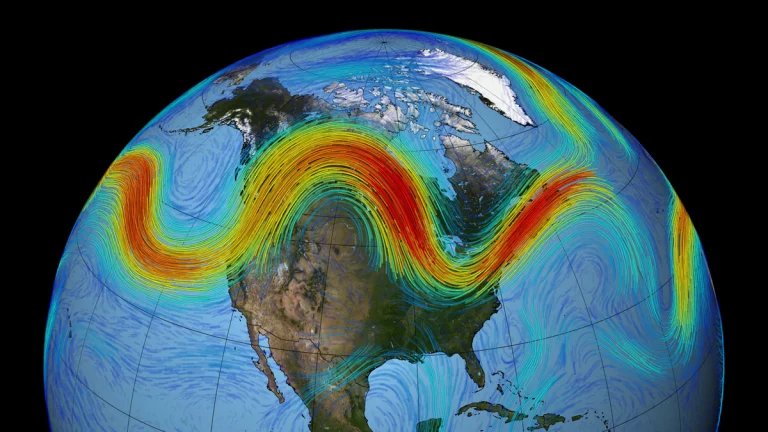
    High above Earth, narrow bands of fast-moving air circle the planet near the tropopause at 9–16 km (30 000–52 000 feet). These fast-moving corridors are known as jet streams, and they steer storm systems, influence temperature patterns, and shape how aircraft move across the globe. Understanding how they form and change over time helps explain many of the weather shifts we experience at the surface. Their behavior also connects daily weather with long-term climate patterns, making them one of the atmosphere’s most influential features.

  • New climate pattern discovered in the tropics may extend storm prediction weeks ahead

    Researchers from the Institute of Science and Technology Austria (ISTA) and collaborators have identified a previously unknown cyclic climate pattern, the tropics-wide intraseasonal oscillation (TWISO), evident across tropical regions on 30–60-day timescales. The discovery, described as one of the most significant advances in climate dynamics, may help improve medium-range forecasts by revealing a predictable rhythm in tropical activity.

  • Magma pulses beneath Santorini revealed as the true cause of intense 2025 earthquake swarm

    A massive swarm of earthquakes that rattled the Aegean Sea between January and March 2025 was not caused by fault movement, as scientists first feared, but by waves of magma slicing through the crust beneath Santorini. The finding, published in Science on November 20, offers a detailed look at how Earth’s interior pulses and shifts beneath volcanic regions.

  • Deep faults beneath Cascadia show signs of rapid self-healing

    At the Cascadia Subduction Zone in the Pacific Northwest, where one tectonic plate slides beneath another, researchers from the University of California, Davis have found that rocks deep within faults can cement themselves back together within hours after seismic slip, offering new insights into how large earthquakes may initiate.