• Long-healed faults reveal why even stable regions can quake

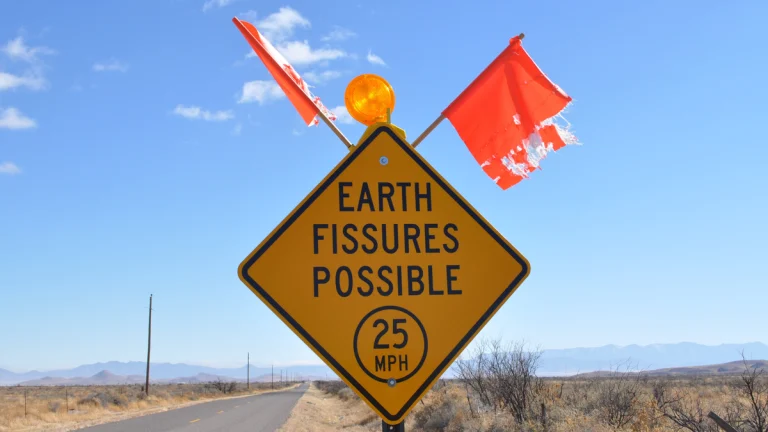
    A new study from Utrecht University reveals that even in regions far from tectonic plate boundaries, dormant faults can still produce earthquakes. The research, published on October 15, 2025 in Nature Communications, explains how faults that have remained inactive for millions of years slowly “heal,” building up strength that is eventually released as a single induced earthquake.

  • Rare fragmented auroras and picket fence structures observed together, challenging long-held latitude boundary assumptions

    Fragmented aurora-like emissions and picket fence structures were simultaneously observed over northern Scandinavia during a geomagnetic storm on January 1, 2025, marking the first recorded coexistence of these two rare phenomena within auroral latitudes. The discovery adds to the growing understanding that Earth’s upper atmosphere is far more dynamic than once thought, with electric-field structures that can stretch over thousands of kilometres but reorganize in seconds.

  • Hidden magma pathway revealed by 2025 Santorini crisis

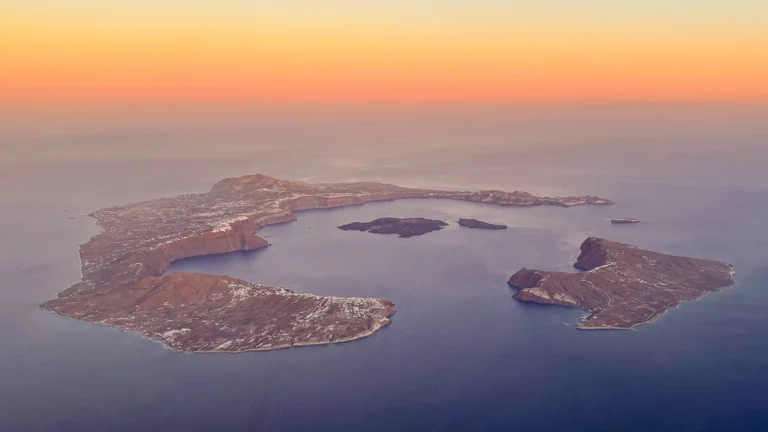
    An intense earthquake swarm shook the Santorini–Amorgos region of Greece beginning on January 27, 2025, lasting about 45 days and producing more than 16 000 tremors between 5–15 km (3–9 miles) below the seafloor. A joint seismological study has revealed that the 2025 Santorini crisis was not a typical tectonic swarm. It was the signature of magma moving through a hidden corridor connecting the Santorini and Kolumbo volcanoes, two of the most active systems in the eastern Mediterranean.

  • Marine cores record Cascadia megathrust earthquakes followed by near-simultaneous San Andreas fault rupture

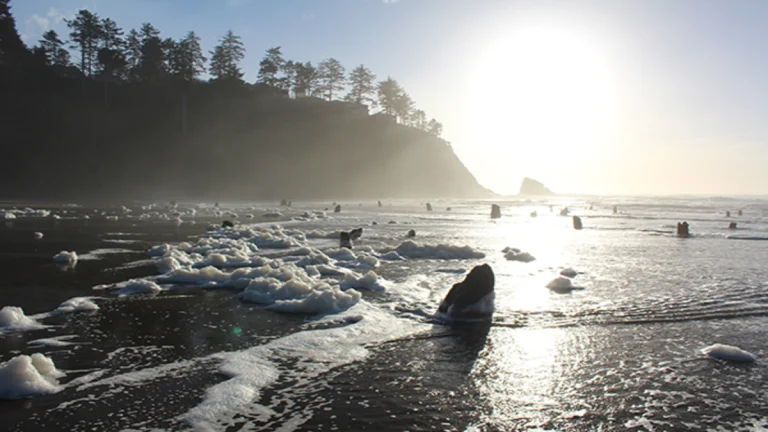
    A new study published recently in Geosphere finds that some of the largest earthquakes along the Cascadia subduction zone may have triggered nearly simultaneous ruptures on California’s San Andreas fault. The discovery suggests that the “really big one” in the Pacific Northwest could cascade southward, affecting much of the U.S. West Coast in a single sequence.

  • Ancient magma chamber fueled Japan’s 2024 Noto earthquake

    A solidified magma body formed about 15 million years ago beneath Japan’s Noto Peninsula may have intensified the M7.6 earthquake that struck the region at 16:10 JST (07:10 UTC) on January 1, 2024, according to a Science Advances study by Tohoku University. The ancient magma appears to have trapped stress below the crust until its failure triggered one of Japan’s strongest inland quakes in decades.

  • Hidden ring-fault system driving unrest beneath Italy’s Campi Flegrei

    A machine-learning model developed by Stanford University and Italy’s National Institute of Geophysics and Volcanology has uncovered more than 54 000 earthquakes and a sharply defined ring-fault system beneath Campi Flegrei, Italy, between January 2022 and March 2025, according to a study published recently in Science.

  • Coral skeletons reveal medieval tsunami and long-term seismic threat to the Caribbean

    A newly dated medieval tsunami between 1381 and 1391 CE struck Anegada, the northernmost of the British Virgin Islands, when an M8.0 or greater earthquake ruptured the Puerto Rico Trench, according to an open-access study published in Geophysical Research Letters on October 8, 2025.